
JUMP TO A SECTION
Ask ten roofers when the best time to replace a roof is and most will say the same thing: late spring through fall. That is true, but it is the easy answer, the one that fits on a truck magnet. The more useful answer is why that window exists, how it actually narrows once you account for booking patterns most homeowners never see, and why the homeowner who calls in March often ends up with a better week, a calmer crew, and the same price as the homeowner who calls in September after a storm sends the whole county's roofers scrambling at once. None of that is secret information a roofer is hiding from you. It is simply information nobody bothers to explain, because a truck magnet has room for a season and not for the reasoning behind it, and the reasoning is what actually helps you plan.
This guide walks the whole calendar in plain terms: the chemistry that sets the comfortable installation window, month by month what that window looks like on the ground in Macomb County, why the month most homeowners assume is best is also the month with the least available scheduling room, and the quieter case for moving earlier than instinct suggests. It closes with the one answer that matters more than any month on a calendar, which is the condition of your specific roof, checked for free.
01 / THE SHORT ANSWERThe short answer, then the honest one
In Macomb County, the comfortable installation window for asphalt shingles runs roughly late spring through fall, when daytime temperatures reliably sit warm enough for shingles to seal properly and the days are long enough for a full crew day. Cold-weather installation is possible and done every winter with the right procedures, which is a separate guide on its own, but it is the exception rather than the rule for a routine, non-emergency replacement.
is the installed range for a full asphalt replacement in Macomb County year round, with most homes landing $12,000 TO $16,000. The season changes your scheduling leverage, not the price canon. Get your own ballpark with the instant estimator in about 60 seconds.
The honest version of the answer, though, is that the best time to replace a roof is before it fails, not on a fixed date on the calendar. A roof that is showing real wear does not get safer by waiting for a specific month, and a free inspection costs nothing whether it happens in April or November.
02 / THE SCIENCEWhy sealing temperature drives the whole calendar
Underneath every architectural shingle is a strip of thermoplastic sealant, sometimes called the seal strip, that is designed to soften slightly in the sun and bond the shingle above it to the one below it. That bond is what keeps a roof watertight and what keeps individual shingles from lifting in a strong wind. The seal strip needs a period of warm, direct sun exposure after installation to activate fully, which is the entire reason the roofing calendar looks the way it does.
What happens when it is warm enough
During late spring through fall, ambient temperatures and direct sun exposure are generally enough to activate the seal strip within days of installation, sometimes faster on south and west facing slopes that get the most sun. Once sealed, the shingle course behaves as a single bonded surface rather than individual tabs, which is what gives a finished roof its wind resistance.
What happens when it is not
In cold weather, the sealant can take much longer to activate, and shingles installed and handled below their rated application temperature are also more prone to cracking simply from being bent during installation. That does not mean winter work is unsafe or improper. It means a roofer working outside the comfortable window follows manufacturer cold-weather procedures, including hand-sealing tabs with roofing cement rather than relying on the factory strip alone, (see the manufacturer technical literature for the major shingle lines (GAF, Owens Corning, CertainTeed)). That is more labor per square, which is one reason winter replacement, covered in full in our winter roofing guide, is usually reserved for roofs that genuinely cannot wait.
There is a second, less technical factor: daylight. A crew tearing off and reshingling a typical home needs a full working day, and the short daylight hours of late fall and winter compress how much a crew can safely complete before dark, which is part of why multi-day jobs become more common outside the main season, a scheduling factor covered in depth in our guide on how long a roof replacement actually takes.
A third factor rarely gets mentioned at all: shingle handling itself. Cold, stiff asphalt is more brittle than warm, pliable asphalt, so a bundle of shingles carried up a ladder and bent around a ridge or a hip on a 20 degree morning is simply more prone to cracking than the same bundle handled on a 70 degree afternoon. A careful winter crew works around this by keeping shingles warm until the moment of installation and handling them gently, another reason cold-weather work takes longer per square than the same job in July.
03 / THE CALENDARThe season, month by month
Here is how the Macomb County roofing calendar generally behaves, in plain terms rather than marketing language.
| WINDOW | TEMPERATURE PICTURE | BOOKING PICTURE |
|---|---|---|
| Late March to May | Warming, sealing conditions improving through the window | Lightest booking of the main season; best availability |
| June to August | Consistently warm, ideal sealing conditions | Busy but steady; the classic roofing season |
| September to November | Still workable, narrowing as the season ends | Heaviest demand; often booked weeks out, more after storms |
| December to March | Below comfortable sealing range on most days | Cold-weather procedures apply; reserved mainly for urgent replacements |
Late March to May
Temperatures climb steadily through this stretch, and sealing conditions improve week by week rather than arriving all at once. Early in the window a crew may still want a sunny afternoon rather than an overcast one for the seal strip to activate quickly, but by May the days are reliably warm enough that installation runs no differently than a summer job. This is also, as covered in section 05, the lightest booking period of the year.
June to August
This is peak season in the truest sense: consistently warm days, long daylight hours, and sealing conditions that are about as reliable as Michigan weather gets. It is also the busiest stretch for every roofing company in the county, so while conditions are ideal, availability is the tightest of the warm-weather months, particularly right after any significant summer storm.
September to November
Early fall is still comfortably inside the sealing window and, on paper, some of the best weather of the year to have a roof torn off and replaced. The catch, covered in full in section 04, is that this is also when the largest share of homeowners decide to call, which compresses the calendar considerably by the time October arrives. Late November starts to push against the edge of comfortable sealing temperatures on cooler days.
December to March
Daytime temperatures on most days sit below the range where a shingle's factory sealant activates quickly on its own, so a job in this window generally means cold-weather procedures: hand-sealing tabs, careful shingle handling, and a schedule built around the shorter daylight and the occasional weather hold. It is not a season to avoid if a roof genuinely cannot wait, and our companion guide on winter roof replacement in Michigan covers exactly when that trade-off makes sense.
Rain is its own variable inside any of these windows, since an open roof deck cannot sit exposed through a wet forecast regardless of the season. Our guide on how rain affects a roof replacement covers how a good crew plans around it.
04 / THE CROWDWhy fall books out faster than any other season
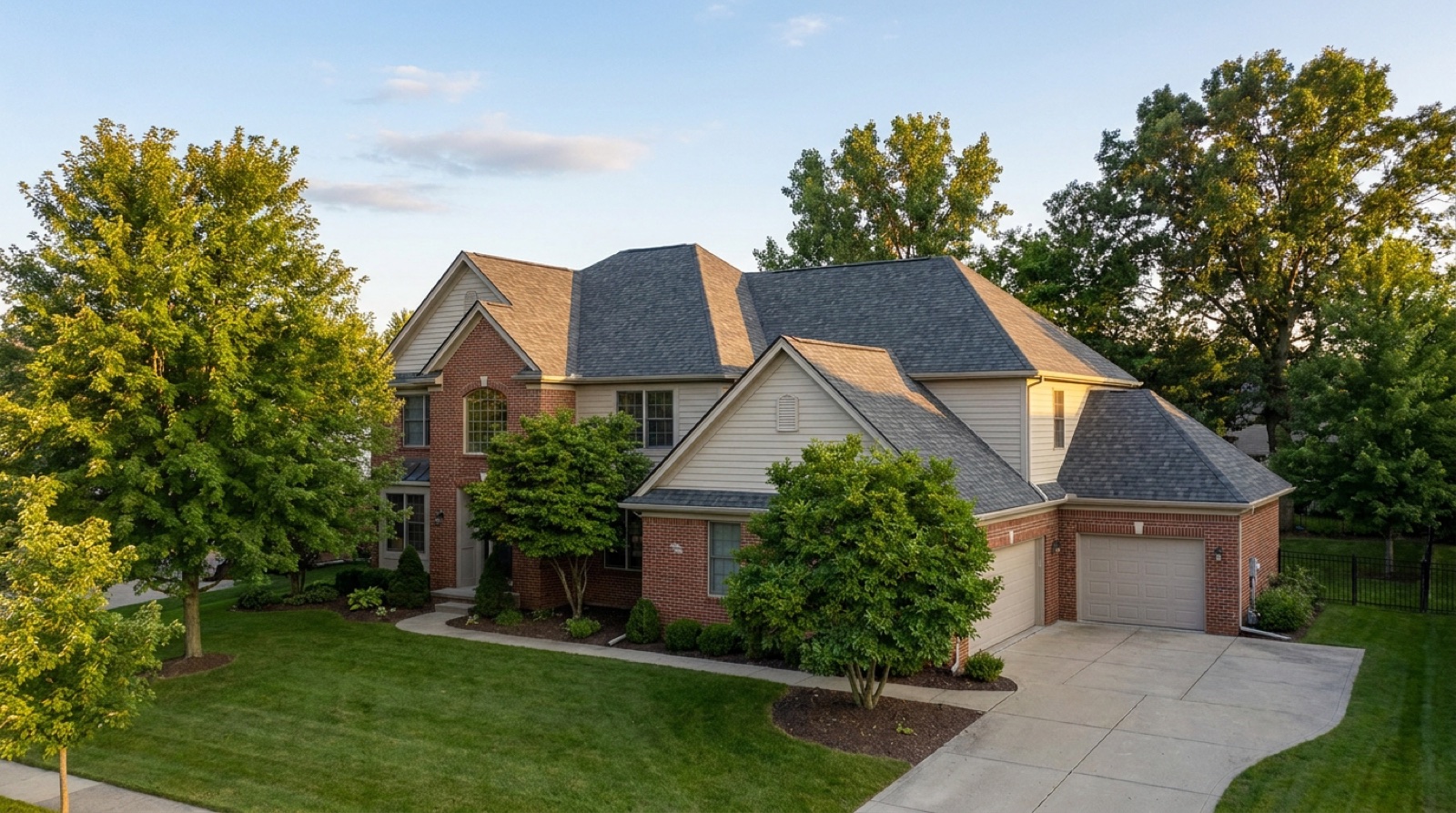
September through November feels like the natural time to replace a roof: the weather is comfortable, summer vacations are over, and the coming winter makes the project feel urgent. Every homeowner in the county tends to reach the same conclusion at roughly the same time, which is exactly why fall is the tightest booking window of the year rather than the easiest one.
Storm activity compounds it. A single significant wind or hail event can put a large share of a neighborhood on the schedule within the same week, and legitimate local roofers who were already busy now have a backlog of storm-damaged roofs ahead of routine replacements. That is a good problem for the roofs that were actually damaged, and our storm and insurance claims guide covers that process directly, but it is a real scheduling cost for a homeowner who simply wanted a routine fall replacement and finds themselves several weeks out.
The roofers are not busiest in fall because fall is roofing season. They are busiest because everyone decided it was roofing season at the same time.
That crowding effect is worth naming because it changes how a quote should be read in fall. A legitimate local company with a real backlog will tell you the honest lead time up front rather than promise a same-week slot they cannot actually deliver, and an offer to squeeze your job in ahead of everyone else with no explanation is a detail worth asking about, not just accepting gratefully. Our full guides library covers the broader pattern of vetting a contractor before you sign anything.
05 / THE UNDERRATED PLAYThe case for scheduling early in the season
Late March through May is the quiet window most homeowners overlook, and it is arguably the smartest time to get on the schedule for three reasons that have nothing to do with the shingles themselves.
- Crew availability is better. Before the summer rush and well ahead of the fall crunch, a homeowner calling in spring generally has more choice over the actual week their roof goes on, rather than taking whatever slot is left. That matters if you have a specific event, a closing date, or a family gathering you would like the project finished ahead of.
- You beat the storm-demand spike. If your roof is already showing wear, replacing it before peak storm season means one less thing at risk when the summer's first serious wind event rolls through, and it means you are not competing for a contractor's attention with an entire neighborhood of storm claims. A roof that is already weakened by age or minor wear is exactly the kind of roof a summer wind event turns into an emergency.
- Pricing pressure is calmer. The published price canon does not change by season, but a less compressed schedule generally means a more unhurried, better-supervised install, which is worth something on its own. A crew that is not racing to the next storm-damaged roof across town has more room to do the small things right, from clean flashing details to a thorough magnet sweep at the end of the day.
- You control the sequence of decisions. Booking early means the inspection, the material selection, and the scheduling conversation happen in whatever order makes sense for you, rather than all at once under time pressure because a leak just started.
None of this means a fall or winter replacement is a mistake. It means the earlier a homeowner books relative to when they first notice wear, the more control they keep over timing, crew, and scheduling flexibility, and that control tends to erode as the season goes on. A homeowner who has been putting off a known issue since last autumn loses nothing by using the coming spring's quieter window instead of waiting for the fall rush to repeat itself.
06 / THE REAL ANSWERThe real answer: before the roof fails
Strip away the calendar and the honest answer is simple: the best time to replace a roof is before it actively fails, not on a specific date. A roof that is aging out does not get safer by waiting for June, and a roof with real structural or decking problems does not improve by scheduling around the seasons. Waiting for the perfect month with a roof that is already leaking in multiple places usually just adds interior damage to the repair bill.
An inspection is the tool that answers the real question, which is not what month is best in general but what state your specific roof is in right now. Ours is $0 with no obligation, runs every month of the year, and covers the shingle field, flashing, ventilation, and the attic side of the deck with photos of everything we find. If your roof has real years left, we tell you that and you get to choose your season with a clear head. If it does not, you get that answer while you still have the widest possible choice of scheduling.
If you want a ballpark before anyone visits, the instant estimator runs the same published ranges as this page, and the cost calculator applies them to your roof size. Our full roof replacement process guide walks what happens once you are on the schedule, whatever month that turns out to be.
- Late spring through fall is the comfortable installation window because shingle sealant strips need warm, sunny conditions to bond fully.
- Winter replacement is possible with cold-weather procedures like hand-sealing, but it means more labor and is usually reserved for roofs that cannot wait.
- Fall feels natural but books out fastest, especially after storm events pull crews toward damage claims.
- Scheduling in spring, before the season's demand spike, generally means more control over your install week.
- The price canon does not change by season; the real answer is to replace before the roof fails, and a free inspection tells you where you stand any month of the year.
Questions we hear most
There is no single perfect month, but late spring through fall gives shingle sealant strips the warm, sunny conditions they need to bond fully, and daylight hours support a full crew day. Within that window, late spring is often the quietest booking period, before the summer rush and well ahead of the fall crunch.
Yes, with cold-weather installation procedures such as hand-sealing shingle tabs, which our winter roof replacement guide covers in detail. It generally involves more labor than a warm-weather install and is usually the right call for a roof that cannot safely wait for spring, rather than a routine replacement.
Fall feels like the natural deadline before winter, so a large share of homeowners reach that conclusion at the same time. Storm events in late summer and fall add urgent, insurance-driven jobs to the queue as well, which is why a homeowner planning a routine fall replacement often finds the schedule tighter than expected.
- FEMA, disaster declaration DR-4757-MI, Michigan severe storms of August 2023 (Macomb County designated). fema.gov/disaster/4757
- Manufacturer technical and warranty literature for the major asphalt shingle lines: GAF (gaf.com), Owens Corning (owenscorning.com), and CertainTeed (certainteed.com).
- National Weather Service, Detroit/Pontiac forecast office: southeast Michigan forecasts, warnings, and event records. weather.gov/dtx