
JUMP TO A SECTION
Drip edge is a thin L-shaped or T-shaped strip of metal that runs along the eaves and rakes, the outer perimeter of the roof, and it rarely gets a second look from anyone standing in the yard. That is exactly the problem. It is inexpensive, it installs in minutes per section, and it is one of the more commonly missing or damaged details we find on older Macomb County reroofs, especially budget jobs from decades past. When it is missing, bent, or rusted through, the failure does not show up on the shingles. It shows up on the fascia board and the soffit underneath, often for years before anyone traces the stain back to its actual cause. This guide covers what the metal does, how to spot trouble from the ground, why so many homes in this county were built without it, and what a proper fix involves.
01 / THE SHORT ANSWERA small strip of metal with one job: control the drip line
Drip edge directs water off the shingle surface and into the gutter, instead of letting it wick backward underneath the shingles, the fascia board, or the roof deck itself. At the eaves, it sits under the ice and water barrier and over the fascia, kicking runoff cleanly away from the wood. At the rakes, the sloped edges of the roof, it protects the edge of the deck from wind-driven rain blowing in sideways. Every asphalt shingle roof is supposed to have it at both locations, and building code in Michigan requires it on asphalt shingle roofs. The detail is small, but the water volume moving across it is not. Every drop that lands anywhere on the roof eventually reaches an eave or a rake edge, which makes this unglamorous strip of metal one of the higher-traffic parts of the entire system.
Eave drip edge goes down first, under the ice and water barrier, so water shed off the roof lands on metal, not on the fascia board. Rake drip edge goes on top of the underlayment along the sloped sides, since it is mainly stopping wind-driven rain rather than sheet flow. The two locations use the same basic metal, installed in a different order relative to the underlayment beneath them.
02 / THE MECHANICSWhat drip edge does at eaves and rakes
Without drip edge, water running off the shingle field clings to the underside of the roofline through surface tension and travels backward onto the fascia board and the top edge of the soffit, rather than dropping cleanly into the gutter below. It sounds like a minor physics detail until you have watched it happen on a rainy day: an unprotected edge lets a thin sheet of water crawl back several inches under the shingles before it finally lets go. Over a few seasons, that repeated wetting is exactly what rots a fascia board from the top down, long before a shingle ever shows a problem.
Drip edge also closes a physical gap that wind-driven rain and pests both exploit. At the eave, the metal's kicked-out lip breaks the water's grip and sends it into the gutter. At the rake, it shields the exposed edge of the roof deck from rain blowing in at an angle, which a plain shingle overhang alone does not fully stop. And because it seals the small gap between the shingle edge and the fascia, it also closes off an entry point that squirrels, bats, and insects use to get into a soffit cavity. A homeowner who is chasing a mystery scratching sound in the attic corner has sometimes found a missing drip edge section, not a hole in the shingles, at the root of it.
The metal also backs the gutter line itself. A properly installed drip edge extends far enough over the gutter's back edge that runoff lands inside the trough rather than behind it. Gutters hung slightly out of position, or a drip edge trimmed too short during a past reroof, can send water behind the gutter and straight down the fascia, a problem that looks like a gutter issue but is actually the drip edge and the gutter alignment working against each other.
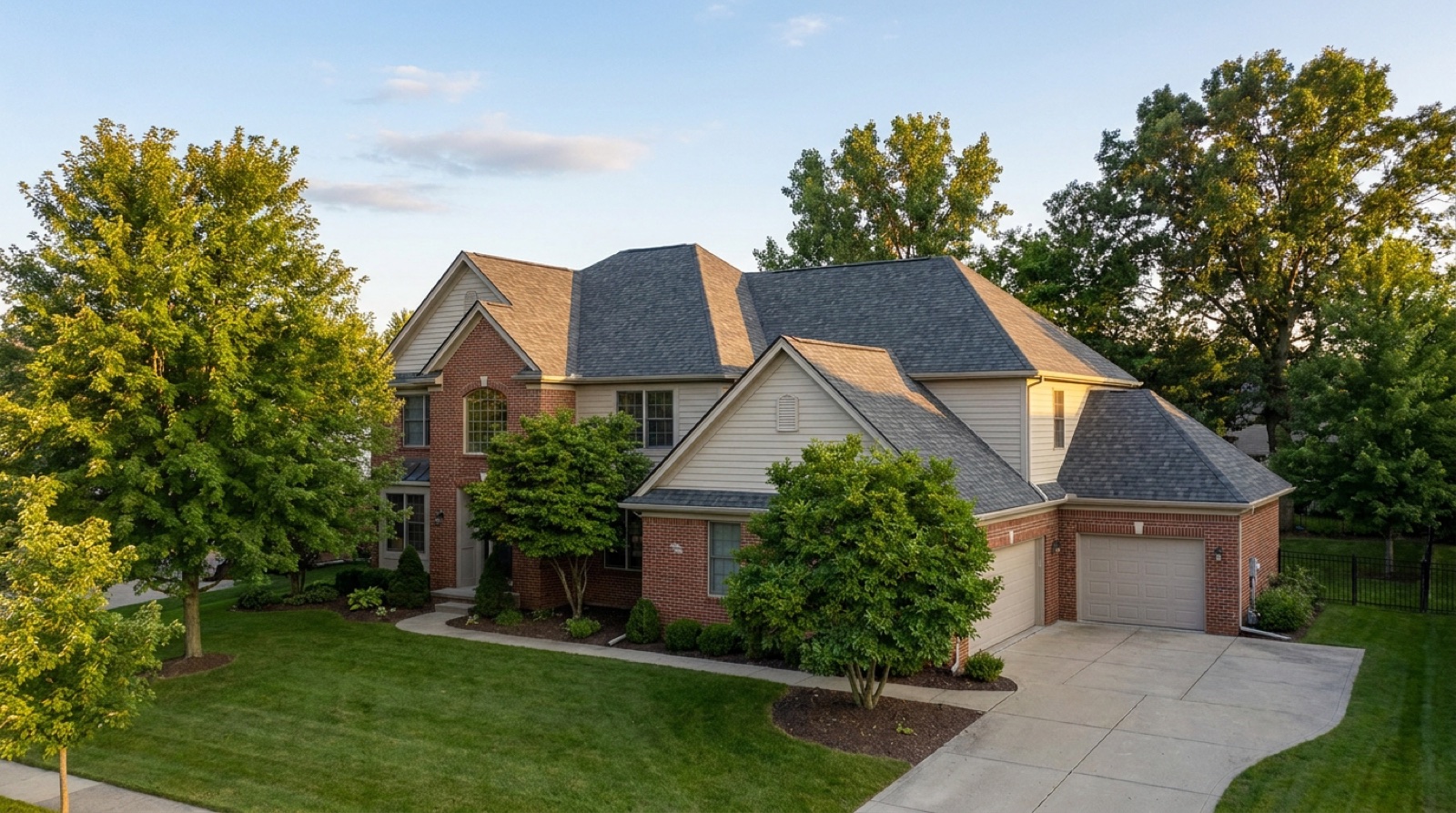
03 / THE SIGNSHow to spot missing or failed drip edge from the ground
You do not need to get on the roof to catch most drip edge problems. The damage tends to show up on the trim below the roofline long before it shows up on the shingles themselves.
Rotted or soft fascia boards
The fascia is the vertical board the gutters mount to, running along the eave just under the roofline. If it looks discolored, soft when pressed, or is starting to peel paint in a straight line that tracks the roof edge, water has been getting behind it for a while. Fascia rot almost always means the drip edge above it is either missing, bent away from the roof, or was never installed long enough to actually direct water into the gutter.
Stained or discolored soffits
The soffit is the horizontal panel under the eave overhang, and a brown or dark stain on it, especially near the outer edge closest to the fascia, is one of the more reliable signs that water is tracking backward instead of dropping into the gutter. Soffit staining is easy to blame on a gutter that is simply overflowing, but a drip edge problem produces the same stain even when the gutter itself is clean and draining fine, because the water never made it into the gutter in the first place.
Water tracking in behind the gutter
If you notice water running down the face of the fascia board or dripping from behind the gutter during a rain, rather than falling cleanly off the front lip of the gutter, that is drip edge doing too little of its job, or not being there at all. This is one of the easier signs to catch in person during an actual rainstorm, and one of the hardest to catch from a dry-day inspection alone.
Visible rust, gaps, or a missing run entirely
On a roof old enough to see from the ground with binoculars, look for a thin metal lip along the shingle edge. Rust streaks on the metal itself, sections that are bent up and away from the fascia, or a stretch of eave where no metal edge is visible at all are each worth a closer look. A missing run is common on homes reroofed decades ago on a tight budget, since skipping drip edge was, for a long time, a way contractors shaved material and labor cost off a bid without the shortcut being obvious to the homeowner signing the invoice.
Interior water stains at the top of an exterior wall, just under the roofline, are sometimes blamed on flashing or a shingle leak. On inspection, a fair share turn out to trace back to missing rake or eave drip edge letting wind-driven rain track behind the trim and down into the wall cavity instead.
04 / THE HISTORYWhy so many older Macomb County homes were built without it
Drip edge is not a new idea, but it was not always treated as a mandatory line item on every reroof the way it generally is today. For a long stretch of decades, some contractors installed it as standard practice and others skipped it to save a modest amount of material and labor on a bid, particularly on lower-cost jobs where the homeowner was comparing quotes mostly on the bottom-line number. Michigan's building code has since caught up: current code requires drip edge at eaves and rakes on asphalt shingle roofs, with minimum overlap and fastening specifications. That requirement applies going forward on new work and permitted reroofs, but it does nothing to retroactively fix a roof shingled without it years or decades ago and never reroofed since.
That is why age is one of the first questions worth asking about a specific house. A roof shingled in the last decade or so, especially one that pulled a permit, is far more likely to have drip edge installed correctly at both eaves and rakes. A roof not fully replaced since sometime in the 1980s or 1990s is a reasonable candidate for a missing or under-built detail, particularly if the original job was priced aggressively. Neither age alone confirms anything either way; the only way to know for certain is a look at the actual edge, paired with the fascia and soffit condition it has been protecting, or failing to protect, all this time.
05 / THE RETROFITRetrofitting drip edge under existing shingles
Adding proper drip edge to a roof that already has shingles on it is more involved than a fresh installation during a full tear-off, because the metal has to slide in underneath shingles already nailed down and weathered into place. A careful crew lifts the bottom courses along the affected run, removes any old or damaged metal, slides the new drip edge into position under the shingle edge and, at the eave, under the ice and water barrier or existing underlayment, then reseats the shingles without cracking them. Aged shingles get brittle in cold weather, so a retrofit is easier and safer during warmer months, and a crew doing it correctly will tell you honestly if the edge shingles are too brittle to lift without damage.
In some cases the fascia board is already compromised by the time the problem gets caught, which turns a metal-only fix into a combined repair: new drip edge, plus replacing the rotted section of fascia underneath it, and sometimes a section of soffit as well. That combination job costs more than a metal-only retrofit, but skipping the wood repair just closes the door after most of the damage is already done. An honest inspection tells you which situation you actually have before any work starts.
Gutters usually have to come down, or at least detach along the affected run, to get proper access to the eave edge during a retrofit. That is a natural point to also check the gutter's condition and pitch toward the downspouts, since a gutter hung slightly wrong can undercut a fresh drip edge installation by missing the water the new metal now correctly directs toward it.
The drip edge itself is inexpensive. What it protects, the fascia, the soffit, and the wall cavity behind them, is not. That is the whole case for fixing it before the wood underneath is already gone.
06 / THE COSTWhat drip edge repair or replacement runs
Drip edge work falls inside our published roof repair range of $350 to $3,200, and larger or complex repairs can run higher. Where a specific job lands in that range depends mostly on three things: how many linear feet of eave and rake need new metal, whether the shingles at the edge are healthy enough to lift and reseat without replacing them, and whether any fascia or soffit wood underneath has already rotted and needs to come out and be replaced along with the metal. A short run of eave with sound shingles and dry wood underneath is a modest job. A full-perimeter retrofit paired with fascia replacement on multiple sides of the house is a larger one, and it is still a repair rather than a reason to replace the whole roof, since the shingle field itself is generally unaffected by a drip edge problem at the edge.
If a roof is already due for a full replacement for other reasons, correcting the drip edge is simply part of doing the job right the first time rather than a separate cost, since new drip edge goes in as a standard part of any proper tear-off and reshingle. Our roof replacement cost guide covers that full picture if you are weighing the two paths, and the metal versus asphalt comparison is worth a look if you are considering a system change at the same time.
The other detail worth checking at the same time is the gutter's own condition, since a drip edge fix and a gutter problem often get discovered together. If the eave issue turns out to trace back to how the gutters themselves were hung or damaged, our soffit and fascia repair guide covers that side of the fix in more depth, and it is common for both to be scoped in the same visit rather than as two separate trips. Flashing at nearby valleys, sidewalls, and edges can fail for related reasons, and our roof flashing types guide and kick-out flashing guide cover the two pieces most often found failing alongside a bad drip edge run.
The only way to price your specific house is a look at the actual eave and rake edges, the fascia condition behind them, and an honest count of how many linear feet actually need attention. That look is free. Start with the instant estimator, browse the full published pricing, or run your numbers against a larger project with the cost calculator if a fuller reroof is also on the table.
- Drip edge is the metal strip at eaves and rakes that keeps runoff on top of the roof and out of the fascia and soffit behind it.
- Rotted fascia boards, stained soffits, and water tracking behind the gutter are the three most common ground-level signs of a missing or failed run.
- Many older Macomb County homes were reroofed before drip edge was consistently required and were never retrofitted since.
- Retrofitting under existing shingles means lifting and reseating the edge courses without cracking brittle shingles, and sometimes replacing rotted fascia at the same time.
- Drip edge repair generally falls inside the $350 to $3,200 repair range, and the inspection that scopes it is $0.
Questions we hear most
Look for a thin metal lip along the eaves and rakes from the ground, and check the fascia board and soffit directly below the roofline for staining, softness, or rot. A missing lip paired with staining on the trim underneath is a strong sign the drip edge is absent or failed, and a free inspection confirms it either way.
Yes, in most cases. A retrofit involves carefully lifting the affected shingle courses, sliding new metal into place, and reseating the shingles, which works well as long as the existing shingles are not too brittle to lift without cracking. If fascia or soffit underneath has already rotted, that wood is typically replaced at the same time.
Yes. Beyond a stained fascia board, prolonged water tracking behind the roofline can rot the wood structure underneath, invite pests into the soffit cavity, and in freeze-thaw conditions contribute to ice building at the eave. Repairs run $350 to $3,200 depending on the scope, and catching it early keeps the fix on the smaller end of that range.
- Michigan Residential Code 2015, section R905.2.8.5 Drip Edge: required at eaves and rakes, extending not less than 1/4 inch below the roof sheathing. up.codes: MRC chapter 9