
JUMP TO A SECTION
Homeowners shopping a metal roof spend most of their attention on the panel itself, the gauge, the finish, the color, the profile, and very little on the assembly working underneath it. That is backwards. The panel sheds water and holds up to weather almost regardless of what is happening in the attic. The ventilation is what decides whether the roof deck stays dry and cold all winter or slowly rots, frosts, and feeds ice dams at the eaves for the next twenty or thirty years the panel is up there.
This guide covers how ridge exhaust actually works on standing seam and ribbed metal profiles, why soffit intake has to be balanced against it rather than treated as an afterthought, and how above-sheathing ventilation changes the picture on batten-mounted systems like stone coated steel. It closes with the Michigan-specific stakes: what an under-ventilated metal roof does to your attic and your ice dam risk over a full winter.
01 / THE SHORT ANSWERVentilation is the difference between a 50-year panel and a 50-year roof
A metal roof needs the same two things every roof needs to manage attic air correctly: intake low at the soffits and exhaust high at the ridge, moving in balance so the attic stays close to outdoor temperature year round. What changes with metal is the ridge detail itself, since the profile of a standing seam or ribbed panel has to be vented through a purpose-built ridge cap rather than the shingle-over-ridge-vent strip used on asphalt, and on batten-mounted systems like stone coated steel, a second layer of ventilation runs above the deck, under the panel, doing a job shingles never need done at all.
Whatever the roofing material, the goal of attic ventilation is the same: keep the underside of the deck close to outdoor temperature so snow on top does not melt from attic heat leaking up through it. Metal roofing does not eliminate that requirement. It just changes the hardware that delivers it.
The rest of this page walks through the mechanics by section: ridge exhaust, soffit intake, above-sheathing airflow on batten systems, and the winter consequences of getting any one of those wrong. If you already know your attic has moisture or frost problems, our metal roof condensation guide covers the diagnosis side of that in depth.
02 / THE EXHAUST SIDEHow ridge venting works on standing seam and ribbed profiles
Asphalt roofs typically vent at the ridge with a shingle-over strip vent that sits directly on the deck under the cap shingles. Metal cannot use that detail, because the panel profile itself, whether a standing seam rib or a corrugated or ribbed panel, has to terminate at the ridge in a way that sheds water, resists wind-driven snow, and still leaves an open path for air to escape. That means a metal ridge vent is a purpose-built component: a vented ridge cap engineered to match the specific panel profile, usually paired with a baffle or weather filter that blocks blowing snow and insects while still passing air.
The practical upshot for a homeowner is that ridge venting on a metal roof is not something a crew can improvise with generic parts. The vented ridge has to match the panel manufacturer's profile, or air leaks and water intrusion at the ridge become likely. This is one of the details worth asking about directly when comparing metal roofing bids, since a lower bid that skips the correct vented ridge assembly is deferring a problem to the first heavy snow rather than pricing the job correctly.
Ribbed and corrugated panels
On ribbed or corrugated panel profiles, the ridge cap has to seal against the peaks and valleys of the panel rib pattern while leaving the exhaust path open, which is typically handled with a formed foam or rubber closure strip cut to match the rib profile, topped with the vented ridge cap itself. Getting the closure strip profile wrong is a common source of both leaks and blocked airflow on lower-quality installs.
Standing seam panels
Standing seam systems, with their raised vertical seams, use a ridge detail engineered around those seams specifically, since the vented ridge cap has to clear the seam height on both sides of the roof while still shedding water over the ridge line. Manufacturer-specific ridge vent components exist for this reason, and mixing generic parts with a specific standing seam profile is one of the more common installation shortcuts we see on roofs that come to us with ridge leaks or condensation complaints.
03 / THE INTAKE SIDEBalanced intake at the soffits
A ridge vent, no matter how well engineered, does nothing on its own. Exhaust at the ridge only works if intake air is entering low at the soffits in a roughly matched quantity, so air is actually moving from eave to ridge rather than sitting still or, worse, pulling conditioned house air up through ceiling penetrations because the attic has no other air source available. That balance matters just as much under a metal roof as under asphalt, and it is frequently the weaker half of the system on older Michigan homes.
Soffit intake gets blocked in a few predictable ways: insulation pushed out to the eaves during a re-insulation job with no baffle to hold an air channel open, soffit vent holes painted over or clogged with decades of dust, or a bathroom or kitchen exhaust fan that was supposed to vent outside but was instead routed into the soffit or the attic itself. None of these are metal-roof-specific problems, but a metal roof project is a natural point to correct them, because the attic and eaves are already exposed during tear-off and new ridge work.
| COMPONENT | JOB | COMMON FAILURE POINT |
|---|---|---|
| Soffit vents | Draw fresh, cold outdoor air into the attic low at the eaves | Blocked by insulation or painted shut |
| Baffles | Hold an open air channel from soffit to attic over the insulation | Missing or crushed during re-insulation |
| Ridge vent (metal-specific) | Exhaust warm, moist attic air at the peak, profile-matched to the panel | Wrong profile or generic parts on a specific panel system |
| Above-sheathing layer (batten systems) | Vent the space between deck and panel on stone coated steel and similar | Omitted to save cost on a lower-tier install |
A rough rule of thumb in the trade is that intake and exhaust should be close to matched, and if anything intake should have a slight edge, since starving the intake side turns the ridge vent into a weak suction point that can pull air from the wrong places instead of the soffits. The exact net free area math is a code and manufacturer specification question that deserves a sourced, code-depth treatment rather than a rule of thumb repeated here; our guides library covers that attic-ventilation math in its own dedicated piece.
04 / THE SECOND LAYERAbove-sheathing ventilation for batten-mounted systems
Stone coated steel and some other batten-mounted metal systems add a layer of ventilation that shingles and standard standing seam do not use at all: a gap between the solid deck and the panel itself, created by the battens the panels are fastened to. That gap lets air move under the panel, above the deck and underlayment, which does two jobs at once. It equalizes temperature across the underside of the panel so it heats and cools more evenly, and it gives any moisture that reaches the deck surface, whether from a minor imperfection in the underlayment or normal seasonal humidity, a path to escape rather than sitting trapped against the panel.
This above-sheathing airflow is a genuine advantage of batten-mounted systems in a climate that swings as hard as Michigan's does, since it adds a buffer layer on top of the standard attic ventilation working below the deck. It is not, however, automatic. The batten spacing, the venting details at the eave and ridge where the gap has to actually connect to outside air, and the closure details at hips and valleys all have to be executed correctly for the airflow to do anything. A batten system installed without attention to those details gets a dead air gap instead of a ventilated one, which offers little advantage over a standard assembly.
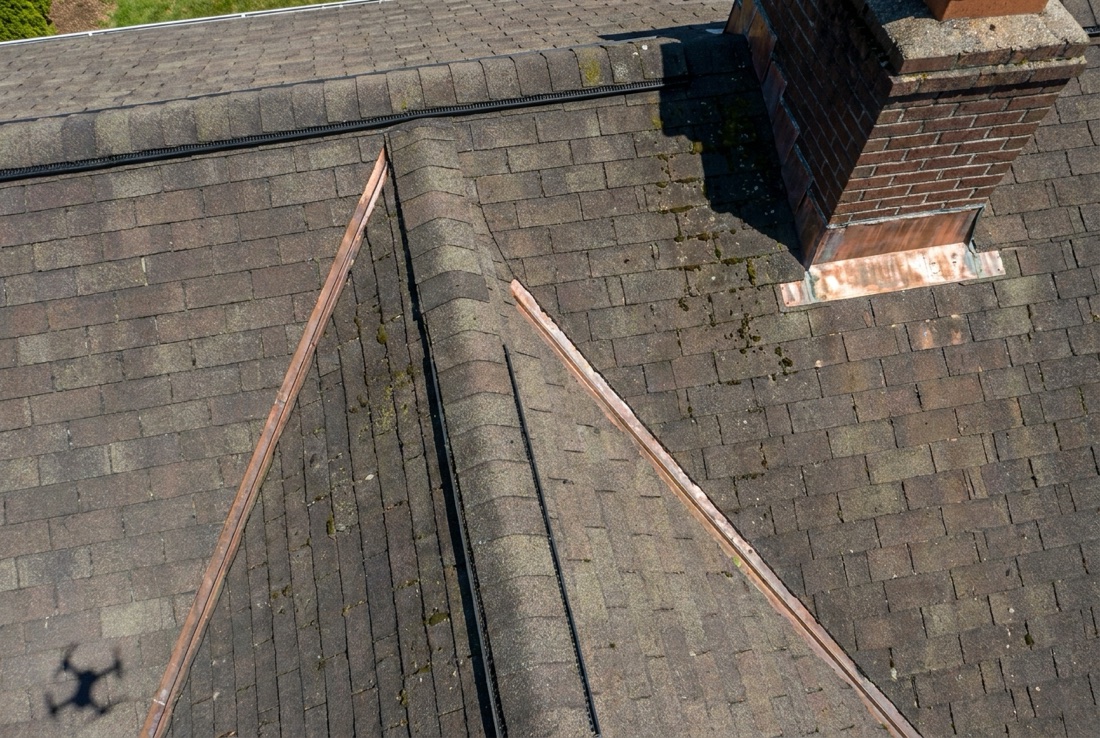
Our metal roof energy efficiency guide covers how this ventilated assembly, not the panel color or coating alone, is the real driver of how a metal roof performs against summer attic heat, which is the flip side of the same airflow system doing its winter job here.
05 / THE MICHIGAN STAKESThe winter stakes: moisture, frost, and ice dams
Everything above matters most in the months Michigan homeowners actually notice roofing problems: the deep cold stretch from December through March. An attic that is properly vented stays close to the outdoor temperature, so snow sitting on the roof stays frozen and simply accumulates or sublimates away, with no meltwater running down to the cold eaves to refreeze into an ice dam. An attic with blocked intake, a mismatched ridge vent, or a dead batten gap traps heat that leaks up from the living space below, and that trapped heat melts the underside of the snowpack from below even while the outside air stays well below freezing.
That meltwater runs down the roof slope until it reaches the eaves, which sit outside the heated part of the house and stay colder, where it refreezes into ice. Layer after layer of that freeze-thaw cycle builds an ice dam that backs standing water up under the shingles or panel edge, and once water gets under the roofing material at the eave, it finds its way into the deck, the fascia, and eventually the ceiling below. Our companion piece on whether metal roofs prevent ice dams answers the question homeowners usually ask directly: the panel material itself does not stop this cycle, since ice dams are a ventilation and heat-loss problem first, not a roofing-material problem.
A metal roof does not outrun a bad attic. Give it the same balanced airflow you would insist on under shingles, and it earns the long service life it is sold on.
The same trapped moisture that feeds an ice dam also condenses on the coldest surfaces it can find inside the attic, which under a metal roof often means frost forming on the panel underside or on exposed fastener heads on cold, calm nights. That frost melts on the next warm stretch and drips, which homeowners frequently mistake for an active roof leak. Our condensation guide walks through how to tell that pattern apart from an actual panel or flashing failure, and ventilation correction is very often the actual fix in either case.
06 / THE NEXT STEPGetting your airflow assessed
Ventilation is one of the parts of a roofing job an owner genuinely cannot judge from the ground or from photos of the shingles. It requires someone in the attic checking soffit intake, baffle condition, ridge vent type and fit, and, on batten systems, whether the above-sheathing gap is actually connected to outside air at the eave and ridge. That is exactly what our free inspection covers alongside the panel and flashing condition, and it applies whether you already have a metal roof showing frost or drips, or you are planning a new metal roof and want the ventilation specified correctly from the start.
If ventilation correction is part of a full metal roof install, that work is priced inside the standard $18,000 to $30,000 metal roofing range, since ridge vent components and soffit correction are a normal part of a properly specified metal job, not an add-on. If your metal roof is already up and just needs the intake or ridge vent corrected, that is typically a targeted repair inside our standard $350 to $3,200 repair range, and larger or more complex ventilation retrofits can run higher. Either way, the inspection that tells you which category applies is $0 with no obligation.
Start with the instant estimator, which runs the same ranges published on our honest pricing page, or use the cost calculator to get a ballpark against your own roof size before anyone visits. If you are still deciding between materials in the first place, our roof replacement service page and metal vs asphalt comparison cover the full decision, ventilation included.
- A metal roof needs the same balanced intake and exhaust as any roof; the ridge detail is what changes, since it has to match the specific panel profile.
- Standing seam and ribbed panels both require purpose-built vented ridge caps, not generic parts, or leaks and blocked airflow follow.
- Blocked soffit intake, from insulation, paint, or a misrouted exhaust fan, is the most common weak link, and metal roof projects are a natural time to fix it.
- Batten-mounted systems like stone coated steel add above-sheathing ventilation, a real advantage in Michigan's climate, but only when the eave and ridge connections are executed correctly.
- Under-ventilated attics feed both ice dams and condensation frost under metal roofing; a free inspection checks intake, ridge vent fit, and, on batten systems, the above-sheathing airflow together.
Questions we hear most
The underlying principle is the same, balanced intake at the soffits and exhaust at the ridge, but metal uses a ridge vent component engineered to match the specific panel profile rather than the shingle-over-ridge-vent strip used on asphalt. Batten-mounted systems like stone coated steel add a second ventilated layer above the deck that shingle roofs do not use at all.
Yes. Bare metal tracks outdoor temperature quickly, so a metal panel's underside can sit colder than a shingle deck would on the same night, and blocked or unbalanced attic ventilation makes that surface a likely spot for indoor moisture to condense or frost. Our metal roof condensation guide covers the signs and the fix in more depth.
Balanced ventilation is one of the two main levers on ice dams, alongside air sealing between the living space and the attic; it keeps the roof deck cold and even so snow does not melt from below. It does not eliminate every ice dam risk on its own, and a free inspection can tell you whether ventilation, air sealing, or both need attention on your specific attic.
- U.S. Department of Energy, Energy Saver program, guidance on attic air sealing and moisture management. energy.gov/energysaver/air-sealing-your-home
- Metal Construction Association, technical resources for metal roof systems. metalconstruction.org
- Manufacturer technical and warranty literature for the major asphalt shingle lines: GAF (gaf.com), Owens Corning (owenscorning.com), and CertainTeed (certainteed.com).