
JUMP TO A SECTION
Squirrels gnaw a hole the size of a fist. A raccoon does not need to be that patient. An adult raccoon can weigh 15 to 25 pounds, and it uses that weight to pry, peel, and rip a soffit panel loose along its seam, then push in. The result is bigger, messier, and structurally more serious than most animal-entry damage we see, and it usually shows up around the eaves, the ridge, or wherever a chimney or roof intersection gives an animal a foothold.
01 / THE SHORT ANSWERWhat raccoon damage actually looks like
If you have raccoons, the giveaway is rarely a small clean hole. It is a peeled-back soffit panel hanging on one nail, a section of vent screen bent outward, or shingles pulled loose at a valley or wall intersection where a raccoon used the gap as a handhold to climb higher. Inside, a scratching or thumping sound that is heaviest at dusk and again before dawn, when raccoons are most active, is a strong tell. A single hole rarely stays single for long, either. Raccoons widen an entry as they get bigger or as a female moves young in and out, so a damage report that starts small in spring can be a torn-open soffit bay by early summer.
A raccoon den in an attic or soffit bay often means young are present, usually between March and August in Michigan. Sealing an entry point before the young are confirmed out traps them inside, which creates a worse problem: a dead animal in the structure and a determined mother tearing a new hole to get back to them. Confirm the den is empty before any repair closes it.
02 / THE SIGNATUREReading the damage: torn, not chewed
The distinction matters because it changes what the repair has to accomplish. A squirrel's chewed opening is small and the surrounding material is largely intact, so a patch over hardware cloth often holds. A raccoon's opening is a structural failure of the panel or shingle course itself, and the repair has to replace, not just cover, what tore.
Soffit panels peeled at the seam
Aluminum and vinyl soffit both fail the same way under raccoon pressure: the panel bends along its locking seam until it releases from the fascia and the J-channel, and the raccoon pushes through the gap into the space above, which usually connects straight into the attic. The panel is rarely reusable once it has been peeled this way.
Shingles ripped at roof intersections
Where two roof planes meet, or where a chimney or dormer creates a natural climbing point, raccoons use the edge of the shingle course as a grip and pull upward. This tears shingles loose from the nail line rather than lifting a single tab the way wind does, and it often exposes the underlayment or the deck beneath, which turns a wildlife problem into a water problem within the next rain.
Crushed or missing vent caps
Roof and gable vent caps are thin sheet metal or plastic, and a raccoon looking for a way in will bend, crush, or fully detach one to reach the opening behind it. A missing vent cap left unrepaired is also an open invitation for the next animal, rain, and snow.
Attic insulation wrecked into a den
Once inside, a raccoon does not nest so much as flatten and pile whatever insulation is nearby into a bed, dragging it away from where it was doing its job. Add droppings, and the insulation in that footprint is no longer something you want in a living space regardless of its remaining R-value.
Droppings, latrines, and staining
Raccoons tend to return to the same spot to relieve themselves, so an established den often leaves a concentrated latrine rather than scattered droppings, usually near the entry or along a favored beam. Left in place, that concentration stains and soaks into wood and insulation below it, and it is one of the clearer signs an inspector uses to tell a raccoon den apart from a squirrel or bird that has only passed through.
03 / THE PATTERNWhy the roof, and why now
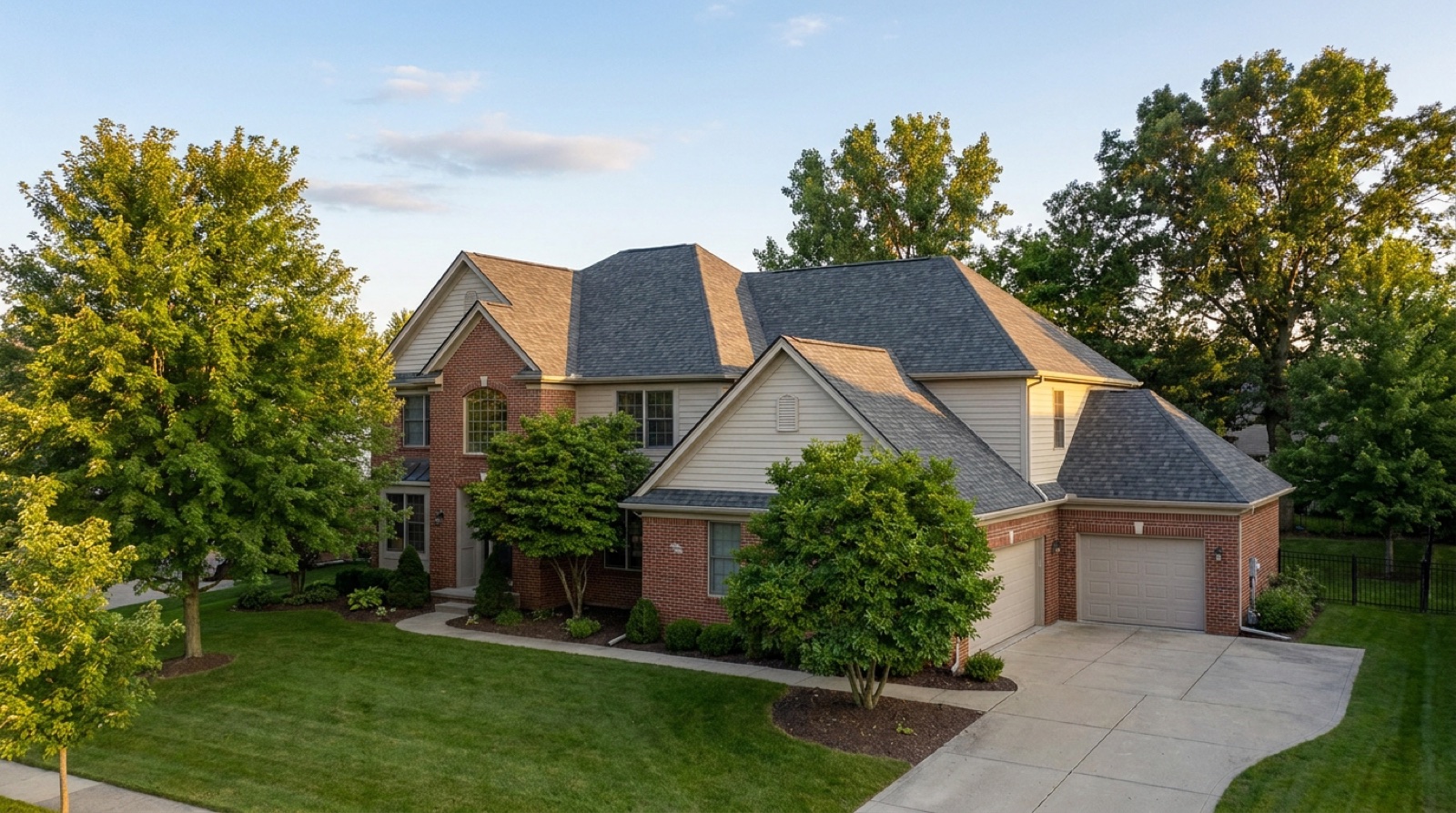
Attics offer exactly what a raccoon looking for a den wants: dry, warm, elevated above ground predators, and quiet during the day. Macomb County's tree cover gives raccoons an easy route to roof height without ever touching the ground near the house, and older soffit systems installed decades ago are often the weakest point in an otherwise solid roof, because the fasteners and channel have loosened over the years even where the shingles above are fine.
Spring is the season we see the most raccoon calls, when females are looking for a den to raise young, followed by a smaller rise in fall as animals look for winter shelter. A house that has never had an issue can suddenly have one the year a favorite tree comes down next door or a neighboring attic gets sealed up, pushing the local raccoon population to try the next roof over.
A few habits lower the odds of a raccoon ever testing your roof in the first place. Trimming tree limbs back from the roofline removes the easiest climbing route, a capped chimney keeps a wide-open flue from looking like a ready-made den, and gable and ridge vents with a screen behind the louver hold up to curious paws far better than an open vent. None of this guarantees a raccoon never tries, since a determined animal will test whatever is in reach, but it removes the easy invitations, and it costs far less than the repair that follows a successful break-in.
A roof that has already had one minor repair, or an older soffit system that was never upgraded when the shingles were last replaced, is more likely to give a raccoon the leverage it needs. That is why we look at the entire eave line during an inspection rather than just the reported entry point. A second soft spot a few feet away is often the reason the animal chose that side of the house in the first place, and it is worth finding before it becomes the next call.
04 / THE ORDER OF OPERATIONSConfirm before you seal
The single most common mistake homeowners make is sealing the visible hole the same day they notice it. If a raccoon is inside, especially a female with young, closing the opening does not solve the problem. It traps the animal, which will either tear a new hole to get out or die in the structure, and either outcome costs more than the delay would have.
Confirming the den is empty is wildlife work, not roofing work, and it is outside our lane. A one-way exclusion device, a listening check over a few nights, and in the right season a wait for young to be mobile enough to leave with the mother are standard approaches a licensed wildlife control operator will use. Michigan treats raccoons as a species with specific nuisance-removal rules, and the right operator will know the current guidance for your situation.
There is also a safety reason to leave the animal itself to a professional rather than handling it yourself. Raccoons can carry rabies and other diseases transmissible to people and pets, and a cornered or defensive animal, or one protecting young, is unpredictable at close range. That risk, more than the roofing work, is why this part of the job belongs to a licensed wildlife operator and not a homeowner on a ladder.
Our role starts once the structure is confirmed clear. At that point the job becomes what we do best: closing the opening permanently with materials that outlast another attempt, and repairing whatever the animal actually damaged getting in.
05 / THE REPAIRRepairing what a raccoon wrecks
A raccoon-proof repair is a heavier-gauge repair, because the same soft aluminum J-channel that failed once will fail again to a strong, determined animal testing the same spot. We typically step up the materials at any confirmed entry point rather than replacing like-for-like.
- Soffit panels: replaced full-bay to full-bay rather than patched, with the new panel secured into sound fascia and, where the damage was severe, backed with galvanized hardware cloth before the panel goes back on.
- Fascia: any wood fascia softened or split by repeated prying is replaced, since fasteners driven into compromised wood will not hold against another attempt.
- Torn shingle courses: the affected course is pulled back to sound material, the deck underneath is checked for water intrusion, and new shingles are woven in and resealed rather than caulked over the tear.
- Vent caps: replaced with a heavier gauge cap or one with an integrated screen, matched to the vent type so airflow is not restricted.
- Chimney and intersection flashing: re-secured and resealed if a raccoon used it as a climbing or entry point, since bent flashing is also a leak point the next time it rains.
Material matching is worth setting expectations on too. Aluminum and vinyl soffit coil stock changes color runs over the years, so a full-bay replacement blends better than a single-panel patch would, and we will tell you honestly if an exact match is not available before the work starts. The same is true of shingles pulled up at an intersection: we match as closely as current stock allows, but weathered shingles rarely match new ones perfectly, and a heavier-gauge vent cap may look slightly different from the one it replaces because it is doing a tougher job.
A repair that only patches the hole a raccoon made is a repair that assumes the raccoon, or the next one, will not try the same spot again. Ours assumes it will.
06 / THE CLEANUPAttic cleanup and the inspection that should follow
The repair to the exterior is only half the job. Insulation that was flattened, soiled, or displaced into a den footprint should be removed and replaced, since compressed or contaminated insulation no longer performs and is not something to leave in an occupied home's attic. This cleanup is typically handled by a wildlife or cleanup specialist rather than by a roofing crew, but it should happen before or alongside the roof-side repair, not months later.
Raccoon droppings deserve a note of caution rather than a DIY afternoon. A raccoon latrine in an attic can carry parasites that pose a real health risk if disturbed without the right precautions, which is one more reason cleanup is worth handing to a specialist with the correct protective equipment rather than shop-vacuuming it yourself. We stay in our lane on the roofing side: our part is confirming the deck and structure underneath are dry and sound once the cleanup crew has finished.
Once the entry point is closed and the den is cleared, a full inspection of the surrounding roof and attic is worth doing even if you think the damage was contained. Raccoons often test more than one spot before settling on an entry, and a second weakened area nearby is common. Our inspection covers the shingles, flashing, ventilation, soffit and fascia, and the attic side of the deck, and it is free with no obligation whether or not you end up needing repair work.
07 / THE FIXCost and getting it repaired
Raccoon damage falls under our standard roof repair service, priced the same way any other targeted repair is: by what actually needs replacing, not a flat call-out fee.
covers most raccoon-damage repairs in Macomb County, from a single soffit bay to a torn shingle course with flashing work. Larger or more extensive damage can run higher. See the full published ranges on our pricing page, or run your own numbers on the cost calculator.
The fastest way to get a real number is a free inspection, and you can start one from the online estimator in about 60 seconds. If the wildlife side of the job is still open, mention it when you call so we can coordinate around removal timing.
- Raccoons tear openings rather than chew them, and the damage is usually bigger and more structural than squirrel or bird entry.
- Never seal an entry point until a wildlife professional confirms the animal, and any young, are out.
- A durable repair uses heavier-gauge soffit, fascia, and vent materials at the confirmed entry point, not a like-for-like patch.
- Attic insulation flattened or soiled by a den should be replaced, and the surrounding roof should be inspected for a second weak point.
- Roof-side repairs for raccoon damage typically fall in the standard $350 to $3,200 repair range, and a free inspection gives you the real number.
Questions we hear most
Raccoons leave larger, torn damage, such as a peeled-back soffit panel or ripped shingle course, rather than the small gnawed hole squirrels leave. Raccoons are also heavier and louder, with activity concentrated at dusk and before dawn, and their droppings and den debris are noticeably larger than a squirrel's.
Not right away. Raccoons, especially females, often have young inside that are not visible from outside, and sealing the opening before a wildlife professional confirms the den is empty can trap animals inside. Confirm first, then repair.
Roof and soffit repairs from raccoon damage typically fall within our standard repair range of $350 to $3,200, depending on how much soffit, fascia, shingle, or flashing needs replacing. Larger or more extensive damage can run higher. A free inspection gives you a written price for your specific damage.
No. Confirming and removing the animal is wildlife control work, not roofing work, and we recommend a licensed wildlife operator for that step. Once the structure is confirmed clear, we handle the repair: closing the entry point with durable materials and fixing the soffit, fascia, shingles, or flashing the animal damaged.
- FEMA, disaster declaration DR-4757-MI, Michigan severe storms of August 2023 (Macomb County designated). fema.gov/disaster/4757
- Manufacturer technical and warranty literature for the major asphalt shingle lines: GAF (gaf.com), Owens Corning (owenscorning.com), and CertainTeed (certainteed.com).