
JUMP TO A SECTION
Stand under the edge of almost any older Macomb County roof and look up, and you will see two pieces of trim doing quiet, thankless work: the fascia, the vertical board the gutters hang on, and the soffit, the panel that closes off the underside of the overhang. When they are painted and sound, nobody thinks about them. When they are peeling, stained, or soft enough to push a finger through, they are usually the visible end of a water problem that has been running for a while, and they almost always show up on the to-do list at the same moment the roof does. This guide explains what soffit and fascia replacement costs, the material paths from a quick wood repair to a full aluminum or PVC wrap, and why the cheapest time to deal with either is while a crew is already on the roof.
01 / THE SHORT ANSWERWhat soffit and fascia work actually costs
Soffit and fascia replacement is not usually its own priced project the way a whole roof is. It is trim work that gets bid by the linear foot along the roof edges that need it, and on most homes it arrives as a line item riding alongside a roof replacement rather than a separate job. A full asphalt replacement in Macomb County runs $9,000 to $18,000 installed, with most homes landing $12,000 to $16,000, and wrapping or replacing the trim along the eaves usually folds into that number rather than doubling it. When soffit and fascia are handled on their own, without a roof in play, the work sits in repair territory, and repairs here run $350 to $3,200, with larger or rot-heavy runs climbing toward the top of that band.
is where most Macomb County asphalt replacements land, within a full range of $9,000 to $18,000, and refreshing the soffit and fascia along the eaves usually lives inside that band. Standalone trim work with no roof involved is a repair, and repairs run $350 to $3,200. Get your own ballpark in about 60 seconds with the instant estimator.
The honest headline is that the cost swings on two things: how many feet of trim are involved, and whether the wood behind it is sound or rotten. A tidy aluminum wrap over solid fascia is one price; tearing out soft, punky boards, replacing the wood, and then wrapping it is another. Because that hidden wood cannot be fully graded from the ground, the reliable number comes from a look at the edge up close, which is exactly what a free inspection produces. If you want the whole-job anatomy first, our roof replacement cost guide breaks the total into its parts, and edge trim is one of them.
02 / THE COMPONENTSWhat soffit and fascia actually are
These two words get used loosely, so it helps to be precise, because a bid that lists them separately is telling you something real about the scope. They are different parts, they fail for related but distinct reasons, and they are priced along different runs of the roof edge.
Fascia: the board the gutters ride on
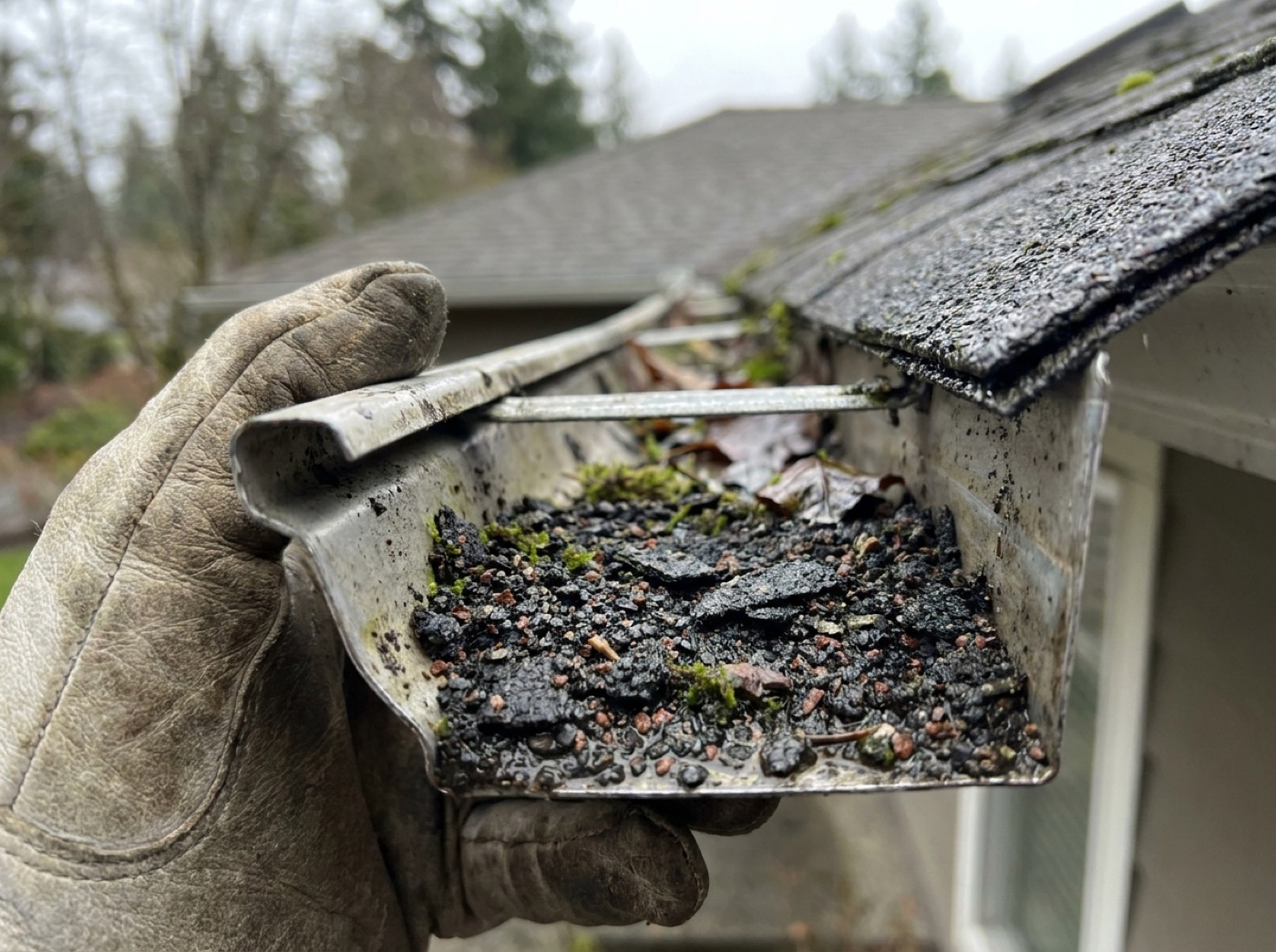
Fascia is the flat, vertical band that caps the ends of the rafters or trusses along the eaves, running horizontally just below the roof edge. It does two jobs: it gives the roof edge a finished line, and it provides the solid backing that your gutters are screwed into. That gutter connection is exactly why fascia rots. When a gutter clogs, sags, or overflows, water sheets down the back side of the fascia instead of running away from it, and the board stays wet through every freeze and thaw. Soft fascia is often the first honest sign that the gutters have been failing longer than anyone noticed.
Soffit: the underside of the overhang
Soffit is the panel that closes in the underside of the roof overhang, spanning from the fascia back to the wall of the house. On a well-built home it is not just a cosmetic cover: it is usually vented, either with perforated panels or discrete vent strips, so that fresh air can be drawn up into the attic at the eaves. That intake air is half of the ventilation system that keeps a Michigan attic and roof deck cold and dry in winter. Soffit fails when water gets behind it from a leaking roof edge or an overflowing gutter, when insects or animals work into a soft corner, or simply when old painted wood or hardboard finally gives up after decades of humidity cycling through it.
The short version: fascia is the face, soffit is the ceiling of the overhang, and gutters hang off the fascia while intake ventilation breathes through the soffit. A leak or a bad gutter tends to damage both at once, which is why the two words almost always appear together on an estimate.
03 / THE CAUSESWhy Macomb County edges rot when they do
Southeast Michigan is hard on roof edges in a specific way, and understanding the pattern explains both the cost and the timing of the fix. The overhang is where water, ice, and gravity all concentrate, and it is the part of the roof that a homeowner can most easily see going wrong from the driveway.
Gutters and ice at the eaves
The eave is where our winters do their damage. When attic heat melts the underside of the snowpack and the water refreezes at the cold roof edge, it builds an ice dam, and the ponded water behind it works back under the shingles and down onto the fascia and soffit. Add a gutter packed with ice or leaves and the water has nowhere to go but into the wood. This is the same freeze-thaw cycle that drives so much edge damage in the county, and it is why the trim at the eaves usually goes before the trim on a gable end. If you are seeing this pattern, the fix at the roof edge is connected to the ice barrier and ventilation work covered in our broader guides.
A leak that traveled to the edge
Not all edge rot starts at the edge. Water that entered higher up, through a failed valley, a cracked pipe boot, or old flashing, runs down the underside of the deck and can surface at the overhang, quietly soaking the fascia and soffit from behind long before a ceiling stain appears inside. This is the same buried mechanism that destroys roof decking, and it is why edge trim and deck damage so often show up on the same bid. Our guide on the cost to replace roof decking covers how these hidden water problems surface once a crew opens the roof up.
The missing drip edge
One quiet culprit is a roof that was built or reroofed without a proper drip edge, the metal flashing that directs runoff off the roof and into the gutter instead of behind it. When that piece is missing or was skipped on a bargain job, water is free to curl back onto the fascia at every rain, and the board pays for it over the years. If your fascia is rotting and you want to understand the cheap component that was supposed to prevent it, read our drip edge installation cost guide, because installing it correctly on the new roof is part of making sure the fresh trim lasts.
04 / THE MATERIALSThe three material paths and what they cost
Most of the price difference between one soffit and fascia quote and another comes down to which of three approaches the job calls for. Knowing them helps you read a bid and understand why a repair on one house costs a fraction of the work on another.
Wood repair and paint, the minimum path
If only a short run of fascia is soft, the leanest fix is to replace the bad wood with new dimensional lumber, prime it, and paint it to match. This is the cheapest per-foot option in materials, and on a small stretch it lands at the low end of the repair range. Its weakness is the future: bare painted wood at the roof edge is exactly what rotted in the first place, so unless the cause, usually a gutter or a missing drip edge, is fixed at the same time, painted wood buys you time rather than a permanent answer. It is the right call for a limited area on a home that is otherwise dry.
Aluminum wrap over sound wood, the common path
The most common approach in the county is to keep or replace the wood fascia and then wrap it in aluminum trim coil, a painted metal skin bent to fit the board, paired with vented aluminum soffit panels underneath. The wrap seals the wood from weather and never needs repainting, which is why so many homeowners choose it when the roof is being done. The material itself is moderate in cost; the labor of bending, fitting, and fastening the coil cleanly is where the skill and the price live. Done well, an aluminum wrap is the finish most people picture when they imagine a crisp, low-maintenance roof edge.
PVC and composite, the premium path
The upgrade tier is solid PVC or composite trim, which does not rot, does not need paint, and carries a heavier, more substantial feel than a wrap over wood. It costs more per foot in material than either wood or aluminum wrap, and it is the choice for homeowners who want the edge handled once and never revisited, or who have had repeat rot problems and want to end them. On most Macomb County reroofs the practical decision is between aluminum wrap and PVC, and a good contractor will lay out the trade honestly: wrap for value, PVC for permanence, with the labor difference between them usually smaller than the material difference.
Whichever path you choose, the single most important detail is not the material but whether the cause was addressed. New trim over a still-overflowing gutter or a still-missing drip edge will rot again on the same schedule the old trim did. The material choice sets the finish; fixing the water is what sets the lifespan.
05 / THE MATHHow the price is actually figured
Soffit and fascia are priced by the linear foot of edge that gets worked, and a clean bid separates the two runs because they are not always the same length or the same scope. Fascia runs along the eaves and rakes where the gutters and roof edge live; soffit runs along the underside of the overhangs, which on a house with deep eaves is a wider surface than the fascia line. A quote adds up the feet of each, applies a per-foot installed rate that folds in the material, the labor to remove the old trim, and the fastening of the new, and totals it out.
We are deliberately not printing a hard per-foot dollar figure on this page, because material pricing moves and the labor share depends heavily on access. What drives your number is a short list you can reason about yourself. Length is the obvious one: a small ranch has far less edge than a rambling two-story with cut-up eaves. Height and access matter next, because trim on a walk-out second story needs staging and slower, safer work than a single-story overhang a crew can reach from a ladder. Hidden rot is the wildcard: if the fascia board behind the old wrap is sound, the crew wraps and moves on, but if it is punky, the wood has to come out and be replaced first, which is more material and more labor. And material tier, wood versus aluminum wrap versus PVC, sets the per-foot rate before any of the above.
How does this land on the whole job? A normal amount of trim refresh along the eaves of a typical home usually disappears into the $9,000 to $18,000 replacement range without moving your total in a way you will feel. It is when a house has long, high runs of badly rotted fascia, or full soffit replacement around every overhang, that the trim line grows into real money and can push a bid toward the upper part of its range. As with decking, the size of the add scales directly with how much wood went bad, which is a function of how long the water was allowed to work.
The tempting shortcut on a lowball job is to wrap fresh aluminum over fascia that is already soft, hiding the rot behind a clean metal face. It looks perfect on the day and keeps rotting underneath, out of sight, until it fails. A sound bid says whether the wood behind the wrap will be replaced or reused, and an honest crew presses on the boards to find out. If a quote is silent on the condition of the wood under the trim, ask, because a wrap is only as good as what it is wrapping.
06 / THE TIMINGWhy this work rides best on a roof replacement
The economic heart of this page is simple: soffit and fascia are cheapest to handle when a crew is already at the roof edge for the reroof. The overhang is the exact zone a roofing crew works through anyway, the staging and ladders are already set, and the drip edge, ice barrier, and gutter connections are all being touched during a replacement. Doing the trim in that same window means you pay once for access instead of twice.
Handled as a separate project later, soffit and fascia work carries its own mobilization: a crew, ladders or staging, and a minimum charge that exists whether the run is long or short, the same economics that make a standalone garage roof cost more per square than the house. That separate trip is money spent on setup rather than on your home. Folding the trim into the roof bid avoids that duplicate cost, which is one reason the honest advice is almost always to fix the edge while the roof is open rather than to defer it and pay the access charge twice. Our guide on the hidden costs of a roof replacement makes the same point about the edge work that quietly surfaces once a bid gets serious.
There is a ventilation reason to keep the two together as well, and this is where the intake side of the system matters. Vented soffit is the intake half of attic ventilation: fresh air enters low at the eaves and exhausts high at the ridge, keeping the deck cold and even so the roof does not age from below or breed ice dams above. If a reroof adds or improves ridge exhaust but the old soffit intake is painted shut, blocked, or being replaced with a non-vented panel, the system is only half connected. Sorting the soffit at the same time as the roof is how the intake and exhaust get balanced as one job. The ventilation science itself belongs in our building guides; here the point is only that the soffit is part of that system, and the reroof is the moment to get it right.
Soffit and fascia are not a separate roof. They are the edge of the one you are already replacing, and the cheapest time to fix an edge is while a crew is standing on it.
07 / THE REAL NUMBERGetting your actual price, free
Everything above narrows the range. Only one thing produces your real number: someone at the roof edge, checking the wood behind the trim before any work starts. Our inspection is $0 with no obligation, and it reads the shingles, the flashing, the ventilation, the gutters, and the condition of the fascia and soffit at the eaves, with photos of what we find, then puts the trim work in writing alongside the whole-job quote. If the boards are sound and only need a wrap, we tell you that. If the wood behind them is gone, you know before you sign, not after the old trim comes down.
A word on order of operations, because it saves real money. Edge rot is progressive: fascia that costs a few feet of repair this year keeps drawing water into the soffit, the deck, and eventually the wall framing if the gutter or drip edge that caused it is never fixed. The cheapest trim bill is the one you head off by correcting the water and doing the edge while the roof is being replaced anyway. If you are weighing whether to act now, that math is the whole point of the roof replacement service and its free inspection. You can also price a full replacement with the edge work accounted for through the estimator, the cost calculator, or our published honest pricing sheet.
- Soffit and fascia are edge trim priced by the linear foot, and on most homes the work rides on a roof replacement of $9,000 to $18,000 rather than being quoted as its own project.
- Standalone trim work with no roof involved is a repair, and repairs in Macomb County run $350 to $3,200 depending on length and rot.
- Fascia holds the gutters and rots when they overflow; vented soffit is the attic intake and fails from leaks, ice, or age.
- The three material paths are wood repair for value, aluminum wrap for a low-maintenance finish, and PVC or composite for permanence, but fixing the water matters more than the material.
- Doing the trim while the roof is open avoids paying a second mobilization later; the exact number comes from a free inspection, and ours is $0 with no obligation.
Questions we hear most
Soffit and fascia are priced by the linear foot and most often ride on a roof replacement rather than being quoted alone. A full asphalt replacement in Macomb County runs $9,000 to $18,000, and refreshing the trim along the eaves usually fits inside that range. Standalone trim work with no roof involved is a repair, which runs $350 to $3,200, with larger or rot-heavy runs toward the top. The firm number comes from a free inspection.
Usually yes, because the crew is already working at the roof edge and the staging, ladders, and gutter connections are all in play during a reroof. Handled as a separate job later, the work carries its own mobilization and minimum charge, so you pay for access twice. Doing it together also lets the roofer balance the soffit intake with any new ridge exhaust so the ventilation works as one system.
Fascia is the vertical board along the roof edge that your gutters hang on, and it tends to rot when gutters overflow and soak it from behind. Soffit is the panel that closes in the underside of the overhang, and it is usually vented to draw fresh air into the attic. A leak or a bad gutter often damages both at once, which is why they almost always appear together on an estimate.
- Macomb Roofing Pros 2026 price canon, installed ranges by system: asphalt $9,000 to $18,000 (most homes $12,000 to $16,000), repairs $350 to $3,200 (larger or complex can run higher).
- FEMA, disaster declaration DR-4757-MI, Michigan severe storms of August 2023 (Macomb County designated). fema.gov/disaster/4757
- Fixr, asphalt shingle roof cost guide: 2026 national installed range roughly $8,000 to $16,000, average near $12,000. fixr.com: asphalt roof cost
- Michigan Residential Code 2015, section R806 Roof Ventilation: minimum net free ventilating area of 1/150 of the vented space, reduced to 1/300 where listed conditions are met. up.codes: MRC chapter 8