
JUMP TO A SECTION
Most winters, a snow-loaded roof is doing exactly what it was engineered to do: sitting there, quietly holding weight, the way it has every winter before. Our roof snow load guide covers why that is true for the overwhelming majority of Macomb County houses in an ordinary season. This guide is about the exceptions: the handful of signs that mean a specific roof, on a specific house, has crossed from carrying a normal load into carrying a structurally significant one.
None of these signs are subtle if you know to look for them, and none of them should be shrugged off as "just an old house settling." A house that has stood for decades does not suddenly start cracking, sticking, or sagging in the same winter unless something changed, and a heavy or oddly distributed snow load is one of the more common somethings. This is a checklist, not a scare tactic: most homes that get an inspection after noticing one of these signs turn out fine. The point is to know which signs justify getting a professional look quickly, and which ones mean get people out of the room first and ask questions second.
01 / THE SHORT ANSWERWhat separates a normal winter from a warning sign
A roof built to Michigan Residential Code carries its design snow load with margin to spare, and a code-built structure flexes slightly under load the way any engineered structure does. That flex is invisible day to day. The five signs below are not that normal flex. They are evidence that the load, the structure's ability to carry it, or both, have moved outside the range the house was designed for, whether from an unusually heavy snowpack, a drift that concentrated weight in one spot, or age and moisture that quietly weakened a truss or rafter years before this winter arrived.
If you notice a loud cracking sound followed by a visibly sagging ceiling, or any sign that a structural member has actually given way, get everyone out of the room and the area below it immediately, and call for help. That scenario is rare, but it is the one case on this page where you act before you read the rest of it.
02 / THE WALLSNew cracks in ceilings and drywall
Houses develop hairline drywall cracks for all kinds of reasons that have nothing to do with the roof: seasonal humidity swings, a house settling on its foundation over years, or a door that gets slammed one too many times. What is different about a load-related crack is timing and shape. A crack that appears or visibly widens during or right after a heavy snow event, that runs along a ceiling near an exterior wall or a ridge line, or that opens at a corner where two ceiling planes meet, is worth treating differently than the same hairline crack that has been sitting in a hallway wall for years unchanged.
What the crack is telling you
Drywall is rigid and brittle compared to the wood framing behind it, so it is often the first material to show visible distress when a roof structure deflects even slightly more than usual under an unusual load. The drywall is not the problem; it is the messenger. A new crack means something behind it moved, and the job of an inspection is to find out whether that movement was a one-time reaction to a single heavy storm or a sign the structure is under ongoing stress.
03 / THE FRAMESDoors and windows that suddenly stick
A door or window that has opened and closed easily for years and then, in the middle of a heavy snow season, starts binding, sticking, or no longer latching cleanly, is showing you a frame that has racked slightly out of square. Door and window frames are set plumb and square when a house is built, and they stay that way as long as the structure around them stays in the same shape. When roof framing deflects downward under an unusual load, it can pull on the top plates and wall framing just enough to rack a nearby door or window frame a few millimeters, which is more than enough to make a door that used to swing free start catching on the strike plate.
One sticking door in an old house, by itself, usually just means an old house. Several doors or windows sticking at the same time, especially ones near each other or under the same section of roof, and especially if the sticking appeared this winter and was not there last year, is a pattern worth mentioning when you call for an inspection.
04 / THE VISUAL TESTA ridge or ceiling you can actually see sag
This is the most serious sign on this list, because by the time a sag is visible to the naked eye, the deflection is no longer subtle. From the ground or the street, sight down the ridge line of the roof and compare it to a straight edge; a ridge that dips visibly between the ends, rather than running straight, is not normal in a house that has not shown that dip before. Inside, the same test works on a ceiling: sighting across it, or holding a long straight board or a taut string against it, will reveal a bow that is easy to miss just by looking up at it directly.
| WHAT YOU SEE | LIKELY MEANING | WHAT TO DO |
|---|---|---|
| Ridge line looks straight from the street | Normal, no visible deflection | No action needed beyond routine winter watching |
| Ridge line shows a visible dip or wave | The roof structure is deflecting under load | Get an inspection promptly, before the next snow adds to it |
| Interior ceiling visibly bows between walls | Deflection has progressed enough to be visible indoors | Get people clear of that room and call for an inspection right away |
A sag that appeared this winter and was not there last year is different from a slight, long-standing wave in an older roof that has looked that way for decades; the second is a structural conversation for your own peace of mind, not necessarily an emergency. The first, especially paired with any of the other signs on this list, is not something to wait on.
05 / THE SOUNDSCreaking, popping, and cracking sounds
Houses make noise in cold weather normally. Wood and metal contract as temperatures drop, and a house settling into a hard cold snap will pop and tick as materials shrink, the same way our subzero cold snap guide describes for the framing and attic in general. What is different under an unusual snow load is a new sound, specifically a loud, sharp crack rather than the softer ticking of thermal contraction, especially one that coincides with a heavy snowfall rather than a temperature swing, and especially one that repeats or gets louder over hours or days rather than happening once and going quiet.
Sound alone is hard to diagnose over the phone, which is exactly why we ask about it during an inspection call. A single loud pop during a cold snap, with nothing else on this list present, is very often just the house doing what houses do in January. The same sound paired with a new crack, a sticking door, or a visible sag is a different situation entirely, and the combination is the useful signal, not any one sign in isolation.
06 / THE ATTICBowed truss members in the attic
The attic is where you can see the structure itself, not just its symptoms downstream in the drywall. Trusses and rafters are engineered to carry load in specific directions along their length; the top chord (the sloped member under the roof deck), the bottom chord (the horizontal member the ceiling hangs from), and the web members that triangulate between them are all sized for compression or tension in a straight line. A member that has bowed visibly out of that straight line, particularly a web member or a bottom chord that now curves where it used to run flat, is showing you that it is under more stress than it was designed to carry comfortably.
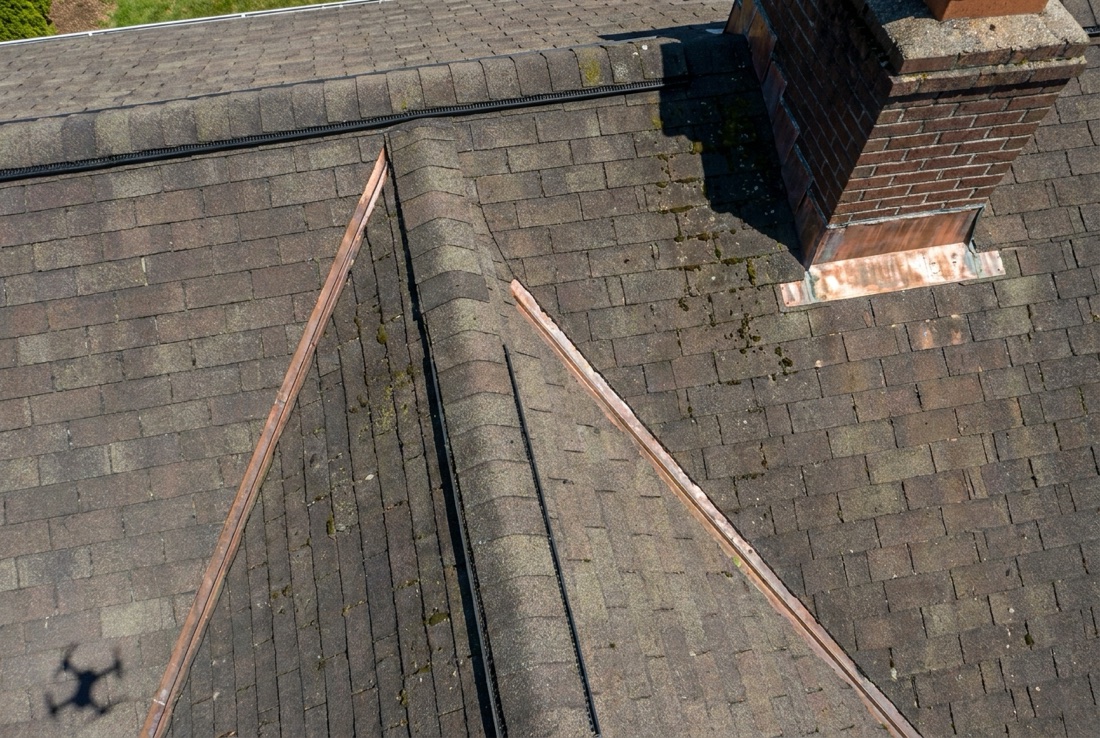
A flashlight and a few minutes in the attic, sighting down the length of each truss member, is something a homeowner can do safely from a stable attic floor without walking out onto insulation or ceiling drywall that will not hold weight. Look for members that curve rather than run straight, gaps that have opened at a connector plate where two members meet, or a bottom chord that appears to sag below where the ceiling drywall it supports actually sits. Any of those is worth a professional look before the next snow adds more weight to a member that is already working harder than it should be.
07 / THE THRESHOLDWhen to get people out, and when to schedule a look
These five signs are not all the same urgency, and treating them that way either causes needless panic or, worse, needless delay. Here is how we sort them when a homeowner calls.
One sign by itself is usually a conversation. Two or three signs at once, especially a sound plus a sag, is a phone call you make before you finish reading the rest of this list.
For the routine and scheduled cases, the next useful step is usually just getting eyes on the roof and the attic before the next storm adds to whatever load is already there; our guide on when to remove snow walks through the decision between waiting it out and having it cleared, and safe removal itself is always ground-based raking, never a homeowner walking a snow-loaded roof. Uneven loading is often the real driver behind these signs in the first place, which is exactly what our snow drift guide and porch and low-slope roof guide cover in more depth, since additions and porch roofs tend to show these signs before the main house does.
For the urgent cases, do not wait for a scheduled visit. We offer 24/7 emergency tarping to address active water intrusion tied to a stressed roof, and our inspection is $0 with no obligation whether the news turns out to be reassuring or not. If the roof does need structural work or a full replacement, most Macomb County asphalt jobs run $9,000 to $18,000, with most homes landing $12,000 to $16,000; the instant estimator and cost calculator use those same published ranges if you want a ballpark before anyone visits. A full look at the load side of this question is in our snow load guide, and the rest of the winter-science lane is at /roofing/guides/.
- A code-built Macomb County roof carries a normal winter's snow without complaint; these signs mean the load or the structure has moved outside that normal range.
- New drywall cracks, doors and windows that suddenly stick, and a visible ridge or ceiling sag are the most common warning signs, and timing this winter versus years ago is the key detail.
- A loud crack followed by any visible sag or movement means get people out of the area and call for help immediately, not schedule a visit for next week.
- A flashlight check of attic trusses for bowed members, from a stable attic floor, is something a homeowner can safely do and is worth doing after any unusually heavy snow event.
- One sign alone is often routine; two or more together, especially a sound paired with a sag, justifies an inspection right away, and ours is $0 with no obligation.
Questions we hear most
Yes, some creaking and popping from thermal contraction of wood and metal is normal in cold weather and is not, by itself, a sign of a snow load problem. What is worth attention is a new, loud crack that coincides with a heavy snowfall rather than a temperature swing, especially if it repeats or is paired with a new crack, a sticking door, or a visible sag.
Stand on a stable attic floor or walkway, never on insulation or ceiling drywall, and use a flashlight to sight down the length of each visible truss member. Look for a member that curves rather than runs straight, a gap opening at a connector plate, or a bottom chord sagging below the ceiling it supports. If you see any of that, or are not comfortable checking it yourself, a free inspection covers the attic as part of the visit.
Get everyone out of that room and the area directly below it immediately, then call for help. That combination, a loud structural sound paired with visible movement, is the one scenario on this page where the right move is to act first and sort out the cause afterward. It is rare, but it is not something to wait out.
- Michigan Residential Code, 2015 edition, adopted with Michigan amendments by the LARA Bureau of Construction Codes, in effect since February 8, 2016. michigan.gov/lara: code books
- FEMA, disaster declaration DR-4757-MI, Michigan severe storms, tornadoes, and flooding of August 24 to 26, 2023 (Macomb County designated; declared February 8, 2024). fema.gov/disaster/4757