
JUMP TO A SECTION
Almost nobody notices attic baffles, and that is exactly the point. A baffle is a rigid channel, usually corrugated cardboard, molded foam, or thin plastic, wedged between two rafters at the eave, and its entire job is to hold open a thin airspace that would otherwise disappear the moment insulation gets added. It is one of the cheapest components in the whole roof and attic system, and it is also one of the most commonly missing or crushed, which is a large part of why the same houses ice up at the eaves winter after winter no matter how much insulation gets piled on the attic floor.
01 / THE COMPONENTWhat a baffle actually does
Balanced attic ventilation depends on a continuous path: outside air enters low, at the soffit, travels up along the underside of the roof deck, and exits high, at the ridge or through gable and roof vents, carrying escaped heat and moisture out with it. Our balanced attic ventilation guide covers why that intake-to-exhaust split matters. A baffle is the piece of hardware that keeps the first leg of that path physically open at the exact spot where it is most likely to get pinched shut: the narrow bay between rafters right where the attic floor meets the eave.
Picture the underside of the roof deck at the point it meets the top of the exterior wall. Insulation on the attic floor needs to run as deep as possible right out to that wall line for good thermal performance, but the moment insulation reaches all the way up against the roof deck at the eave, it seals off the soffit vent below it from the open attic above it. A baffle is simply a stiff shield stapled to the underside of the deck and the sides of the rafters that keeps a clear air channel above wherever the insulation ends up, so intake air can still climb past the insulation and reach the open attic space instead of dead-ending in it.
A baffle is not there to insulate anything. It is there to guarantee that no matter how deep the insulation gets piled on top of it, a clear air channel still runs from the soffit vent to the open attic above. Ventilation only works if that channel stays open every single bay, all the way around the eave.
02 / THE FAILURE MODEWhy insulation alone suffocates an attic
Loose-fill insulation, whether blown cellulose or fiberglass, does not stay exactly where it lands. It settles, it gets disturbed by attic traffic, and installers working quickly from a hose several feet away cannot always see precisely where it is piling up in a dim eave that may be only a few inches tall. Batt insulation has the opposite problem: it gets pushed in by hand to fill every visible gap, including the gap that was supposed to stay open for airflow, because an unbaffled bay just looks like uninsulated space that needs filling.
Either way, the result at the eave is the same. Insulation piles directly against the underside of the roof deck, right over the soffit vent, and the intake side of the ventilation system goes dead in that bay. Air can no longer travel from the vent hole into the open attic, even though the vent hole itself, seen from outside the house, still looks perfectly clear. That is the trap: a homeowner can stand in the yard, see open soffit vents along the whole eave, and have no idea that half of them are choked off a few inches behind the vent hole by insulation with nowhere else to go.
A starved intake does not just reduce airflow a little. Our guide to chronic ice dams lists blocked soffit intake as one of the most common reasons a house keeps damming every season despite raking, cabling, and even a full reroof. Exhaust vents at the ridge cannot pull outside air through a bay that has no open path to them, so instead they pull warmer, moister air sideways from neighboring bays or up from the living space through any bypass they can find, which defeats the purpose of adding exhaust capacity in the first place.
03 / THE TWO-PIECE FIXBaffles plus dams, not baffles alone
A properly detailed eave actually uses two small pieces working together, and skipping either one leaves an opening for insulation to find its way back into the airflow path. The first piece is the baffle itself, the rigid chute running several feet up the underside of the deck from the top of the exterior wall, holding the air channel open along the full length of that rafter bay. The second piece is an insulation dam, a small vertical stop set right at the top plate of the wall, whose only job is to hold loose-fill insulation back from the soffit vent opening itself so it cannot slide or drift down into the vent hole before it ever reaches the baffle above it.
Skip the dam and keep only the baffle, and loose-fill insulation can still bury the vent opening at the very bottom of the bay, even though the channel higher up stays technically open and unreachable. Skip the baffle and keep only the dam, and insulation piled deep on the attic floor can still slump up against the roof deck further along the rafter bay, closing the channel a foot or two past where the dam is doing its job. The two pieces solve two different failure points in the same few feet of framing, which is exactly why the fix is described as baffles plus dams rather than either term alone.
Done correctly, the pair lets a homeowner insulate the attic floor as deep as the budget and the code target call for, right out to the exterior wall, without sacrificing a single bay of intake ventilation to get there. That is the whole point: depth of insulation and openness of airflow are not supposed to be a tradeoff, and a baffle and dam set is the hardware that keeps them from becoming one.
04 / TIMINGRetrofit now, or wait for a reroof
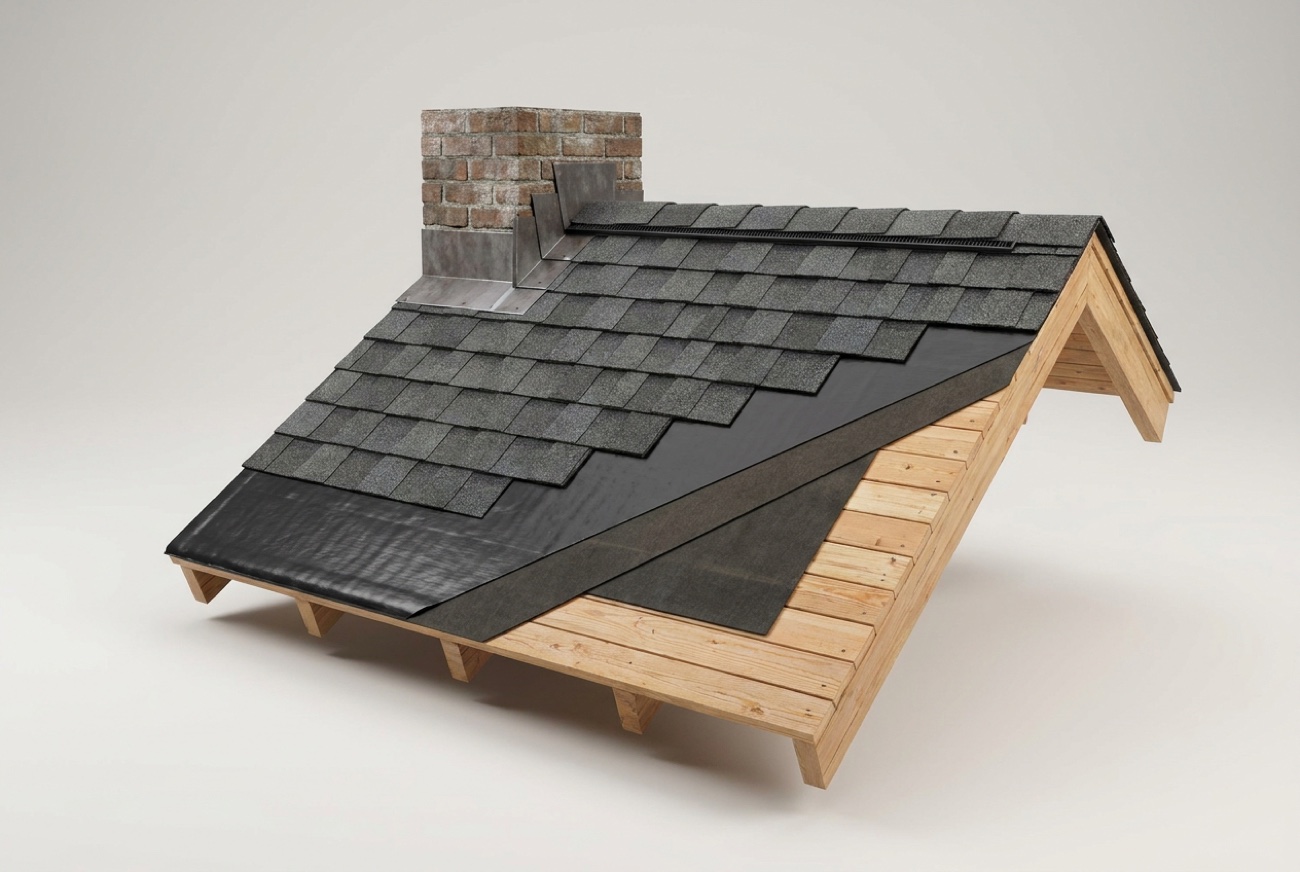
Baffles live entirely on the attic side of the roof deck, so adding or correcting them does not actually require tearing off shingles, which is good news for anyone diagnosed with a blocked eave outside of a reroof project. A retrofit means getting into the attic at the eaves, a tight and often cold or dusty crawl, pulling back whatever insulation has already drifted into the bay, stapling a baffle to the deck and rafters, setting an insulation dam at the top plate, and then putting the insulation back without letting it creep past the dam again. Most homes need this done bay by bay around the full perimeter, since a blockage in one rafter bay says nothing about whether its neighbors are also blocked.
A full roof replacement does not touch the underside of the deck directly, but it is still the natural moment to bundle a baffle correction in, because a reroof is usually already the point where ventilation gets a hard look: adding a ridge vent, correcting undersized intake, or resolving a chronic ice dam a homeowner has decided to finally settle for good. Handling attic-side baffle work in the same season as the roof work means one attic visit and one set of photos instead of two separate service calls months apart. Neither path is wrong on its own; the honest answer is that baffles get fixed whenever the blockage is diagnosed, and a reroof is simply a convenient time to fold it into the same project.
05 / THE TELLSSigns your eaves are already blocked
A blocked eave rarely announces itself directly, but a handful of signs tend to show up together on the houses that have one. Insulation visibly packed tight against the underside of the roof deck at the very edge of the attic, with no gap of open air above it, is the clearest tell once you are actually up there with a flashlight. Frost or dark staining on the deck near the eave in cold weather often means moist air is lingering in that bay instead of moving through it. Soffit vents that look clean and open from the ground but show cobwebs or dust undisturbed when you check them from inside the attic are a sign air simply is not passing through that opening anymore.
- Insulation pressed flat against the roof deck at the eave, with no visible airspace above it
- Frost, dampness, or dark staining on the deck near the perimeter of the attic in winter
- Soffit vent holes that look clear outside but show no dust movement or airflow when checked from inside
- Ice dams that return to the same one or two stretches of eave every winter regardless of raking or cables
- Musty, warm attic air even on a cold day, suggesting exhaust vents are pulling from somewhere other than the soffits
Any one of these on its own is worth a look. Several together, especially paired with an ice dam that shows up at the same stretch of eave every year, are the pattern our chronic ice dam guide walks through as one of the more common root causes once the obvious answers, like attic air leaks and thin insulation, have already been checked.
06 / THE FIXGetting it corrected right
Checking baffles is part of what a thorough attic inspection covers, alongside insulation depth, air sealing at the obvious bypasses, and the balance between intake and exhaust venting. Our inspection is $0, no obligation, and it includes the attic side of the deck specifically because so many ventilation problems are invisible from the roof surface or the yard. If the eaves are blocked, we will tell you which bays and show you photos, rather than a generic recommendation to add more roof vents that will not fix a soffit that cannot feed them air in the first place.
If you are planning a reroof anyway, this is worth raising before work starts so the ventilation correction and any baffle work can be scoped into the same project instead of scheduled separately. You can see where a full replacement lands on your house with the 60-second cost calculator, which uses the same published ranges as our pricing page, or start either conversation directly through the instant estimator.
- A baffle is a rigid channel that keeps an open air path from the soffit vent to the attic above it, no matter how deep the insulation gets.
- Loose-fill and batt insulation both tend to drift or get pushed against the roof deck at the eave, quietly sealing off intake air even while the vent hole outside still looks open.
- The real fix is baffles plus insulation dams together: the dam keeps insulation off the vent opening itself, and the baffle keeps the channel open further up the rafter bay.
- Baffle work lives entirely on the attic side, so it can be retrofitted any time a blockage is found, though bundling it with a reroof means one attic visit instead of two.
- Insulation packed tight against the deck at the eave, frost or staining near the perimeter, and an ice dam that returns to the same stretch of roof every year are the signs worth an inspection.
Questions we hear most
A baffle is a rigid channel, usually cardboard, foam, or plastic, installed between rafters at the eave to hold open an airspace above the insulation. It lets air keep moving from the soffit vent into the open attic even after insulation is added to the attic floor, which is what keeps balanced ventilation working in the bays nearest the eave.
Once insulation piles directly against the underside of the roof deck at the eave, the soffit vent behind it can no longer feed air into the attic, even though the vent opening still looks clear from outside. That starves the intake side of the ventilation system, which can leave warm, moist attic air with nowhere to flush out and is one of the common reasons ice dams keep returning to the same section of eave every winter.
Yes. Baffles and insulation dams are installed from inside the attic, not from the roof surface, so correcting a blocked eave does not require tearing off shingles. It can be done as its own attic retrofit, or bundled into a reroof project if one is already planned, since a reroof is often when ventilation gets addressed anyway.
- ENERGY STAR (U.S. EPA/DOE), recommended home insulation R-values: R-49 to R-60 for attics in climate zone 5, which covers southeast Michigan. energystar.gov: insulation R-values
- Michigan Residential Code 2015, section R806 Roof Ventilation: minimum net free ventilating area of 1/150 of the vented space, reduced to 1/300 where listed conditions are met. up.codes: MRC chapter 8
- Manufacturer technical and warranty literature for the major asphalt shingle lines: GAF (gaf.com), Owens Corning (owenscorning.com), and CertainTeed (certainteed.com).