
JUMP TO A SECTION
Some Macomb County homeowners do everything right every winter and still watch the same ridge of ice build in the same spot on the roof. They rake, they run heat cables, some pay to have a dam steamed off mid-season, and the ceiling stain from two winters ago has barely faded before a new one starts. If that describes your house, the yearly routine is not the problem. Something specific in the attic has never been fixed, and it keeps producing the same dam in the same place because the same heat keeps escaping to the same spot every year. This guide is a diagnostic, not a repeat of the basics: the five causes we see most often behind a chronic, recurring dam, in the order we would actually check them on a real house.
01 / THE SHORT ANSWERA recurring dam means a permanent cause, not bad luck
If a dam forms in the same location year after year despite stopgaps, the cause is almost always one specific, fixable defect rather than simply an old house or a bad winter. Raking and heat cables treat where the ice ends up, not why the roof deck over that one spot keeps running warmer than the roof around it. A house does not grow a new ice dam problem each winter. It has one unresolved heat leak, or one blocked airflow path, that produces the same result every time the weather cooperates. For the full physics of how a dam forms in the first place, see our ice dams overview.
Chronic ice dams are not a sign you need to try harder every winter. They are a sign one attic defect never got fixed, and once you find and correct it, most homes see the dam simply stop coming back.
The order below reflects how often each cause turns out to be the real answer when we get into an attic that dams every year. It starts with the most common culprit and moves to the ones that show up less often but are just as persistent once they are the cause.
02 / THE USUAL SUSPECTSFive causes, in the order we would check them
Every one of these lets warm, moist household air reach the underside of the roof deck at the exact spot where the dam keeps forming. Finding which one applies to your house is the difference between another season of stopgaps and actually ending the cycle.
1. Unsealed bypasses that were never fully sealed
This is the most common cause by a wide margin. A previous air-sealing effort, if one ever happened, rarely catches every gap. Recessed lights, an attic hatch with a thin or missing gasket, a bath fan housing, and the top of an interior chimney chase are the usual holes, and even a partial seal job can leave the one bypass that happens to sit directly above the eave that dams. Our attic air leak guide covers the specific spots that leak on Macomb County homes and how we find them with a flashlight-and-frost check on a cold morning.
2. Insulation that has thinned, settled, or slumped
Insulation that was adequate when it was installed can settle over the years, and loose-fill insulation in particular compresses and loses depth, especially near the eaves where the roof pitch limits how much fits in the first place. A section running at a fraction of its original depth loses a proportional share of its resistance to heat, and if that thin spot sits right where the dam forms, it is doing less work than the insulation ten feet away, every single winter.
3. Blocked soffit intake choking the ventilation
Ridge vent and soffit vents only work as a system, and insulation that has slumped or was blown in without baffles can bury the soffit intake entirely. Once intake air stops moving, the exhaust at the ridge has nothing to pull from outside and can start pulling air from the house instead, which drags warm, moist air straight into the attic rather than flushing it out. A roof that looks properly vented from the outside can still have a dead airflow path at the eave.
4. Ducts or exhaust fans dumping heat into the attic
Bathroom exhaust fans that vent into the attic instead of straight outside, and heating ducts that run through an unconditioned attic with poorly sealed joints, both add concentrated heat and moisture to one specific area rather than spreading it evenly across the attic floor. A duct joint or a fan outlet sitting near a problem eave can produce a dam that forms faster and lasts longer than the rest of the roofline, because the heat source is steadier than a small air leak.
5. Knee-wall geometry on split-levels and capes
Homes with knee walls, the short vertical walls behind a finished attic or bonus room, create a small unconditioned space behind each wall that is easy to under-insulate and hard to ventilate correctly. Heat leaks through the knee wall itself and through the floor above it, warming a section of roof deck that often has less airflow behind it than the main attic. A dam that keeps forming over a bonus room or finished attic space points toward this cause more often than the others.
- Where on the roofline the dam forms and how far it has spread this season
- Whether insulation depth is even across the attic floor or thin in one section
- Whether soffit intake is open, buried, or blocked by slumped insulation
- Whether any duct, bath fan, or kitchen exhaust vents into the attic instead of outside
- Whether the home has knee walls and how well the space behind them is sealed and insulated
03 / THE STOPGAP TRAPWhy raking, cables, and steaming keep having to come back
Roof raking, heat cables, and professional steam removal all genuinely help in the moment, and none of them are a waste of money. What they cannot do is change the gap between attic temperature and outdoor temperature that started the ice building in the first place. Rake the snow off and the roof deck underneath is still warm; the next storm melts a fresh blanket the same way. Run heat cables and they melt a drainage channel through the ice, but the heat producing that ice is still escaping into the attic the entire time the cables are plugged in.
This is why some homeowners describe the same routine every winter: watch for the first hard freeze after a thaw, get the roof rake out, plug in the cables before a big storm, and call for steam removal if it gets ahead of them. Every step of that routine is reasonable. None of it is a fix, and the electric cost of running heat cables all season, year after year, often adds up to more over time than the one-time cost of finding and correcting the actual cause.
A stopgap that has to work every single year is not a fix. It is a subscription to the same problem.
04 / THE DIAGNOSISHow a real diagnosis works
Finding which of the five causes applies to a specific house is not guesswork, and it rarely requires tearing anything open. It starts with the roof and the attic on the same visit, because the pattern on the shingles usually points back to the pattern in the attic.
On the roof, we look at exactly where the dam forms and how far up the slope the ice and staining extend, because a dam concentrated over one section of eave, one dormer, or one bonus room points toward a localized cause like a duct, a fan outlet, or a knee wall, rather than a whole-house insulation problem. Inside the attic, a flashlight-and-frost check on a cold morning shows dark, damp insulation and frost patterns right where warm air is escaping, and a look at the soffit from inside tells us within minutes whether intake is open or buried.
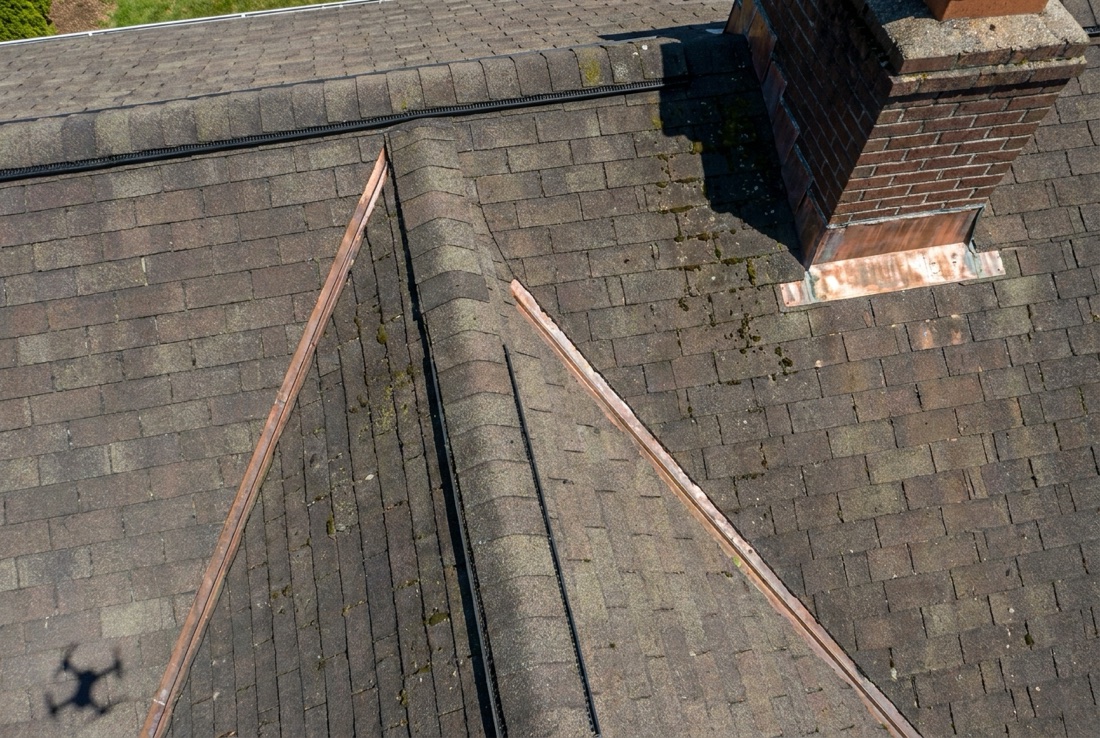
None of this requires assuming the worst. A house with one bad bypass over one bathroom fan needs a very different, and usually far less expensive, fix than a house that needs a full insulation top-up. The point of walking the roof and the attic together is narrowing five possible causes down to the one actually producing your dam, so the money goes toward the fix that ends the cycle instead of another season of stopgaps.
05 / THE REAL NUMBERGetting a real number for your house
The fix for a chronic dam ranges quite a bit depending on which of the five causes applies. Sealing a handful of bypasses and adding baffles at the soffit is a modest project. A full insulation top-up across an attic, or reworking a knee-wall assembly, costs more but can end a dam that has been reappearing for years. Our inspection is $0 with no obligation, and it covers the roof, the attic, and the ventilation path, with photos of exactly what we find, including whichever cause turns out to be yours.
If this winter's dam already caused water damage inside the house, that repair runs inside our standard $350 to $3,200 range depending on what the water reached, and our ice dam damage guide covers what an inspection typically finds once the ice is gone. If the roof itself is old enough that a reroof is on the table anyway, our guide on what replacement does and does not fix is worth reading before you decide, since a new roof alone will not end a dam that is made in the attic. For homeowners still in stopgap mode, our honest look at heat cables and our roof raking guide cover how to use both correctly while you plan the permanent fix. If you want a ballpark on replacement costs before anyone visits, the cost calculator runs the same published ranges as our honest pricing sheet.
- A dam that recurs in the same spot every winter has one specific, fixable cause, not just bad luck or an old house.
- In order of likelihood: unsealed attic bypasses, thinned or slumped insulation, blocked soffit intake, ducts or fans dumping heat into the attic, and knee-wall geometry.
- Raking, heat cables, and steaming all help in the moment but do not change the heat leak that is causing the dam.
- A real diagnosis walks the roof and the attic together to narrow five possible causes down to the one producing your dam.
- The fix ranges from a modest air-sealing project to a full insulation and ventilation overhaul, and a free inspection is the way to find out which applies to your house.
Questions we hear most
Almost always because one specific defect, such as an unsealed attic bypass, thin insulation, a blocked soffit, a duct or fan venting into the attic, or knee-wall geometry, has never been corrected. Weather triggers the dam, but the underlying cause lives in your attic, not in the storm itself.
Insulation alone rarely ends a chronic dam if air leaks were not sealed first, or if the added insulation buried the soffit intake and choked the ventilation path. Both are common, and a diagnosis that looks at air sealing and airflow, not just depth, usually finds what more insulation missed.
Not by itself. A reroof can include code-required ice and water barrier at the eaves, which limits the damage a dam causes, but the dam itself is produced by heat escaping from the house into the attic. Correcting that is what actually ends the cycle, and we can tell you honestly if a new roof is not the fix your house needs.
- Building Science Corporation, published research and information sheets on moisture movement, air leakage, and roof assemblies in cold climates. buildingscience.com
- Michigan Residential Code 2015, section R806 Roof Ventilation: minimum net free ventilating area of 1/150 of the vented space, reduced to 1/300 where listed conditions are met. up.codes: MRC chapter 8
- Manufacturer technical and warranty literature for the major asphalt shingle lines: GAF (gaf.com), Owens Corning (owenscorning.com), and CertainTeed (certainteed.com).