
JUMP TO A SECTION
Curling shingles look alarming from the driveway, edges lifting away from the roof like pages of an old paperback. Sometimes that is exactly what it is: an aging symptom spread across the whole field, and the honest answer is that repair money is better spent toward a replacement. Other times it is two or three shingles in one shaded corner, and a targeted fix solves it for a few hundred dollars. The shape of the curl and how much of the roof shows it are what separate those two conversations, and this guide walks through both before anyone tries to sell you an answer.
01 / THE TWO SHAPESCupping vs. clawing, and why the difference matters
Roofers use two words for curling because it shows up in two distinct shapes, and each points to a different cause.
Cupping
Cupping is when the edges of a shingle turn up while the center stays flat or dips, so the tab looks like a shallow bowl. It usually starts at the edges exposed to the most sun and weather and tends to show first on south and west facing slopes, which take the hardest sun in Macomb County's warm months.
Clawing
Clawing is the opposite shape: the edges turn down while the middle of the shingle rises, so the tab looks like it is gripping the roof from underneath. Clawing shows up more often on shingles that have also lost significant granules, and it tends to track with heat building up under the shingle from a hot, poorly vented attic rather than sun hitting the top surface.
Neither shape by itself tells you whether the fix is small or large. That comes from how much of the roof is affected, which section 03 walks through.
02 / THE CAUSESWhat actually makes a shingle curl
Asphalt shingles are a manufactured composite: a fiberglass mat coated in asphalt and pressed with mineral granules. Every cause of curling comes down to that asphalt coating losing its original flexibility and shrinking unevenly across the shingle.
Age and normal asphalt drying
The most common cause is simply age. Asphalt oils evaporate slowly over the shingle's service life, and as the coating dries out it loses elasticity and shrinks. A shingle that shrinks unevenly, faster at the exposed edge than at the nailed center, pulls itself into a curl. This is expected behavior on a roof approaching the end of its rated life, not a defect.
Attic heat cooking the shingles from below
A hot, under-ventilated attic bakes the underside of the deck and the shingles above it all summer, every summer. That accelerated heat cycling ages the asphalt faster than sun exposure alone would, and it is a major contributor to clawing in particular. If curling is showing up well before a roof's expected age, poor attic ventilation is one of the first things worth checking, alongside the roof itself.
Poor ventilation and trapped moisture
Ventilation cuts both ways: heat accelerates drying and shrinkage, while trapped moisture underneath a shingle from a starved attic can also distort it. Either mechanism points to the same fix, which is correcting intake and exhaust airflow, not just replacing the shingles that show the symptom.
Occasionally, a defective product
Less commonly, a batch of shingles curls prematurely because of a manufacturing defect, an underlying mat or coating problem that shows up well before the shingle's rated life is up. This is worth raising if curling appears broadly on a roof installed only a few years ago; manufacturer warranties sometimes cover it, and documentation from an inspection is the starting point for that conversation.
Michigan's freeze-thaw cycle adds its own wear
Southeast Michigan puts shingles through dozens of freeze-thaw cycles every winter, and each cycle stresses the asphalt coating a little more. A shingle that is already drying out from age or attic heat loses flexibility faster when it is also expanding and contracting with the cold, which is one reason curling here can show up a few years earlier than the same product would show it in a milder climate. It is not a defect specific to Macomb County roofs, it is simply the local weather doing what it does to every exterior material over enough winters.
03 / JUDGE THE SCALEHow to tell isolated from widespread before anyone gives you an answer
The single most useful thing you can do before calling anyone is a five-minute look from the ground and, if you are comfortable, from a ladder at the eave. You are not trying to diagnose the roof yourself. You are trying to walk into the conversation already knowing roughly which category you are in, so a quote either matches what you already see or raises a question worth asking.
It helps to be honest with yourself about how you are looking. Curling is easiest to spot in low, raking sunlight early or late in the day, when shadows exaggerate the lifted edges; the same roof can look nearly flat under a harsh midday sun. If you are only checking once, pick a low-light hour and walk the full perimeter rather than staring at the one slope visible from the front yard, since curling that starts on a rear or side slope is invisible from the street.
- Count the slopes affected. Curling on one slope, especially the one that takes the harshest afternoon sun, points toward a localized or age-plus-exposure issue. Curling on every slope, front and back, north and south, points toward a roof-wide age or ventilation issue.
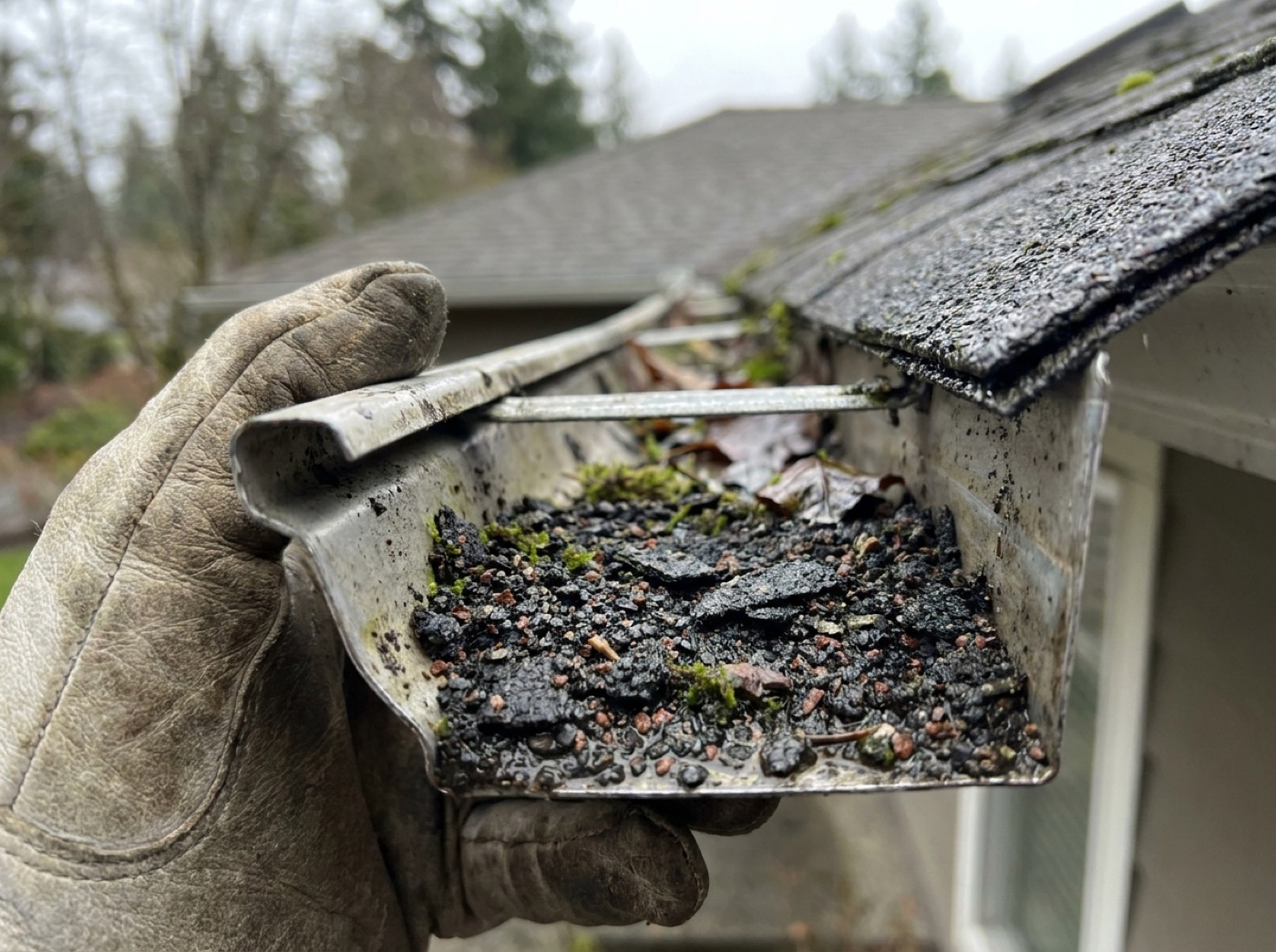
- Look for granules in the gutters and downspout splash zones. Heavy granule loss alongside curling is a strong end-of-life signal; curling with granules still intact and adhered is more likely isolated.
- Check the roof's age against its expected life. A roof well past its rated service life that is curling broadly is doing exactly what old asphalt does. A roof only a handful of years old that is curling broadly is a different, more urgent conversation.
- Note whether it is scattered or patterned. A handful of curled shingles scattered near a chimney, vent, or one hot corner of the attic below often traces to a local heat or moisture source. Curling that repeats in a consistent band or across an entire field is systemic.
If you can count the curled shingles on one hand and they are confined to one area, you likely have a repair. If you would need a running tally across multiple slopes, you likely have a roof reaching the end of its life.
04 / THE FORKWhen repair helps and when it is money toward the wrong problem
Isolated curling, a shaded corner, a handful of tabs near a vent, a patch that shows up after a localized ventilation problem gets fixed, is a legitimate repair. The damaged shingles get replaced, the underlying cause (usually a heat or airflow issue in that section of attic) gets addressed, and the roof goes back to shedding water normally in that spot. Repairs across Macomb County run $350 to $3,200, and where a curling repair lands in that range depends mostly on how many shingles need replacing and whether matching them is straightforward.
A small, easily accessed patch of curled shingles with a straightforward color match sits toward the lower end of that range. The price climbs when the fix also requires attic work, added soffit or ridge ventilation, baffle clearing, or insulation adjustments alongside the shingle swap, or when the affected area is on a steep or hard to access slope. None of that changes the underlying math: a repair is only worth doing when it is solving a contained problem, not chasing a symptom that is going to reappear a few feet away next season.
Widespread curling is a different conversation, and the honest answer is that it is usually a symptom of a roof at or near the end of its service life, not a problem repair fixes for good. Replacing curled shingles across a slope while the rest of the field is aging at the same rate buys a short reprieve at best; the shingles next to the repair will curl on their own timeline soon after. At that point, the money is better redirected toward a full roof replacement, and our replacement cost guide lays out that full price picture.
A repair should come with a reason it will hold. Replacing curled shingles next to a hundred more shingles curling at the same rate is not a reason, it is a delay.
If the curling shows up alongside cracked or brittle shingles that break when lifted, or a deck that feels soft underfoot, those are separate signs worth reading on their own; our signs your roof needs repair guide and our broader repair vs. replacement guide both help place curling in the full picture of what your roof is telling you.
05 / THE FIXWhat a proper curling repair actually involves
When curling is isolated enough to repair, the job is not simply pulling off the affected shingles and nailing down new ones. A competent repair follows a sequence.
- Confirm the cause, not just the symptom. An inspector checks the attic below the affected slope for heat buildup, insufficient insulation baffles, or blocked soffit intake before touching the shingles themselves.
- Address the underlying heat or moisture source. If ventilation is starving that section of roof, adding intake or exhaust ventilation or clearing blocked baffles happens as part of the same visit, not as an afterthought.
- Replace the curled shingles. The damaged shingles come out, and new ones go in, tied into the surrounding courses so the new patch sheds water the same way the field around it does.
- Match as closely as the available product allows. Weathered shingles fade over years, so an exact color match on an older roof is rarely possible; a good roofer tells you that honestly before starting, and our shingle matching guide covers that reality in more depth.
This is also exactly the kind of detail a free inspection is built to catch. If a roof already 18 to 20 years old is showing broad curling, our guide on repairing an older roof walks through that specific decision, and the estimator can run both a repair and a replacement number side by side using the free inspection request or the cost calculator.
- Cupping (edges up) usually starts with sun and age; clawing (edges down, center up) tracks more with attic heat and moisture.
- Isolated curling in one area, confined and scattered, is usually a $350 to $3,200 repair.
- Widespread curling across multiple slopes, especially with heavy granule loss, is usually an end-of-life signal where repair money is better redirected to replacement.
- A proper repair addresses the ventilation or moisture cause first, not just the shingles showing the symptom.
- A free inspection is the fastest honest way to know which category your roof is in.
Questions we hear most
It depends on scale. A handful of curled shingles confined to one area, often a shaded corner or a spot with local attic heat, can usually be repaired for $350 to $3,200. Curling spread across most of the roof is usually an age-related, end-of-life symptom, and replacing just the curled shingles rarely holds for long since the surrounding shingles are aging on the same timeline.
Cupping is when a shingle's edges turn upward while the center stays flatter, most common on sun-exposed slopes. Clawing is the opposite: the edges turn down while the center lifts, and it tracks more closely with heat buildup from a poorly ventilated attic. Both are curling, but the shape can point toward which cause is driving it.
It can be a major factor. A hot, under-ventilated attic bakes the shingles from underneath all summer, which accelerates the asphalt drying and shrinking that causes curling, particularly clawing. Correcting intake and exhaust airflow is often part of a proper repair rather than an optional add-on.
Check how many slopes are affected, whether granules are heavily gone in the gutters, and how the roof's age compares to its expected service life. Curling confined to one small area with granules still intact usually points to repair. Curling across most of the roof, especially paired with heavy granule loss on a roof nearing the end of its rated life, points toward replacement. A free inspection settles it either way.
- FEMA, disaster declaration DR-4757-MI, Michigan severe storms of August 2023 (Macomb County designated). fema.gov/disaster/4757
- Manufacturer technical and warranty literature for the major asphalt shingle lines: GAF (gaf.com), Owens Corning (owenscorning.com), and CertainTeed (certainteed.com).
- Michigan Residential Code 2015, section R806 Roof Ventilation: minimum net free ventilating area of 1/150 of the vented space, reduced to 1/300 where listed conditions are met. up.codes: MRC chapter 8