
JUMP TO A SECTION
A roof does not fail all at once. It fails in stages, and the stage you are in when you finally call someone is usually what decides whether the fix is a few hundred dollars or a few thousand. This guide walks through what a slow, untreated leak actually does to a Macomb County home over weeks, months, and years, and where the honest line sits between a repair that can wait a bit and one that cannot.
01 / THE SHORT ANSWERWhat a leak does while you wait
There is no fixed countdown clock on a leaking roof, no day-47 alarm bell that goes off. But there is a real, fairly predictable progression: water finds a way in, the materials it touches degrade a little faster with every week that passes, and every stage you skip now tends to show up later as a bigger invoice. A homeowner who notices a small, contained stain and gets it inspected within a few weeks is usually looking at a straightforward repair. A homeowner who watches the same stain spread through an entire Michigan winter is usually looking at something bigger.
Most roof leaks start as a repair in the $350 to $3,200 range. Left long enough, the same failure point can turn into rotted decking, ruined insulation, and drywall work, which is a materially bigger project than the flashing or shingle repair that would have solved it early. This page is not an active-emergency page. It is the case for scheduling the small repair before it stops being small.
That table is a simplification of a messier reality, but the direction never changes: the longer water has a path into the house, the more categories of repair it eventually touches. Homeowners rarely decide to ignore a leak on purpose. Life gets busy, the stain looks stable for a while, and the roof drops down the priority list until a rainy week reminds everyone it is still there. The point of laying out the stages is not to scare anyone into an unnecessary same-day call; it is to make the actual tradeoff visible, so the decision to wait is a choice and not an accident.
One more honest note before the timeline: every roof, attic, and house is different. A leak over an unfinished garage bay behaves differently than one over a bedroom closet with blown-in insulation. The stages below describe the general pattern professional roofers see again and again, not a guarantee about your specific ceiling.
02 / WEEKSThe first few weeks: small, contained, still cheap
In the early stage, most of the damage is cosmetic and most of it is reversible. This is the window where a repair is genuinely a repair, not the first phase of a larger project.
What you can see
A brownish-yellow ring on the ceiling, sometimes with a darker edge where water paused and evaporated before moving again. Paint that has started to bubble or flake in one spot. A faint, damp smell that shows up mainly right after rain and fades between storms. None of this means the roof is failing wholesale; it usually means one flashing detail, one pipe boot, or one patch of shingles let go, and water is tracing a single path to the same low point every time.
What you cannot see yet
Above the stain, the insulation directly under the entry point is picking up moisture and starting to lose some of its R-value, and the top of the ceiling drywall is absorbing water it will eventually need to shed. The roof deck itself, if you could see the attic side, may show a faint discoloration but is not yet soft. This is the cheapest possible moment to fix the problem, because nothing structural has changed yet. It is also the easiest moment to misdiagnose, since a small, occasional stain does not look urgent. If you are trying to work out whether what you are seeing is roof water at all, our guide on roof leak repair cost breaks down what typically drives the price once a roofer confirms the source.
How long is too long to wait, in this stage
As a practical rule, a stain that has appeared once, is not growing between rain events, and is not accompanied by any smell is a reasonable one to get on the schedule within the next few weeks rather than treating as same-day. A stain that reappears after every rain, is visibly larger than it was a month ago, or comes with a musty smell has already told you it is an active, ongoing entry point, and that is worth moving up the list. The difference matters because it is the last point in the timeline where waiting a little longer costs almost nothing extra.
03 / MONTHSThe months that follow: rot, mold conditions, corrosion
Give the same leak a season or two and the picture changes. Wood that stays wet for extended stretches begins to soften and delaminate rather than simply drying out between rains, and the fasteners holding the roof deck together start to change. Roofers can often tell how long a leak has been running just from the color of the nail tips they find: bright and silver means recent, dull red or orange means corrosion has had months to work.
Sustained moisture is also the condition mold favors: standing or repeated dampness, an organic surface like wood sheathing or paper-faced drywall, and enough time for it to take hold. If you are already seeing dark spotting on attic sheathing or a musty smell that will not clear, that has likely crossed from a pure leak problem into a moisture and biology problem. Our guide on attic mold after a roof leak covers how that gets assessed and remediated, and why the roof repair always has to come first.
Insulation that has been wet for months is usually beyond drying out and back to full performance; it typically needs to be replaced rather than salvaged. There is also a practical, everyday cost that shows up before any of the structural stuff: a room with damp, compressed insulation above it loses some of its comfort and efficiency, and a musty smell in a bedroom or living space is not something most households want to just live with for a season. None of this is dramatic on its own, which is exactly the problem: a homeowner can live with a months-old leak and not feel like anything urgent is happening, right up until the repair estimate reflects everything that changed underneath.
04 / YEARSLeft for a year or more: the repair becomes a rebuild
This is the stage where the numbers stop being close to the original repair estimate. Roof decking that has been cycling wet and dry for a year or more can go from softened to genuinely compromised, sometimes soft enough to flex underfoot in the attic. At that point the job is no longer patch the flashing and reseal the shingles; it now includes cutting out and replacing deck sheathing, which is priced per sheet because nobody can see the full extent of it until the roof is opened up. Our roof decking replacement guide walks through how that scope gets assessed and priced.
Water is patient and it does not travel in straight lines. Over a year or more it can migrate along framing members well beyond the point where it first entered, which is why a leak that looked like a single small stain can eventually show up as a second stain in another room, or as damage inside a wall cavity nobody suspected. The ceiling drywall itself, softened repeatedly, may need to be cut out and replaced rather than simply patched and repainted, and insulation across a wider footprint than the original leak may need to come out.
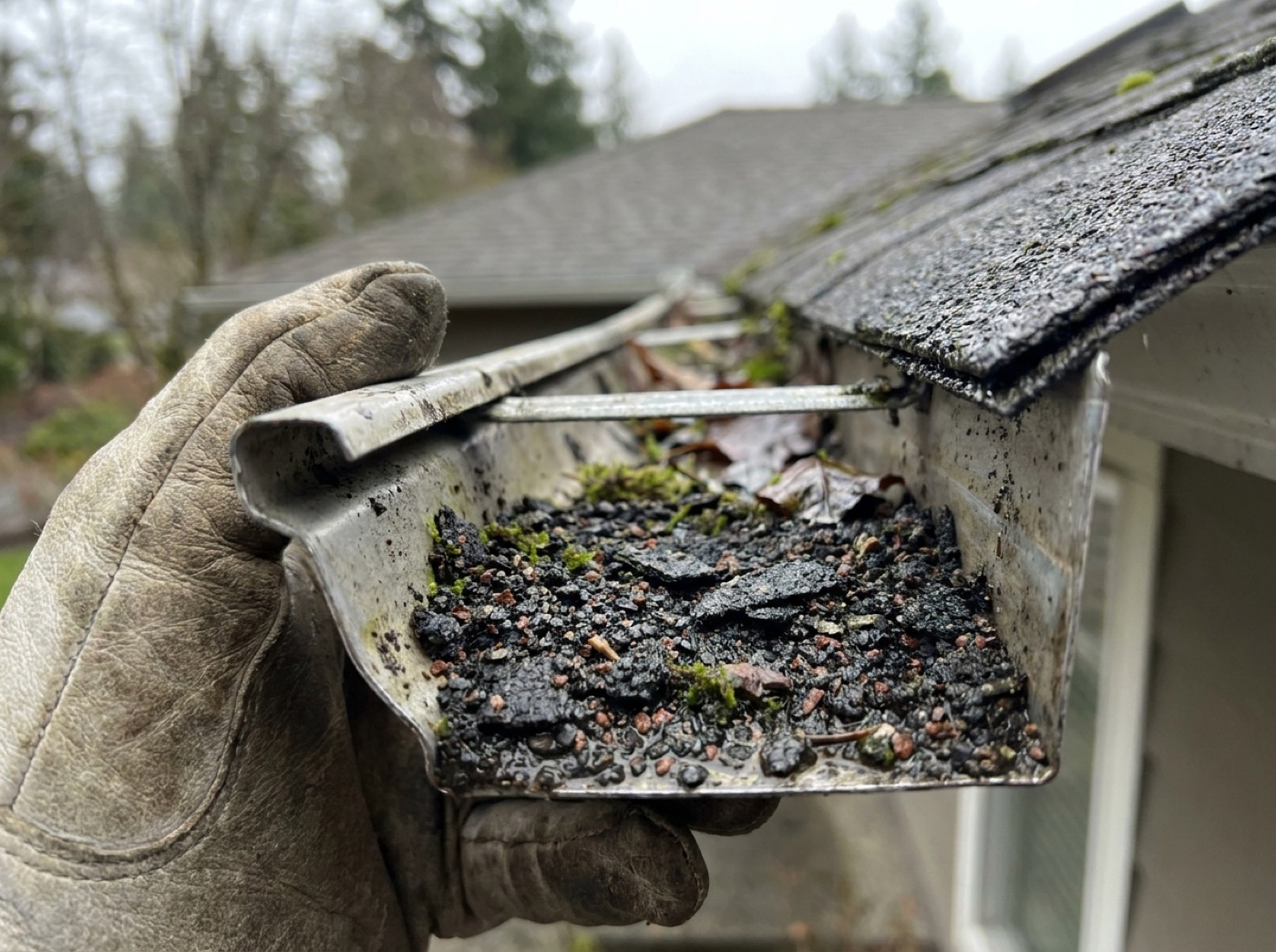
None of this means every year-old leak requires a full roof replacement. Plenty of long-neglected leaks are still, at their core, a single failed flashing detail or shingle course, and the repair itself stays modest. What grows is everything around the repair: the decking, the insulation, and the interior finish work needed to put the room back together. That surrounding work is usually the larger part of the bill, and it is the part that was avoidable.
There is a resale angle worth a mention, too. A long-neglected leak tends to leave a record: a stain a fresh coat of paint could not fully hide, a soft spot a home inspector's moisture meter will find, or an insulation smell that shows up the moment the HVAC kicks on. None of that is a reason to panic about a recent, small leak. It is a reason not to let a known leak sit indefinitely and become the thing a future buyer's inspector flags, at exactly the moment you have the least leverage to negotiate the fix.
05 / THE CALENDARWhy timing beats the calendar in Michigan
A leak that seems tolerable during a dry August stretch behaves very differently once fall rain and winter arrive. Michigan roofs spend a good part of the year cycling through freeze and thaw, and a weak point that only dripped occasionally in summer can start taking on meltwater as ice dams form at the eaves and back water up under the shingles for weeks at a stretch. A leak you were willing to watch in July is a much worse bet to watch through February.
Macomb County's own weather history is a reminder that roof damage compounds fast once real weather gets involved. The county was included in federal disaster declaration DR-4757 after the severe wind storms of August 2023, and homes that took wind damage that summer and were never inspected afterward have had more than two years of freeze-thaw cycles to make a small problem worse. If your leak followed a wind or hail event rather than simple age, that is a different conversation with your insurer, and our storm and insurance claims guide walks through documentation and what a policy may or may not cover.
There is also a scheduling reality worth knowing. Roofing crews across southeast Michigan book up fastest in spring and right after storm events, when everyone on the block calls at once. A homeowner who gets a repair scheduled in a quiet month is choosing their own timeline. A homeowner who waits until the leak is undeniable is taking whatever slot is left, often during the exact season when a delayed repair does the most additional damage.
06 / THE TELLSSigns you already waited too long
- Ceiling drywall that feels soft, spongy, or sags slightly when you press on it near the stain
- A musty smell in the room or attic that does not clear after airing the space out
- Visible dark spotting or fuzzy growth on the ceiling, the attic sheathing, or the insulation
- A floor in the attic near the leak that feels bouncy or gives slightly underfoot
- A repair estimate that keeps growing once a roofer actually opens up the area
Any one of these is a reason to get an inspection scheduled rather than waiting for the next rain to confirm what you already suspect. None of them mean the house is in danger of collapse; they mean the project has grown past what a shingle swap and a bead of sealant will solve.
07 / THE MOVEWhat to do about it now
The math is straightforward once you see all the stages side by side. A repair caught early usually lands inside the standard $350 to $3,200 range published on our roof repair page, because the scope is limited to the actual failed component: a boot, a flashing detail, a section of shingles. The same failure, left to run for a year or more, can pull in decking, insulation, and drywall alongside the roof work itself, which is a different and larger conversation. Waiting rarely saves money; it usually just moves the spending from a repair invoice to a rebuild invoice.
The only way to know which stage your roof is actually in is to have someone look at it, on the roof and in the attic. Our inspection is $0 with no obligation, and it covers the shingles, the flashing, and the attic side of the deck, with photos of exactly what we find, whether that is a five-minute fix or something more involved. If a repair solves it, that is what we will recommend, and we will tell you plainly if the scope has grown past a simple repair rather than pad the invoice to find out. You can also run a rough ballpark first with the 60-second cost calculator, or see the full published ranges on our pricing page before anyone sets foot on the roof.
A leak does not get cheaper by waiting. It gets bigger, and the invoice eventually catches up to what actually happened underneath the shingles.
- In the first few weeks, damage is usually cosmetic and the repair stays inside the $350 to $3,200 range.
- By a few months, wet decking, mold-favorable conditions, and corroding fasteners are the new risk.
- Left a year or more, the project can grow to include decking, insulation, and drywall alongside the roof fix.
- Michigan freeze-thaw and ice dam season make a tolerable summer leak much worse by winter.
- The only way to know your actual stage is a free, no-obligation inspection with photos.
Questions we hear most
There is no fixed number of days, but the pattern is consistent: damage that is cosmetic in the first few weeks can progress to wet decking and mold-favorable conditions within a few months, and to structural repairs and interior work within a year or more of neglect. A contained, recently noticed leak can usually wait for a scheduled inspection; one that has been dripping for a season or longer should be looked at soon.
Usually, yes. Most roof leaks start as a repair in the $350 to $3,200 range because the scope is limited to the failed component. The longer the same leak runs, the more likely it pulls in decking, insulation, and drywall, which is a larger and separate scope of work beyond the original roof repair.
Usually not in the sense of needing a same-hour response, but it is not something to ignore either. If water is actively coming in during a storm, we offer 24/7 emergency tarping to stop the water, then schedule the permanent repair. A slow, occasional leak is better handled with a scheduled free inspection before the next season makes it worse.
- FEMA, disaster declaration DR-4757-MI, Michigan severe storms of August 2023 (Macomb County designated). fema.gov/disaster/4757
- U.S. Environmental Protection Agency, guidance on construction and demolition debris and household environmental hazards. epa.gov
- Michigan Residential Code, 2015 edition, adopted with Michigan amendments by the LARA Bureau of Construction Codes, in effect since February 8, 2016. michigan.gov/lara: code books
- Manufacturer technical and warranty literature for the major asphalt shingle lines: GAF (gaf.com), Owens Corning (owenscorning.com), and CertainTeed (certainteed.com).