
JUMP TO A SECTION
"How long will this take" is one of the first questions homeowners ask when they call to book a free roof inspection, usually right after "how much does it cost." The cost answer is easy: $0. The time answer is genuinely a range, because a straightforward single-story ranch and a cut-up two-story with three dormers are not the same visit. This guide breaks down what a typical inspection actually takes, minute by minute, what specifically adds time to that baseline, what almost nothing you need to do to prepare, and why the real friction in the process is scheduling the appointment, not the appointment itself.
01 / THE SHORT ANSWERHow long a roof inspection takes, in ranges
For a typical single family home in Macomb County, a full ground-to-attic free inspection runs 30 to 60 minutes on site. That covers a walk around the exterior, a surface pass on the roof, a check of flashing and penetrations, and a look at the attic side of the deck. A quick surface-only walk, without an attic check, can be done in as little as 15 to 20 minutes, though we do not recommend skipping the attic side, since that is where leaks and daylight gaps actually confess. A storm damage documentation visit, where every slope gets photographed and measured for a claim, typically runs longer, often 60 to 90 minutes or more.
Most Macomb County homes get a full inspection in under an hour, and the appointment itself is rarely the reason to put it off. Scheduling the visit is usually the longer wait, not the visit.
| INSPECTION TYPE | TYPICAL TIME ON SITE | NOTES |
|---|---|---|
| Surface-only walk | 15 to 20 min | Roof field only; attic side not checked |
| Full ground-to-attic inspection | 30 to 60 min | Our standard free visit; most single family homes |
| Large or complex roof | 45 to 90 min | Multiple slopes, valleys, dormers, or skylights |
| Storm damage documentation | 60 to 90 min or more | Every slope photographed and measured for a claim |
| Commercial or flat roof | Varies by square footage | Priced and timed by area; see our <a href="/roofing/commercial-flat-roofing/">commercial roofing page</a> |
Those ranges hold for a typical single family home. A large or unusually complex roof, one with several distinct roof planes, multiple chimneys, or a walkout addition that was reroofed at a different time than the main house, can push past the upper end simply because there is more roof to look at and more transitions where water can get in. None of that changes the price of the visit; it only changes how long the inspector is on your property.
02 / THE SEQUENCEWhere the time actually goes
A visit is not sixty minutes of standing on shingles. It runs in a set order, and each stage takes a different, fairly predictable slice of the total. Our companion guide walks this sequence in more depth: what happens during a roof inspection.
Photos get taken at every stage, not just where something looks wrong, so the finished record shows the whole roof rather than a curated slice of it. That documentation habit is part of why the visit takes the time it takes: a fast look that skips photos is not the same inspection, even if it is technically faster.
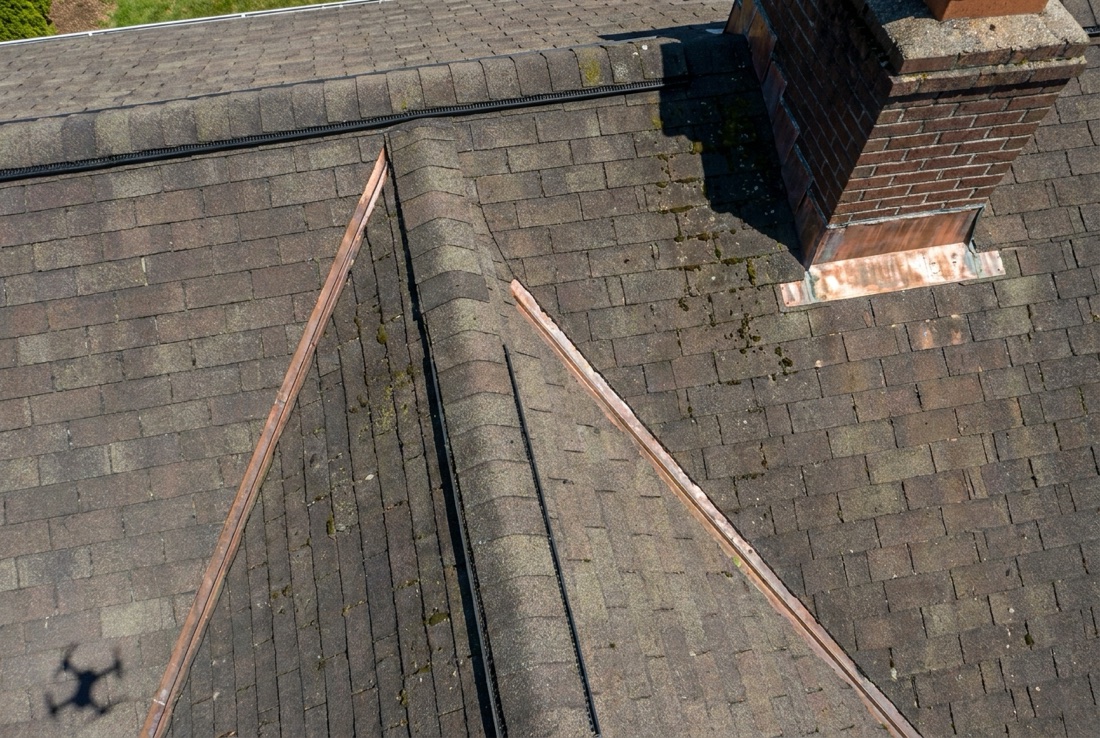
You do not need to clear an afternoon for this. Most homeowners plan around it the way they would a delivery window, not a service call that eats the day. If you work from home or step outside periodically, the inspector will keep you posted on progress; if you are not available to be present, the findings walkthrough simply happens by phone once the visit wraps, and the photos and notes are the same either way.
03 / THE DRIVERSWhat adds time to the visit
Four things reliably push a visit toward the longer end of the range, or beyond it. None of them are a problem, they just change the clock.
Steep pitch and access
A shallow roof that can be walked upright gets covered quickly. A steep roof needs harnesses, roof jacks, and slower, more deliberate movement, so the same square footage simply takes longer to cover safely. Difficult ladder access, a fenced yard, or a roof surrounded by landscaping adds a few more minutes before the surface pass even starts.
Attic access and layout
An attic hatch that is easy to find and reach speeds the interior half of the visit considerably. A hatch buried behind stored belongings, a finished attic with limited crawl space, or a layout with multiple separate attic sections all add time, because the inspector still needs to see the underside of the deck to check for daylight gaps, staining, and moisture.
Storm documentation depth
A routine inspection samples the roof thoroughly; a storm documentation visit measures and photographs every slope individually, because that level of detail is what an adjuster meeting runs on later. That thoroughness is the point, not a delay to apologize for, and the full documentation standard is covered in our storm and insurance claims guide.
Drone flights
Drone imaging can speed up the surface pass on a steep or hard-to-access roof, since a flight covers ground a ladder would take much longer to reach. It can also add a few minutes up front for setup and battery swaps on a larger roof with multiple slopes. Either way, drone use does not replace the attic-side check, which still happens from inside. Our guides library covers when a drone survey versus a walked inspection makes more sense for a given roof.
Roof size and layout
Roofers measure area in squares, a hundred square feet of roof surface, and a bigger footprint simply has more field, more edge, and usually more penetrations to check. A simple gable roof with one ridge line moves fast. A roof with multiple hips, valleys, dormers, and a chimney or two takes longer for the same reason it costs more to replace: every intersection is a place water can get in, and each one gets its own look.
04 / PREPARINGWhat you need to do beforehand, which is almost nothing
The appointment does not require homeowner prep work in any meaningful sense. A short list of small things speeds it along, but none of them are a barrier to booking.
- Clear a path. A driveway free for a ladder truck and an unlocked gate to the backyard, if you have one, saves a few minutes on arrival.
- Know your attic hatch. Being able to point to it in thirty seconds shortens the interior half of the visit.
- Mention pets ahead of time. A dog in the yard is easy to plan around; a surprise on arrival just costs a few minutes.
- Note anything you have already seen. A ceiling stain, a musty smell, or daylight in the attic gives the inspection a starting point and can actually shorten the search.
You are welcome to be present for the whole visit, and most homeowners are. Nothing about staying home and walking alongside the inspection, or being handed the findings room by room afterward, changes the timeline. The one thing that does add real time on the day is a locked or inaccessible attic hatch discovered on arrival, since the inspector then has to track you down for a key or a different access point mid-visit. A thirty-second heads-up when you book avoids that entirely.
05 / THE REAL BOTTLENECKBooking is the real bottleneck, not the appointment
The part of this process that actually takes planning is not the sixty minutes on the roof, it is getting on the calendar. We answer the phone Mon to Sat, 7am to 7pm, and a same-week appointment is common outside of the busiest post-storm stretches. Schedules fill fastest right after a big regional wind event, when a large share of the county is calling at once, so booking sooner rather than later protects your choice of week more than it protects the length of the visit.
If a repair or replacement comes out of the visit, the written price follows the same-day findings walkthrough, not a separate appointment. Homeowners comparing the inspection step to the pricing step can see the full published ranges on our honest pricing sheet, or run their own ballpark on the 60-second cost calculator before anyone visits.
"Same week" is a real target, not a marketing phrase, outside of the two or three weeks a year when a major regional storm pushes call volume county-wide. In that window, active leaks still jump the line for tarping, and routine inspections simply move a few days later than usual rather than being skipped or rushed. If timing matters for a real estate closing, a loan condition, or a claim deadline, say so when you call; that context helps us sequence the schedule fairly.
06 / STORMS AND CLAIMSWhen the timeline changes: storms and insurance
Two situations reliably move the timeline. The first is an active leak, which routes to 24/7 emergency tarping to stop the water immediately, with the full inspection and any repair scheduled right behind it rather than waiting for a normal slot. The second is documented storm damage, where the visit itself runs longer for the reasons in section three, and the resulting record is what supports meeting your adjuster on site, though no contractor can promise a claim outcome.
Macomb County has recent history worth knowing. After the severe storms of August 2023, the county was included in federal disaster declaration DR-4757. Wind events like that can lift shingles and drive water under the roof surface in ways that are invisible from the ground and only get documented properly on a dedicated visit. If your roof has not been checked since then, the visit is still $0, and it simply runs on the storm-documentation end of the range rather than the routine one. The full claim path, start to finish, is in our storm and insurance claims guide.
The clock on a roof inspection is set by the roof and the reason for the visit, not by how busy we are. A thorough sixty minutes beats a rushed twenty every time.
- A typical free inspection runs 30 to 60 minutes on site, ground walk through attic check.
- Steep pitch, hard attic access, storm documentation depth, and drone setup are the main drivers that add time.
- Homeowner prep is minimal: clear a path, know your attic hatch, mention pets, and note anything you have already noticed.
- Booking, not the visit itself, is the real bottleneck; we answer Mon to Sat 7am to 7pm and same-week slots are common.
- Active leaks route to 24/7 emergency tarping first; storm documentation visits run longer but follow the same $0 model.
Questions we hear most
Most full ground-to-attic inspections in Macomb County run 30 to 60 minutes on site, covering the exterior, the roof surface, flashing and penetrations, and the attic side of the deck. A large or complex roof, or a storm documentation visit, can run 60 to 90 minutes or more.
Usually, yes. Steep pitch requires slower, harnessed movement for safety, and more roof area means more surface to cover. Hard attic access adds time too. None of that changes the cost, which stays $0 with no obligation.
Call (586) 300-1746 during our phone hours, Mon to Sat 7am to 7pm. A same-week appointment is common outside of major post-storm surges, when schedules fill fastest because a large share of the county calls at once.
- FEMA, disaster declaration DR-4757-MI, Michigan severe storms of August 2023 (Macomb County designated). fema.gov/disaster/4757
- National Roofing Contractors Association, technical guidance for steep-slope roof systems. nrca.net
- Federal Aviation Administration, Part 107 rules for small unmanned aircraft (commercial drone roof surveys). faa.gov
- Michigan Department of Licensing and Regulatory Affairs (LARA), residential builder licensing and the public Verify a License lookup. michigan.gov/lara