
JUMP TO A SECTION
Every roofing product rep will tell you metal panels can go directly over an existing asphalt roof, and technically, on the right roof, that is true. What the brochure will not tell you is that recovering is a bet on a roof you cannot fully see, and the size of that bet depends entirely on condition, code, and how honest your contractor is about what a recover cannot fix. This guide walks through both sides plainly: the real appeal of skipping tear-off, the risks that do not show up until years later, what Michigan's building rules actually allow, and the cases where we will tell a homeowner directly that tear-off is the smarter money. If you have already decided metal is the material and just want the installation process itself, our metal roof installation process guide covers that end to end.
We install metal both ways, over a torn-off deck and, less often, as a recover over sound existing shingles, so this page is not an argument for one over the other. It is the reasoning a homeowner should hear before choosing, laid out the way we lay it out on the phone.
01 / THE SHORT ANSWERWhat a recover is, and the quick verdict
A recover means new metal panels are fastened over your existing asphalt shingles instead of stripping the roof to bare deck first. The metal roof itself still costs the same as it would on a tear-off, $18,000 to $30,000 installed in Macomb County, since material and panel labor do not change. What a recover removes is the tear-off labor and disposal cost that a full strip-down adds on top of that number, which is the entire appeal. What it also removes is the one thing a tear-off guarantees: a look at the deck underneath before the new roof goes on.
The honest verdict is conditional, not universal. A recover can be a legitimate choice on a roof with a single layer of sound, flat-lying shingles and no history of leaks. It is the wrong choice on a roof with hidden rot, more than one existing layer, or a pattern of past leaks, because those are exactly the conditions a recover cannot see past. The rest of this guide is the reasoning behind that split, and a straightforward look at Michigan's layer limits, which cap how far the shortcut can go regardless of what a homeowner prefers.
is still the installed range for the metal roof itself, recover or tear-off. What changes is whether you also pay for stripping the old roof off first. Run a ballpark with the instant estimator.
02 / THE APPEALWhy the recover pitch is genuinely tempting
The case for going over an existing roof is not manufactured. On the right house it solves real problems, and it is worth naming them honestly before getting to the downsides.
Less debris, less disruption
Tear-off is loud, dusty, and generates a dumpster full of shingles that has to be hauled and disposed of. Skipping it means fewer days of crews walking the roof, less debris landing in flower beds and window wells, and a shorter overall disruption to the household. For a homeowner working from home, hosting an event soon, or simply dreading the noise, that difference is real and not trivial.
A faster install
Without a tear-off day, the crew moves to panel installation sooner, which can shorten the total number of days the roof is open to weather mid-project. On a Michigan job where a stretch of dry days is not guaranteed, fewer exposed days is a genuine risk reduction, not just a convenience.
Lower total project cost, sometimes
Removing tear-off labor and disposal fees from the project can bring the total in lower than a full strip-and-replace metal job on the same house, since neither the dumpster nor the extra labor days are billed. How much lower depends entirely on the size and complexity of the roof, and it is a question for your specific quote rather than a number we will publish here, because it varies too much house to house to state as a range.
There is a fourth point worth naming, though it cuts both ways: a recover leaves the old shingles in place as an extra layer of insulation and sound deadening under the new metal, which some homeowners notice as a quieter roof in heavy rain compared to metal installed directly over bare decking with only underlayment between. It is a real side benefit, not a reason on its own to choose recover over tear-off, but it is part of the honest picture.
Those points are real, and they are also the entire pitch. What follows is what that pitch leaves out.
03 / THE REAL RISKSWhat a recover cannot see past
A recover trades a look at your deck for a shorter, cheaper project, and that trade is the whole risk. Four specific problems come up often enough that we walk every recover candidate through them before we quote the job.
Hidden rot and soft decking
Tear-off is the only reliable way to see the wood deck underneath the shingles. Soft, delaminated, or rotted sheets are common on older roofs, especially anywhere a slow leak has been running quietly for years, and a recover installs a new metal roof directly on top of that damage instead of finding it. The deck keeps deteriorating underneath a roof that looks brand new from the ground, and by the time it shows, the fix is far more invasive than it would have been at tear-off.
Telegraphing through the panels
Metal panels are thin and rigid, and they tend to show the texture of whatever is beneath them, a phenomenon installers call telegraphing. Curled, cupped, or unevenly worn shingles can print their outline faintly through the new metal surface, especially on panels with a low profile or a light, reflective finish. A furring strip or purlin system installed over the old roof reduces this by creating a flat, ventilated plane for the panels to attach to, but it adds a labor step, and a bid that skips it to save money is a bid more likely to telegraph.
Trapped moisture between layers
Asphalt shingles hold moisture, and sandwiching them under a metal roof without adequate airflow between the two layers can trap that moisture against the deck, which is the opposite of what you want in a Michigan freeze-thaw climate. This is the reason a proper recover assembly usually includes a ventilated furring or batten system rather than panels fastened flat to the old shingles, and it is also the reason a recover done wrong can accelerate deck problems rather than avoid them.
Warranty conditions that assume a clean deck
Many metal panel and underlayment warranties are written around installation on a sound, prepared deck, and some manufacturers condition full warranty coverage on specific recover assemblies, an approved underlayment, or a documented substrate inspection before panels go on. Installing over shingles without meeting those conditions can reduce or void portions of the manufacturer warranty even when the workmanship is fine, which is a detail that belongs in writing before you sign, not a surprise if you ever file a claim. Our underlayment guide for metal roofs covers what a compliant assembly actually requires.
A recover does not fix anything under the old roof. It only decides whether you find out about it now, or in ten years, from underneath a roof you already paid for.
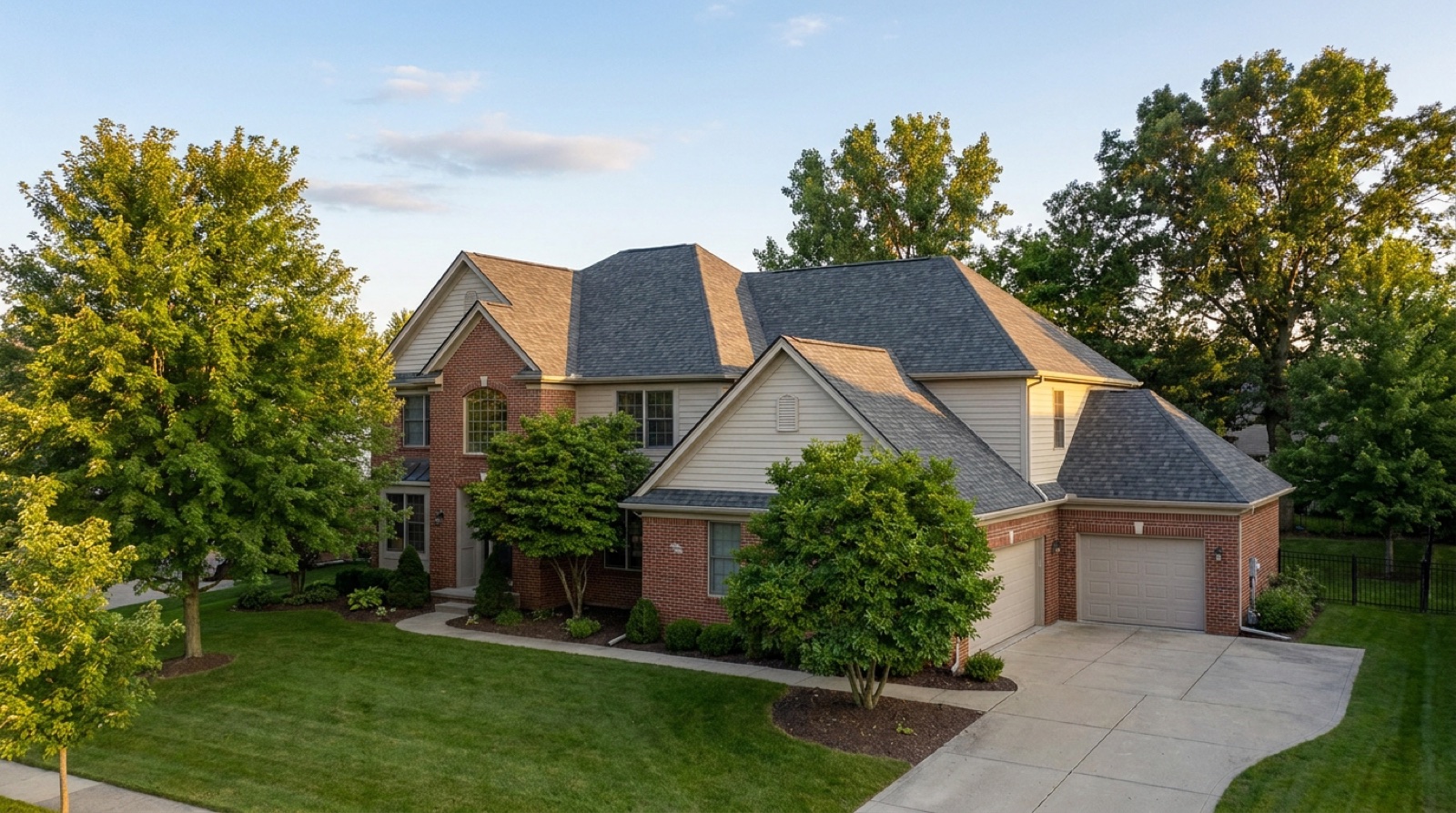
04 / THE CODE QUESTIONWhat Michigan's rules actually allow
Recover is not simply a preference a homeowner and contractor agree to. Michigan's residential building code governs how many layers of roofing a structure is allowed to carry and under what conditions a new layer can go over an existing one, and those provisions are applied and interpreted at the local building department level. The specific layer-count limits, the conditions under which an inspector will approve a metal recover over existing asphalt, and any local amendments your municipality has adopted are the kind of exact code citation we are not going to state as a blanket fact on a marketing page, because it varies by jurisdiction and by the condition found on your specific roof. Confirm the applicable provisions and any required permit with your local building department, or ask us to pull the permit and handle that confirmation as part of your quote.
What we can say plainly from doing this work across Macomb County: most jurisdictions here treat a second full layer of roofing as the practical ceiling, and a roof that already carries two layers of asphalt is typically not a legal recover candidate for a third, metal or otherwise, regardless of what a contractor is willing to install. If your home was reroofed once already by a prior owner without a tear-off, and you do not know how many layers are currently up there, that is a fact worth establishing before a metal recover is even on the table, and it is one of the first things our inspection checks.
How many layers of roofing are on this house right now? If nobody can answer that with certainty, a recover is not a safe decision to make yet, and a quick attic and roof-edge check should come before any panel is quoted.
Permits matter here too. A metal recover is still a reroofing project in the eyes of most municipal building departments, and skipping the permit does not make the layer limit go away, it just means nobody is checking whether it was respected. A contractor who tells you a recover does not need a permit is a flag worth taking seriously, since it is often the same contractor skipping the parts of the job that would reveal a problem.
05 / THE HONEST NOWhen tear-off clearly wins
We would rather talk a homeowner out of a recover than install one that fails early. A few situations where tear-off is the clearly better call, plainly stated.
Any known or suspected leak history
If the roof has leaked anywhere, even once, a recover installs a new roof over the exact spot where you already know water got in and the deck may already be compromised. Tear-off is the only way to see and fix that spot before it is sealed under a new layer for the next several decades.
An existing layer already on the roof
If your home already carries one prior overlay, a second recover on top of that puts you at or past most local layer limits, and it is often not permittable at all. This is the single most common reason we tell a homeowner tear-off is not optional, not a preference.
Curled, cupped, or unevenly worn shingles
Shingles in rough shape are the exact condition most likely to telegraph through metal panels and the exact condition most likely to be hiding deck damage underneath. A roof in this state has usually earned a full tear-off on its own merits, independent of the recover question.
A roof you plan to keep for decades
Metal is a long-horizon investment, generally expected to outlast the asphalt roof beneath it several times over. Installing it on top of an unknown deck is a strange way to start a multi-decade commitment. If you are choosing metal because you want to stop thinking about your roof for a long time, as our metal roof worth-it guide covers, tear-off protects that investment at the one point it is cheapest to protect it: before the new roof goes on.
None of this means recover is never right. A single, sound layer of flat-lying shingles with no leak history, on a homeowner who is not trying to squeeze in a third layer later, is a legitimate recover candidate, and we will tell you so honestly if that is what an inspection finds.
It is also worth separating the recover question from a repair question entirely. If the actual problem is a handful of wind-lifted shingles or a single failed valley on an otherwise sound, single-layer roof, neither a metal recover nor a full tear-off is the right next step yet. Repairs in Macomb County run $350 to $3,200, and the honest first move on a roof that is not clearly at the end of its life is a repair estimate, not a material upgrade. A metal recover is a decision for a roof that is genuinely due for replacement, not a way to dress up a roof that only needed a patch.
06 / THE REAL ANSWERHow to know which one your roof needs
Everything above is a framework for a decision that ultimately depends on your specific roof: how many layers are up there, what the decking is doing underneath, and whether your municipality will permit a recover at all. Our inspection is $0 with no obligation, and for a metal recover question it specifically checks layer count from the roof edge and attic side, decking condition wherever it is visible, and any signs of past leaks, then gives you a straight answer on whether recover is even on the table for your house, with photos of what we found.
If a recover is not a safe option, that is not the end of the metal conversation, it just means the number moves to the tear-off side of our roof replacement service, still $18,000 to $30,000 installed, and our installation process guide walks through what that version of the job looks like start to finish. If you are still deciding between metal and asphalt generally, our metal vs asphalt comparison lays both materials side by side, our pricing overview lines up every canon range at a glance, and the cost calculator uses the same published ranges you see on this page for a quick ballpark before anyone visits. Ready to see where your own roof lands? The instant estimator takes about a minute.
A last practical note: get any recover assembly in writing, specifically whether it includes a ventilated furring or batten system, which underlayment is specified, and how the manufacturer's warranty conditions are being met. A contractor confident in the assembly will not mind writing it down, and a homeowner who asked for it in writing is the one protected if a warranty question ever comes up years later.
- A recover installs metal directly over existing shingles; it saves tear-off labor and disposal, not material cost.
- Metal still runs $18,000 to $30,000 installed either way, recover or tear-off.
- The core risk is what a recover cannot see: hidden deck rot, which gets sealed under the new roof instead of found.
- Telegraphing and trapped moisture are real failure modes without a proper ventilated furring assembly.
- Michigan layer limits and local permit rules cap how far a recover can go; confirm with your building department.
- Any leak history, an existing overlay layer, or rough shingle condition is a clear signal tear-off is the right call.
- A free inspection checks layer count and deck condition before a metal quote is written either way.
Questions we hear most
In many cases, yes, but it depends on how many layers of roofing are already on the house and what your local building department permits. Most Macomb County jurisdictions treat a second layer as the practical ceiling, and a home that already carries one overlay is typically not a legal candidate for a metal recover. Confirm your specific layer count and local rules before assuming a recover is an option.
The metal roof itself still costs the same, $18,000 to $30,000 installed, since material and panel labor do not change. A recover removes the tear-off labor and disposal cost from the total, which can bring the project in lower, but the exact savings depends on your roof's size and complexity and is a question for your specific quote.
Hidden deck damage. A recover skips the one step, tear-off, that reliably reveals soft or rotted decking underneath the old shingles, and installing new metal over an undiscovered problem seals it in rather than fixing it. Telegraphing through the panels and trapped moisture without proper ventilation are the other common issues, and any leak history or existing overlay layer are signs tear-off is the safer call.
- Michigan Residential Code 2015, section R908.3.1 Roof Re-cover: a re-cover is not permitted where the existing roof already has two or more applications of any type of roof covering. up.codes: MRC chapter 9
- Manufacturer technical and warranty literature for the major asphalt shingle lines: GAF (gaf.com), Owens Corning (owenscorning.com), and CertainTeed (certainteed.com).
- Metal Construction Association, technical resources for metal roof systems. metalconstruction.org