
JUMP TO A SECTION
A metal roof gets sold on the panel: the profile, the color, the standing seam or stone coated steel finish. What actually decides whether that panel keeps the house dry for the next thirty or fifty years is everything installed underneath it before a single panel goes up. Underlayment matters more under metal than under asphalt shingles, for a simple reason. Shingles are a semi-redundant water shedding system on their own; the underlayment beneath them is mostly a backup. Under metal, the underlayment does more of the day-to-day work of sealing fastener penetrations, handling condensation, and surviving heat the panel itself passes straight through. Get the hidden layers wrong and a fifty-year panel can sit on a foundation that fails in ten.
01 / THE SHORT ANSWERWhat underlayment actually does under a metal roof
Underlayment is the water resistant layer installed directly over the wood deck and directly under the metal panels. On a proper residential metal system it is doing several jobs at once: a second line of defense if wind or ice ever drives water past the panel seams, a barrier at fastener penetrations on exposed-fastener systems, a buffer against condensation forming on the underside of cold panels, and in Michigan, a code required ice barrier at the eaves and valleys where ice dams form every winter. None of that is unique to metal roofing in concept. What is different is how much hotter and how much more thermally active the space between deck and panel gets under metal, which changes which underlayment products actually hold up there.
installed for a typical Macomb County home, against $9,000 to $18,000 for asphalt. The underlayment package described on this page is part of that installed price, not a line item most homeowners ever see broken out separately. Get a ballpark on your own roof with the instant estimator.
This page is written for homeowners comparing bids or trying to understand why one metal roofing quote calls out an underlayment package in detail and another simply says "underlayment included." Both roofs may look identical from the driveway on installation day. Ten years later, the difference is often invisible until it is not.
02 / THE ICE BARRIERHigh-temperature ice and water shield at eaves and valleys
Every Michigan roof, metal or asphalt, is required by code to carry a self-adhering ice barrier membrane at the eaves, extending far enough up the slope to protect against the classic ice dam scenario: attic heat melts snow from below, the meltwater runs down and refreezes at the cold overhang, and backed up water works under the roofing material toward the deck. Valleys, which concentrate runoff from two roof planes into one channel, get the same treatment. The membrane itself is a rubberized asphalt sheet with a sticky underside that seals tightly around any fastener that punches through it, which is exactly what you want under a roof that depends on hundreds of exposed or hidden fasteners.
Where metal changes the calculation is temperature. A dark metal panel in direct summer sun can run considerably hotter at its underside than a shingle of the same color, because metal conducts heat efficiently and the space directly beneath the panel has less thermal mass sitting between it and the membrane below. A standard ice and water shield rated for the temperatures typically seen under asphalt shingles can soften, lose adhesion, or let its rubberized asphalt bleed through at the sustained higher temperatures a metal panel can create. That is why a proper metal roof spec calls for a high-temperature rated ice and water shield at the eaves and valleys specifically, a membrane formulated to hold its bond and its integrity at the higher sustained temperatures metal panels create, rather than the standard-grade product installers may default to on an asphalt job.
Valleys deserve a second look on their own, because they concentrate more water moving faster than any other part of the roof, and on a cut-up house with multiple roof planes there can be several of them feeding into one another. A valley under metal typically gets the same high-temperature membrane as the eaves, run continuously up both slopes rather than pieced together, because a seam or a gap in that location is a seam or a gap exactly where the most water is trying to get through. Penetrations, meaning the plumbing vents, chimneys, and any skylight curbs on the roof, get the same high-temperature membrane wrapped and sealed around them for the same reason: those are places where a fastener, a flashing edge, or a boot creates a small opportunity for water, and the membrane underneath has to hold its seal at whatever temperature the metal above it reaches.
This is one of the details worth asking a bidding contractor about directly: which grade of ice and water shield is specified at the eaves, valleys, and penetrations under the metal, not just whether ice barrier is included at all. Michigan's residential code sets the requirement for where an ice barrier membrane goes; it does not choose the temperature rating of the product for you, and that choice is where a metal-specific installer earns the premium metal roofing commands.
03 / THE FIELD LAYERSynthetic underlayment vs felt across the rest of the roof
Away from the eaves and valleys, the field of the roof, meaning the broad open slopes, is typically covered with a lighter weight underlayment rather than full ice and water shield edge to edge, both for cost reasons and because full self-adhered coverage everywhere is not what the assembly needs. The two common choices are asphalt-saturated organic felt, the traditional black paper familiar from decades of asphalt roofing, and synthetic underlayment, a woven or non-woven polymer sheet developed more recently and now the default choice on most metal installations.
Felt
Felt is inexpensive and has a long track record under asphalt shingles, where it mostly sits protected from sun and heat cycling once the shingles are down. Under metal it is a weaker fit. Felt tends to wrinkle when it absorbs any moisture during construction, wrinkles that can telegraph faintly through a smooth metal panel over time. It also degrades faster than synthetics when exposed to sustained heat, and a roof under construction can sit with underlayment exposed to sun and weather for longer than anyone plans on.
Synthetic underlayment
Synthetic underlayment is lighter, more tear resistant, and generally rated for significantly longer UV exposure during construction, which matters if weather delays push a job past the timeline everyone hoped for. It also tends to hold up better to the sustained heat cycling that happens under a metal panel through a Michigan summer, without the wrinkling and moisture wicking felt is prone to. Most reputable metal roofing specifications call for a high quality synthetic underlayment across the field of the roof, reserving the high-temperature self-adhered membrane described above for the eaves, valleys, and penetrations where code and physics both demand the strongest layer.
| ATTRIBUTE | FELT | SYNTHETIC |
|---|---|---|
| Weight per roll | Heavier, more rolls to carry and fasten | Lighter, faster to handle on steep slopes |
| Construction UV exposure | Shorter tolerance before it should be covered | Generally rated for longer exposure windows |
| Behavior when wet | Can wrinkle and telegraph through the panel | Resists wrinkling far better |
| Sustained heat under metal | Degrades faster over years of heat cycling | Holds up better through repeated heat cycles |
None of that makes felt unusable everywhere. It has decades of history under asphalt shingles and remains a defensible choice on some outbuildings and lower-cost projects. Under a residential metal roof meant to last decades, though, the case for synthetic across the field is strong enough that it has become the default most metal-focused installers reach for without being asked.
The underlayment package under a metal roof is not one product. It is usually two: a high-temperature membrane where ice and water demand it, and a synthetic sheet everywhere else, each doing the job the other is not built for.
04 / HEAT AND MOVEMENTHeat, dark panels, and slip sheets
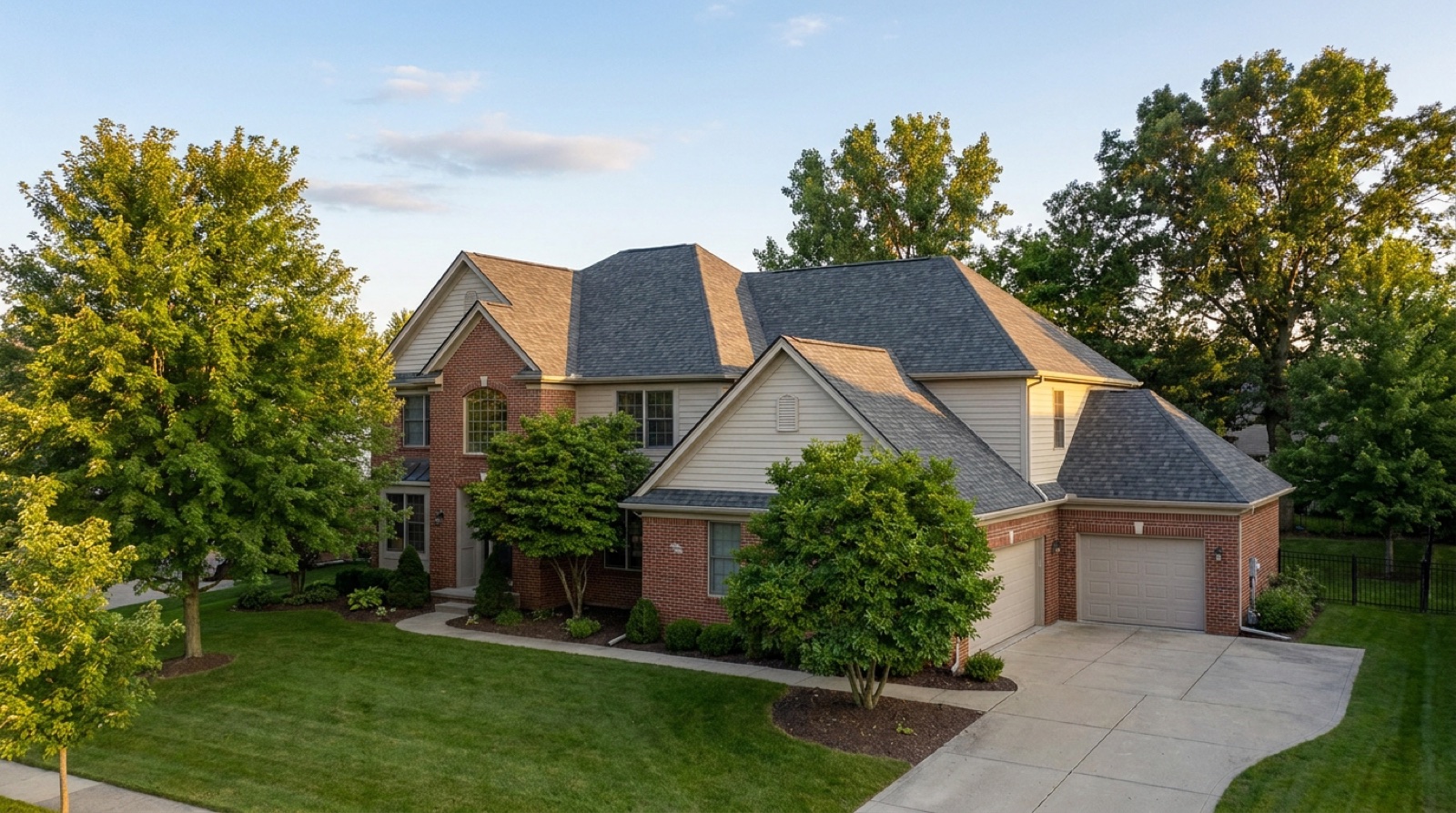
Metal expands and contracts with temperature more than asphalt shingles do, and that movement is largest on dark colored panels, which absorb more solar heat and swing through a wider daily temperature range than a lighter finish. Our metal roof color guide covers the aesthetic side of that tradeoff; here the concern is what constant expansion and contraction does to the layers underneath the panel over the years.
The risk is not the panel failing outright. It is the panel bonding to a sticky membrane surface underneath it. If a metal panel sits directly against a self-adhered ice and water shield with no separation layer, repeated thermal movement can drag against that bond point after point, which over enough seasons can contribute to oil canning, the cosmetic waviness our oil canning guide explains in more depth, or in worse cases can strain fastener points and seams. Some installers address this with a slip sheet, a thin layer such as rosin paper or a purpose-built slip underlayment placed between the panel and the sticky membrane below it, specifically so the panel can expand and contract without bonding to whatever is underneath it.
Not every metal system needs a slip sheet in every location; the right answer depends on the panel profile, the fastening method, and where self-adhered membrane is used versus mechanically fastened synthetic. This is a detail worth raising with whoever bids your job, particularly if you are choosing a dark panel color on a south or west facing slope that will see the most sustained heat.
05 / VAPOR AND MOISTUREVapor considerations and condensation
The last piece of the underlayment picture is moisture moving the other direction, from inside the house outward, rather than from weather inward. Warm, moist indoor air that reaches the cold underside of a metal panel in winter can condense there, the same way a cold glass of water sweats on a humid day. Our metal roof condensation guide covers the full diagnosis and fix in depth; the underlayment piece of that story is that the assembly as a whole, meaning deck, underlayment, insulation, and ventilation together, has to manage vapor and airflow as a system rather than relying on any single layer to block moisture entirely.
Some underlayment products are more vapor permeable than others, meaning they let a small amount of moisture vapor pass through rather than trapping it entirely between the deck and the panel. Whether that permeability helps or hurts depends on the rest of the assembly. In a properly vented attic with balanced intake and exhaust, a slightly more permeable underlayment can help any incidental moisture that does reach the deck dry back out rather than sit trapped against a solid membrane. In a finished or low-ventilation attic space, the same product choice interacts with insulation and air sealing in ways that deserve a specific look rather than a default answer, since the goal is always to keep the wood deck dry on both sides, not just the outdoor-facing one.
This is a detail a competent installer weighs against your specific attic construction rather than a blanket rule that applies the same way to every house, which is exactly why an on-site inspection matters more for a metal roof than for a straightforward asphalt reroof. A homeowner converting an attic to living space, or one who has already had ice dams or musty smells in a Michigan winter, should raise that history during the estimate so the underlayment and ventilation plan gets built around the actual house rather than a generic spec sheet.
06 / THE REAL SPECGetting the underlayment right on your roof
None of this is something a homeowner can verify by looking at a finished metal roof from the ground, which is exactly why it belongs in the conversation before a contract gets signed, not after. A quote that spells out the ice barrier grade at the eaves and valleys, the underlayment type across the field, and whether a slip sheet is planned under a dark panel color is a quote from someone who has thought through the assembly, not just the finish. Our metal roof installation walkthrough covers where underlayment fits into the day-by-day sequence of a real install, from tear-off through panel hanging.
If you already have a metal roof and are wondering whether the hidden layers were done right, the honest answer usually starts with an inspection rather than a guess. Attic-side signs like rusty fastener tips, staining on the underside of the deck, or a musty smell after a hard freeze thaw cycle can point back to an underlayment or ventilation gap rather than a panel problem. If you are instead weighing whether to install metal directly over existing shingles, our metal over shingles guide explains why that shortcut complicates the underlayment picture specifically, since it changes what the ice barrier and synthetic layer are actually adhering to.
A free inspection covers the roof surface and, just as importantly, the attic side of the deck, so we can tell you honestly what is underneath an existing metal roof or spec the right underlayment package for a new one before a single panel goes down.
- Underlayment does more of the daily work under metal than under asphalt, because metal passes heat and requires a stronger secondary seal at every fastener.
- Code requires an ice barrier membrane at eaves and valleys; under metal, that membrane should be a high-temperature rated product, not a standard shingle-grade one.
- Synthetic underlayment generally outperforms felt across the field of a metal roof, resisting wrinkling, UV exposure, and sustained heat better.
- Dark panel colors move the most with heat, which is why some systems call for a slip sheet between the panel and any sticky membrane below it.
- Metal replacement runs $18,000 to $30,000 installed in Macomb County, and the underlayment package described here is part of that price, confirmed free with an on-site inspection.
Questions we hear most
Most reputable metal roofing specs use two products together: a high-temperature rated ice and water shield at the eaves, valleys, and penetrations, and a high quality synthetic underlayment across the rest of the roof field. Felt can work under metal in some assemblies, but it wrinkles and degrades faster under the heat metal panels create, which is why synthetic is now the more common default.
Yes, at least at the eaves and valleys. Standard ice and water shield is rated for the temperatures typical under asphalt shingles, and can soften or lose adhesion at the higher sustained temperatures a metal panel, especially a dark one, can create. A high-temperature rated membrane is the metal-specific answer there, while a quality synthetic underlayment is generally suitable across the field either way.
A slip sheet is a thin layer, such as rosin paper or a purpose-built product, installed between a metal panel and a sticky membrane beneath it, so the panel can expand and contract with temperature without bonding to that membrane. Whether your roof needs one depends on the panel profile, fastening method, and panel color, since darker colors move more with heat. It is worth asking any contractor bidding a metal roof whether one is planned.
- Michigan Residential Code 2015, section R905.1.2 Ice Barriers: membrane required from the eave edge to not less than 24 inches inside the exterior wall line. up.codes: MRC chapter 9
- Manufacturer technical and warranty literature for the major asphalt shingle lines: GAF (gaf.com), Owens Corning (owenscorning.com), and CertainTeed (certainteed.com).