
JUMP TO A SECTION
Type the phrase into a search bar and you will find advice that treats a roof claim like a used car lot: hold firm, push back, do not take the first offer. Most of it misunderstands how a claim file works. The carrier's estimate is not an opening bid pulled from the air; it is a document built from whatever evidence, measurements, and line items were in the file the day it was written. An adjuster cannot pay for a slope that was never photographed, a code item that was never flagged, or a chimney flashing detail that never made it into the notes. Which means the practical question is not how to argue harder. It is how to get the missing information into the file through the channels that exist for exactly that purpose. This guide walks those channels in the order most homeowners should use them: the itemized contractor estimate, the supplement request, the reinspection, and, when a genuine dispute remains, the appraisal clause and the professionals licensed to fight about coverage. It is equally clear about the boundaries. Your roofing contractor, us included, can document, measure, and explain the scope of work, and we can meet your adjuster on site. What no contractor can do is negotiate coverage on your behalf or promise what the carrier will pay. The full claim playbook, from first photos to final invoice, lives on our storm and insurance claims page; this page covers the part that happens after the first estimate arrives and looks light.
01 / THE REFRAMENegotiation is documentation, not argument
Here is the mental model that makes everything else on this page make sense. A claim settlement is the output of a file. The file contains photos, measurements, notes, your policy language, and an estimate written in claims software from a regional price database. When the settlement changes, it is almost always because the file changed first: a new report was added, a measurement was corrected, a line item was proven necessary. Adjusters review evidence for a living, and the ones handling Macomb County claims after a big wind event are working through a long docket of files just like yours. A homeowner who calls to express frustration adds nothing to the file. A homeowner who sends a documented, itemized contractor estimate with photos adds something the process is actually built to respond to.
The stakes justify the paperwork. A typical asphalt replacement in Macomb County runs $9,000 to $18,000 installed, and most homes land $12,000 to $16,000, the same canon published on our pricing page. When a carrier estimate comes in thin, the gap between what was offered and what the work costs is frequently a few thousand dollars, and that gap usually traces to specific, findable omissions rather than to a stingy adjuster. The levers below are how those omissions get found and corrected.
02 / THE MECHANISMThe four things that actually move a settlement
Strip away the folklore and nearly every legitimate settlement adjustment falls into one of four categories. Knowing them tells you what to look for before you pick up the phone.
New evidence
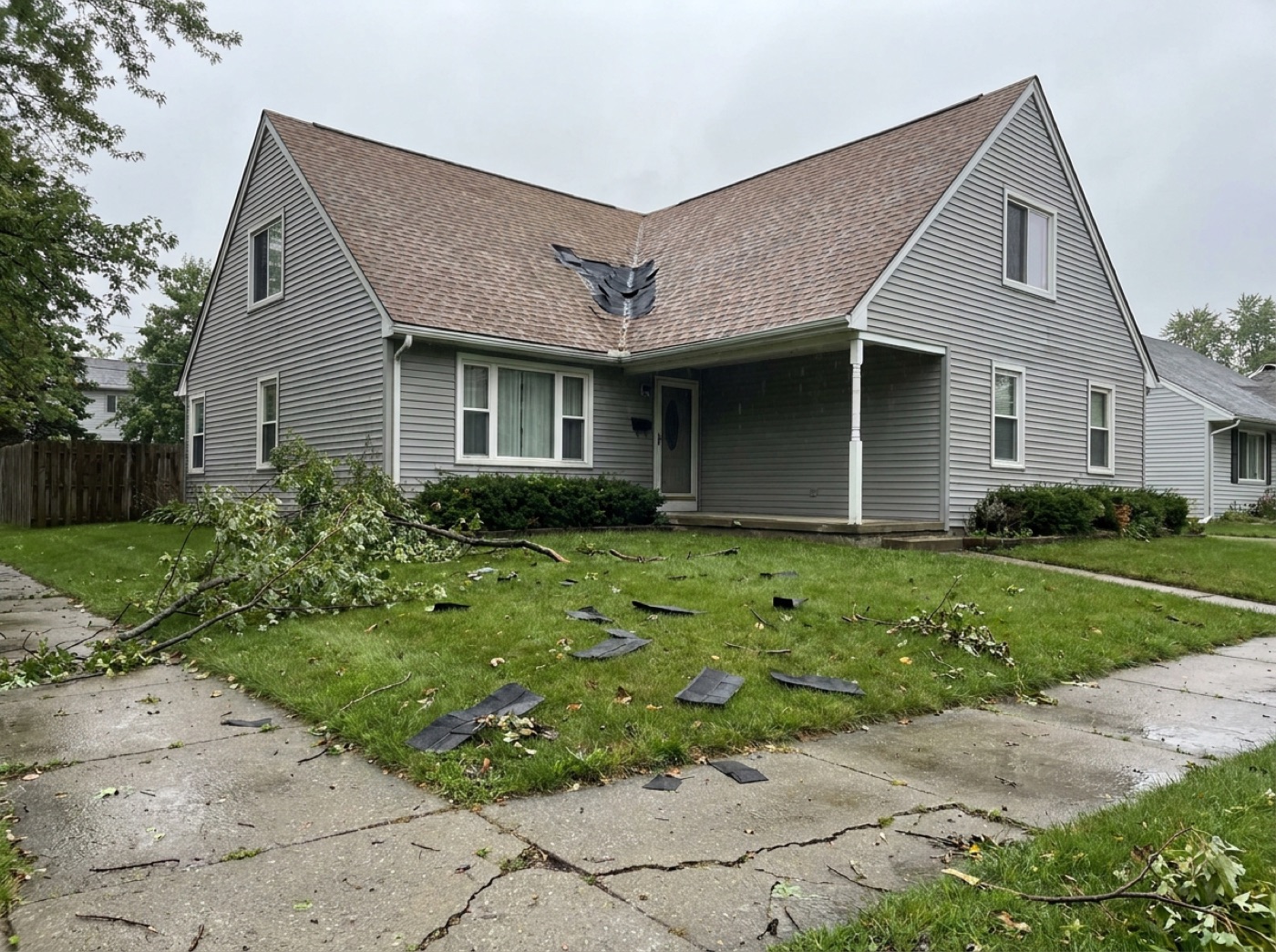
Damage the adjuster never saw cannot be paid for. Interior stains that appeared after the inspection, wind damage on a slope that was not walked, wet insulation found once a contractor opened the attic hatch: all of it is new evidence, and all of it belongs in the file with dated photos and a written description. This is the most common reason first estimates run light after major events, when adjusters are moving fast through full dockets. Our guide to underpaid roof claims covers how to audit the first estimate against what your roof actually shows.
Missed line items
A roof replacement is dozens of line items, not one. Tear-off, disposal, underlayment, ice and water barrier, drip edge, starter course, ridge cap, flashing details, pipe boots, ventilation, steep or high charges where they apply. Claims software only prices the lines the estimator enters, and lines get missed, especially details like chimney flashing rebuilds or extra tear-off layers that are hard to see from a quick walk. A trade-fluent second reader catches these, which is exactly what an itemized contractor estimate is for.
Code requirements
Michigan's climate zone brings code items that a bare-minimum estimate can overlook, ice barrier membrane at the eaves being the classic example. Whether code upgrade costs are covered depends on your policy's ordinance or law provisions, so this lever depends on both the building code and your specific policy language. The honest framing: code items may be claimable, your declarations page has the answer, and flagging the item in writing is what puts the question in front of the carrier at all.
Corrected measurements
Estimates are built from roof dimensions, and dimensions are sometimes simply wrong: a missed dormer, an undercounted slope, waste factors that do not match a cut-up roof. Because every material and labor line multiplies off the square count, a measurement correction can move an estimate more than any single line item. Aerial measurement reports and a contractor's on-roof tape both serve as documentation here, and disagreements between them are resolved with evidence, not adjectives.
03 / LEVER ONEThe itemized contractor estimate
The single most useful document a homeowner can add to a claim file is a detailed, line-item estimate from a local contractor who has actually been on the roof. Not a one-line total on a letterhead. An itemized scope that lists the same categories the carrier's software uses: tear-off and layers, decking allowance, underlayment and ice barrier, flashing details by location, ventilation, disposal, and the labor conditions that apply to your specific roof. When the two documents sit side by side, discrepancies stop being a feeling and become a list.
This is also where the tone of the whole process gets set. An itemized estimate is not an accusation; it is a second measurement of the same job, written in the same trade language the adjuster works in every day. In our experience the conversation that follows is usually cooperative, because both documents are trying to describe the same roof and the differences are usually explainable: a slope counted differently, a detail one party saw and the other did not. If the carrier's estimate came back higher or lower than your contractor's and you want to understand why before acting, our guide on what to do when the contractor estimate is higher than the insurance estimate walks the comparison line by line.
Two practical notes. First, get the estimate from a contractor you would actually hire at the number they wrote, because an inflated paper estimate helps nobody and can hurt your credibility with the carrier. Ours mirror the published ranges on this site, which is the point of having a public price canon. Second, timing matters: a documented inspection before the adjuster visit means the estimate can be handed over on the spot, and we can meet your adjuster on site to walk the same slopes together. A free inspection through the instant estimator starts that clock.
An adjuster cannot pay for what is not in the file. Every legitimate negotiation tactic is really one move: put the missing thing in the file, in writing, with evidence.
04 / LEVERS TWO AND THREESupplements and reinspection: the built-in correction channels
Carriers know first estimates miss things. That is why the process has two standing correction channels, and using them is not adversarial; it is how the system is designed to work.
The supplement request
A supplement is a documented request to add items to an approved claim, and it is routine in roofing. Some supplements cover damage discovered mid-job, rotted decking being the classic case, since nobody can see all of the deck until tear-off. Others cover items the original estimate simply missed: a required code item, an undercounted flashing detail, a disposal line that did not match the actual debris. A proper supplement is specific, photographed, and priced, and it is submitted through the claim, not argued by phone. Contractors prepare supplements as part of doing the covered work correctly; the carrier still decides what gets approved. The full mechanics, including what a well-documented supplement package looks like, are in our guide to roof claim supplements.
The reinspection
If you believe the adjuster's inspection itself missed damage, you can request a reinspection: a second site visit, often by a different adjuster or a senior reviewer, ideally with your contractor present. The request works best when it is specific, in writing, and attached to evidence: photos of the missed slope, the contractor's report, the line-item comparison from lever one. A reinspection request that says the estimate feels low goes nowhere. One that says the north slope shows wind-lifted shingles that do not appear anywhere in the inspection photos, with the photos attached, gives the reviewer something to act on. Neither channel guarantees a change, and it would be dishonest to suggest otherwise. What both channels do is get the corrected record in front of a decision-maker, which is the only thing that ever moves a settlement anyway.
After the August 2023 storms that placed Macomb County inside federal disaster declaration DR-4757, carriers processed enormous claim volume on stretched schedules. High-volume periods are precisely when first estimates run thin and when the supplement and reinspection channels earn their keep, because they exist to correct exactly the misses that speed produces.
05 / LEVER FOURAppraisal, public adjusters, and attorneys: when the dispute is real
Sometimes the file is complete and the two sides still disagree about the amount. Most homeowners policies contain an appraisal clause for exactly this situation: you hire an appraiser, the carrier hires an appraiser, the two select a neutral umpire, and the panel sets the amount of the loss. Appraisal typically resolves disputes about how much, not about whether the loss is covered at all, and it comes with its own costs and timelines, so read your policy's appraisal provision and weigh the size of the gap before invoking it. It is a formal tool for a genuine impasse, not a first move.
For disputes about coverage, or for homeowners who want a professional managing the entire claim, Michigan licenses public adjusters: independent professionals who represent the policyholder, document and value the loss, and negotiate with the carrier directly, generally for a fee taken as a percentage of the settlement. That fee buys real representation, and whether it is worth it depends on the size and complexity of the claim; our guide to public adjusters in Michigan roof claims walks the tradeoff. Denied claims, alleged bad faith, and legal disputes over policy language belong with an attorney. And any homeowner can file a complaint with Michigan's insurance regulator, DIFS, if they believe a claim was handled improperly.
Notice who is absent from that list: your roofing contractor. Negotiating coverage on a policyholder's behalf is licensed activity in Michigan, and a contractor who offers to handle your insurance company for you is offering something they are not permitted to deliver. A good contractor is a fact witness and a scope expert. The advocacy roles belong to you, a public adjuster, or an attorney.
06 / THE BOUNDARIESWhat not to do, and how to keep your leverage
The strongest position in any claim is being the reasonable party with the better paperwork. A few boundaries protect that position.
- Do not inflate anything. Exaggerated damage descriptions and padded estimates are the fastest way to lose credibility with a carrier, and misrepresenting a loss can jeopardize the claim itself. The truth, thoroughly documented, is the stronger play in every case.
- Do not sign advocacy away to a contractor. Be careful with any roofer whose contract makes them your claim representative or conditions the deal on the insurance outcome. Contractors document and build; they do not negotiate coverage.
- Do not vent into the claim file. Every call is logged. Keep calls short, factual, and dated, confirm anything important in writing, and let the documents carry the argument.
- Do not miss your policy's clocks. Proof of loss deadlines, appraisal windows, and suit limitation periods are real. Read the duties-after-loss section of your policy early, and calendar the dates.
And keep the goal in view. The point of all this is a correctly scoped roof, built right, at the price the loss actually justifies. If the covered work lands where most Macomb County asphalt replacements do, you are managing a five-figure project, and repairs, where a repair is all the damage calls for, run $350 to $3,200. Sanity-check any estimate, the carrier's or a contractor's, against the 60-second cost calculator, which runs the same published ranges as this page. If you are staring at a first estimate right now and wondering whether it is thin, start with a free inspection: we document the roof with photos, write the itemized scope, and can meet your adjuster on site. What happens to the settlement after that is the carrier's call, and anyone who promises you otherwise is telling you something they cannot know.
- Settlements move when the file changes: new evidence, missed line items, code requirements, or corrected measurements. Arguing adds nothing; documentation is the whole game.
- Lever one is an itemized, honest contractor estimate that mirrors the carrier's own line-item language and exposes specific gaps.
- Supplements and reinspections are built-in correction channels, not hostile acts. Use them in writing, with photos and specifics.
- A genuine impasse over amount can go to the policy's appraisal clause; coverage disputes belong to public adjusters, attorneys, and DIFS, never to your roofer.
- Contractors cannot negotiate coverage on your behalf in Michigan, and no one can promise a claim outcome. We document, we scope, and we can meet your adjuster on site.
- Keep leverage by staying honest, keeping records, watching policy deadlines, and letting the paperwork make the case.
Questions we hear most
You can pursue an adjustment, but the word negotiate is misleading. Settlements typically change when new documentation enters the file: an itemized contractor estimate, photos of missed damage, code requirements, or corrected measurements. The built-in channels are supplement requests, reinspections, and, for genuine disputes over amount, the appraisal clause in your policy. No adjustment is ever guaranteed.
No. In Michigan, negotiating a claim on a policyholder's behalf is licensed activity reserved for public adjusters and attorneys. What a contractor can legitimately do is document the damage, provide an itemized estimate in the same line-item language adjusters use, prepare supplements for the covered work, and meet your adjuster on site, which we do. The coverage conversation stays between you and your carrier.
Get a detailed, itemized estimate from a local contractor who has been on the roof, then compare it to the carrier's estimate line by line. Most gaps trace to specific missed items, measurements, or slopes, and those specifics become the basis for a written supplement or reinspection request with photos attached. Specific, documented requests move files; general complaints do not.
- FEMA, disaster declaration DR-4757-MI, Michigan severe storms of August 2023 (Macomb County designated). fema.gov/disaster/4757
- Michigan Department of Insurance and Financial Services (DIFS), consumer insurance resources and complaint process. michigan.gov/difs
- Insurance Information Institute, consumer explainers on homeowners policy coverage, deductibles, and the claims process. iii.org
- Michigan Residential Code 2015, section R905.1.2 Ice Barriers: membrane required from the eave edge to not less than 24 inches inside the exterior wall line. up.codes: MRC chapter 9