
JUMP TO A SECTION
Somewhere in the middle of a difficult roof claim, most homeowners ask the same question: who is actually on my side here, and who am I supposed to call? The confusion is understandable, because three different professionals orbit a roof insurance claim and their jobs overlap just enough to blur together. A roofing contractor documents the damage, writes the scope, and performs the work. A public adjuster represents you, the policyholder, in the valuation of the claim itself, for a fee. An attorney handles denials, disputes, and litigation when the claim has gone genuinely wrong. Each one is the right call in a specific situation, each one is the wrong call in others, and hiring the wrong one at the wrong moment can cost real money or, worse, real time. This guide draws the lanes clearly. It is written by a roofing company, and we will be honest about that bias up front: we believe most Macomb County claims never need anything more than a well documented contractor file, and we will also tell you plainly where our lane ends. A roofer does not negotiate coverage. A roofer does not interpret your policy. And nobody, in any of the three lanes, can promise your claim gets approved or that any path pays more. What we can promise is the thing inside our lane: thorough documentation, an itemized scope, and a crew that can meet your adjuster on site. The full claim process around all of this lives on our storm and insurance claims page.
01 / THE MAPThe three lanes in one view
Start with the shortest possible version. Your roofer is the damage and construction expert: they find what broke, document it, price the fix, and build it. A public adjuster is a claim representative: a licensed professional you can hire to value and present your claim to the carrier on your behalf, typically for a percentage of what the claim pays. An attorney is the dispute professional: the person you retain when a claim has been denied, badly underpaid after every other remedy, or mishandled in ways that may need legal pressure to resolve.
Roofers handle the damage and the work, public adjusters handle claim valuation for a fee, attorneys handle denials and legal disputes, and none of the three can guarantee what your carrier decides.
The lanes matter because the rules are different in each one. Contractors are regulated as builders, public adjusters are licensed as insurance professionals, and attorneys are licensed to practice law, and each license draws a boundary the others may not cross. A roofer who offers to negotiate your settlement is stepping outside what a contractor is permitted to do. A public adjuster cannot file a lawsuit for you. An attorney is an expensive way to get a scope of repairs written. Knowing the map keeps every professional in the seat they are actually qualified to fill, and it keeps you from paying dispute-level fees for documentation-level problems.
02 / THE ROOFERWhat your roofer does, and where our lane ends
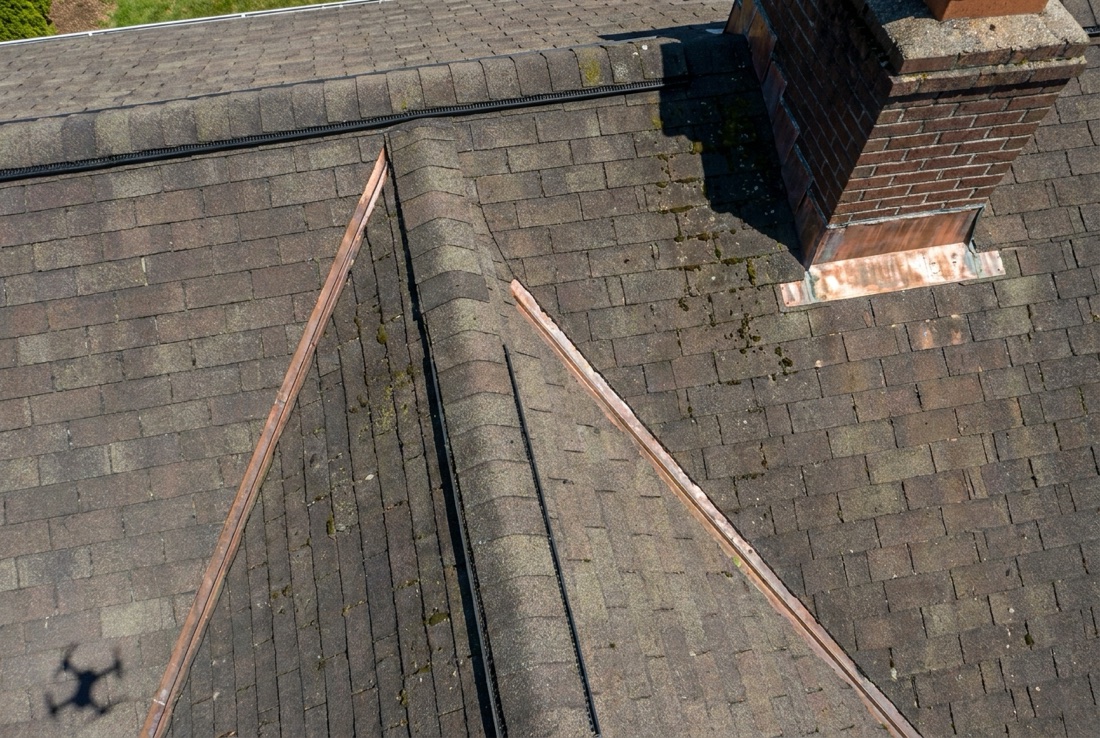
The roofing contractor's job on a claim is evidence and execution. Before the carrier ever sees your roof, a good contractor has inspected it, photographed the damage slope by slope, and written an itemized scope of what a complete repair or replacement actually requires: materials, quantities, tear-off, flashing details, code items, disposal. That document, and the photo file behind it, is the backbone of nearly every successful claim we have watched move through the process. Carriers work from documentation, and the contractor is the professional who produces most of it.
The second thing a roofer brings is presence. You are entitled to have your own contractor at the adjuster inspection, and it is usually the single most useful appointment we attend. We can meet your adjuster on site, walk the roof with them, point out every documented damage area so nothing gets missed because a slope was inconvenient, and answer technical questions about repair methods and measurements in the adjuster's own vocabulary. The etiquette matters: a contractor at that appointment is a witness and a technical resource, not a negotiator, and the coverage call always belongs to the adjuster and the carrier. The full case for that appointment is in our guide on whether your roofer should meet the insurance adjuster.
And the third thing is the work itself. When the claim resolves, the roofer is the one professional of the three who actually restores the roof, and the numbers are public on our end: a typical Macomb County asphalt replacement runs $9,000 to $18,000, with most homes landing $12,000 to $16,000, and repairs run $350 to $3,200, with larger or complex work running higher. Where our lane ends is just as important. We do not interpret policy language, we do not argue coverage positions with your carrier, we do not take a percentage of your settlement, and we never promise a claim outcome. When a claim needs valuation advocacy or legal muscle, the honest move is referring you down the hall, and this page is that referral map.
03 / THE PUBLIC ADJUSTERWhat a public adjuster does, and when one may earn their fee
A public adjuster is the only one of the three professionals whose entire job is the claim itself. Where the adjuster your carrier sends works within the insurer's process, a public adjuster is licensed to represent the policyholder: they inventory and document the loss, prepare their own detailed estimate of its value, present the claim to the carrier, and handle the back and forth of valuation on your behalf. In Michigan, public adjusters are licensed by the state, and verifying that license before signing anything is basic due diligence; our full guide to public adjusters in Michigan covers licensing, contracts, and fee arrangements in depth.
The fee structure is the defining feature. Public adjusters commonly work for a percentage of the claim settlement, which means their fee comes out of the same pool of money that is supposed to fund your roof. That arrangement can be entirely fair, and it can also be a poor trade, depending on the claim. On a large, complex loss, a roof plus interior damage across multiple rooms, contents, or a commercial building, a professional who does nothing but maximize claim documentation may find scope a homeowner and even a contractor would miss, and the percentage can be money well spent. On a straightforward residential roof claim where the damage is obvious and the carrier is responsive, the same percentage can simply be a slice taken from a settlement that was coming anyway.
The honest checklist for considering one looks like this: the claim is large or unusually complicated, the gap between the carrier's number and the documented cost of repairs has persisted after supplements and a reinspection, or the process has stalled in ways that persistence has not fixed. A public adjuster may help in those postures; no one can promise they will. What they cannot do also matters. A public adjuster does not perform construction work, cannot practice law, and cannot force a carrier to do anything. When a claim needs a lawsuit, their lane ends too.
04 / THE ATTORNEYWhat an attorney does, and the problems that belong to one
The attorney's lane begins where the ordinary claim process has failed. A denial you believe is wrong after reading the stated reasons against your own evidence. A settlement that remains far below the documented loss after supplements, reinspection, and every administrative remedy. Deadlines blown, communications ignored, or a carrier posture that may amount to bad faith under Michigan law. Policy language disputes, appraisal clause fights that escalate, and litigation are legal work, and only a lawyer is licensed to do legal work. Our companion guide on hiring an attorney for a roof insurance claim walks the decision in detail.
Fee arrangements vary: some property insurance attorneys work on contingency, taking a percentage if they recover money, while others bill hourly for discrete work like a demand letter or a policy review. Either way, an attorney is the most expensive of the three lanes per unit of effort, which is exactly why the sequence matters. A lawyer engaged over a documentation gap is a mismatch in both directions: you pay dispute rates for something a contractor's itemized scope might have resolved, and the legal process is slower than a supplement. But when the dispute is real, the attorney is the only professional who can compel anything, because the courthouse is the only venue where a carrier's decision can actually be overruled. No attorney can promise a result either, and the credible ones say so in the first meeting.
One more stop exists on the map, and it is free: Michigan's insurance regulator accepts consumer complaints about carrier conduct, and filing one costs nothing but time. A regulator complaint is not a lawsuit and does not decide your claim's value, but it puts the dispute on the record and can prompt a documented response from the carrier, which is why many homeowners try that channel, along with a reinspection request, before paying dispute-level fees to anyone. An attorney consultation, which many firms offer at no charge for property claims, can also clarify whether you have a legal question at all or just a documentation gap wearing a scary denial letter. Asking the free questions first is not stalling. It is sequencing.
Three professionals, three lanes. Most claim frustration comes from asking one of them to do another one's job, and most claim money is protected by getting the sequence right.
05 / THE DECISIONWho to call when: the situation table
Real claims do not announce which lane they belong in, so here is the situation-by-situation version. Treat the middle column as a starting point, not a rule; claims can move between lanes as they develop, and the honest criteria are always hedged, because every claim file is different.
| SITUATION | USUAL FIRST CALL | WHY |
|---|---|---|
| Storm just hit, no claim filed yet | ROOFER | A free inspection documents whether the damage is worth a claim at all |
| Adjuster inspection is on the calendar | ROOFER | We can meet your adjuster on site with photos and a written scope |
| Carrier estimate is thinner than the damage | ROOFER | A line-by-line comparison and a documented supplement usually come first |
| Large, complex, or contested valuation | PUBLIC ADJUSTER | Valuation advocacy is their entire license, for a percentage fee |
| Claim denied in writing | ATTORNEY | Denial reasons are a legal question; a public adjuster review can also help |
| Suspected bad faith, blown deadlines, silence | ATTORNEY | Only legal counsel can apply legal pressure |
| You just want the roof fixed | ROOFER | Repairs run $350 to $3,200; replacement is priced in the open |
Two notes on sequence. First, the lanes stack rather than replace each other: a homeowner with a public adjuster still needs a contractor to scope and build the roof, and an attorney will lean on both the contractor's documentation and, sometimes, a public adjuster's estimate as evidence. Hiring one does not mean firing another. Second, escalation is a one-way street with tolls. Moving from documentation to a public adjuster costs a percentage; moving to an attorney costs fees and months. That is why the cheapest first move in almost every posture is the thorough, itemized, photographed contractor file, and why we build one on every storm inspection through our instant estimator.
A roofing contractor cannot negotiate your coverage or your settlement, and you should be wary of any contractor who offers to. After the August 2023 storms that placed Macomb County inside federal disaster declaration DR-4757, plenty of out-of-town operators blurred exactly this line. Documentation is our lane. Valuation advocacy belongs to a licensed public adjuster, and disputes belong to a lawyer.
06 / THE MONEYWhat each one costs, in the open
Cost structure is where the three lanes differ most, and it deserves plain numbers wherever we can give them. The roofer's math is the simplest, and ours is published: the inspection and the written scope are $0 with no obligation, and we are paid by building the roof, at the same prices whether insurance is involved or not. Asphalt replacement runs $9,000 to $18,000 in Macomb County, metal runs $18,000 to $30,000, and the full canon is on our pricing page and in the replacement cost guide. A contractor has no percentage stake in your settlement, which is exactly why the documentation we produce is credible to carriers.
The public adjuster's fee is a percentage of the settlement, set by contract and, in Michigan, subject to the licensing rules that govern the profession. The right way to think about it is simple arithmetic against your actual claim: on a roof settlement in the $12,000 range, every percentage point of fee is real money that no longer buys shingles, so the fee only makes sense when the adjuster's advocacy may move the claim by meaningfully more than it costs. Sometimes it can. It is never guaranteed. The attorney's cost is either a contingency percentage, typically larger than a public adjuster's, or hourly billing, and it buys the one thing the other lanes cannot: legal force. If the arithmetic on any of this needs a starting number for your own roof, the 60-second cost calculator runs the same published figures, and a free storm inspection puts a documented scope in your hands before you pay anyone anything.
- Roofers document damage, write the itemized scope, meet the adjuster, and build the roof; they do not negotiate coverage and take no cut of the settlement.
- Public adjusters are licensed to represent you in claim valuation for a percentage fee, which earns its keep on large or contested claims and can be an unnecessary slice on simple ones.
- Attorneys own denials, bad-faith postures, and litigation; they are the most expensive lane and the only one that can apply legal force.
- The lanes stack: an escalated claim still needs the contractor's documentation and eventually the contractor's crew.
- Sequence saves money: a documented contractor file and a supplement usually come before a percentage fee, and a percentage fee usually comes before a lawsuit.
- Nobody in any lane can promise your claim's outcome, and anyone who does is telling you which lane they should not be trusted in.
Questions we hear most
They do different jobs, so it is not either-or. A roofer documents the damage, writes the repair scope, can meet your adjuster on site, and performs the work; a public adjuster represents you in valuing the claim, for a percentage of the settlement. Many straightforward claims resolve with good contractor documentation alone, while large or contested claims may justify a public adjuster's fee. No one can promise either path pays more.
No. Negotiating coverage or settlement value on your behalf is representation, which in Michigan belongs to a licensed public adjuster or an attorney, not a contractor. What a roofer can legitimately do is document the damage, provide an itemized estimate, meet the adjuster on site to answer technical questions, and submit documentation for supplements. Be cautious with any contractor who offers to handle your claim for you.
Generally when the ordinary process has failed: the claim was denied and the stated reasons look wrong against your evidence, the settlement stays far below the documented loss after supplements and reinspection, or the carrier has ignored deadlines in ways that may amount to bad faith. Attorneys are the most expensive lane, so most homeowners exhaust documentation and administrative remedies first. No attorney can guarantee a result.
- FEMA, disaster declaration DR-4757-MI, Michigan severe storms of August 2023 (Macomb County designated). fema.gov/disaster/4757
- Michigan Department of Insurance and Financial Services (DIFS), consumer insurance resources and complaint process. michigan.gov/difs
- State Bar of Michigan, lawyer referral service and consumer legal resources. michbar.org