
JUMP TO A SECTION
Somewhere between filing the claim and getting the estimate, every homeowner faces the same appointment: the insurance adjuster is coming to look at the roof. And almost every homeowner asks the same question about it. Should my roofing contractor be there too? The short answer is yes, in most claims, and the reasons are practical rather than adversarial. The adjuster's inspection produces the file your entire claim gets decided from, and a contractor who has already been on your roof can help make sure that file is complete: every slope documented, every damaged detail pointed out, every technical question answered in the same language the adjuster's estimate will be written in. What a contractor cannot do is just as important, and this guide is blunt about it. A roofer does not decide coverage, does not negotiate your settlement, and cannot promise your claim gets approved; nobody can. Those lanes belong to the adjuster, to you, and in disputed claims to a licensed public adjuster or an attorney. What follows is the full case, the etiquette, and the boundaries, so the appointment helps your claim instead of complicating it. If you have not read how the appointment itself unfolds, start with our walkthrough of the adjuster inspection and come back.
01 / THE ANSWERThe short answer: yes, and here is the honest version of why
You have the right to have your own contractor present when the adjuster inspects your roof, and exercising that right costs you nothing. The value is simple: the adjuster is at your house to build a record, and the record is only as good as what gets seen, measured, and photographed during a visit that commonly runs under an hour and a half. A roofer who inspected the roof before the appointment arrives knowing exactly where the damage is. On a claim day when the adjuster may be working several properties, that knowledge is the difference between a complete file and a file with gaps that take weeks of supplements and phone calls to close later.
The honest version of why also includes what the meeting is not. It is not a negotiation, and a contractor who treats it like one does you no favors. The adjuster still makes the coverage call, writes the report, and answers to the carrier. Your roofer's job on site is documentation and translation, full stop. When contractors respect that line, adjusters generally welcome the company; a knowledgeable second set of eyes makes their documentation job easier too. When contractors cross it, the appointment gets tense and the homeowner is the one whose claim file inherits the tension.
Having your roofer at the adjuster inspection is about completeness, not combat: the contractor points out damage, speaks the estimate's technical language, and keeps an independent record, while the adjuster still makes every coverage decision.
02 / THE CASEWhat a knowledgeable roofer actually adds to the appointment
Strip away the sales talk and three concrete things happen when a competent contractor attends the adjuster visit. Each one protects the completeness of the claim file, which is the only thing a homeowner can really influence at this stage.
Nothing gets missed because nobody knew where to look
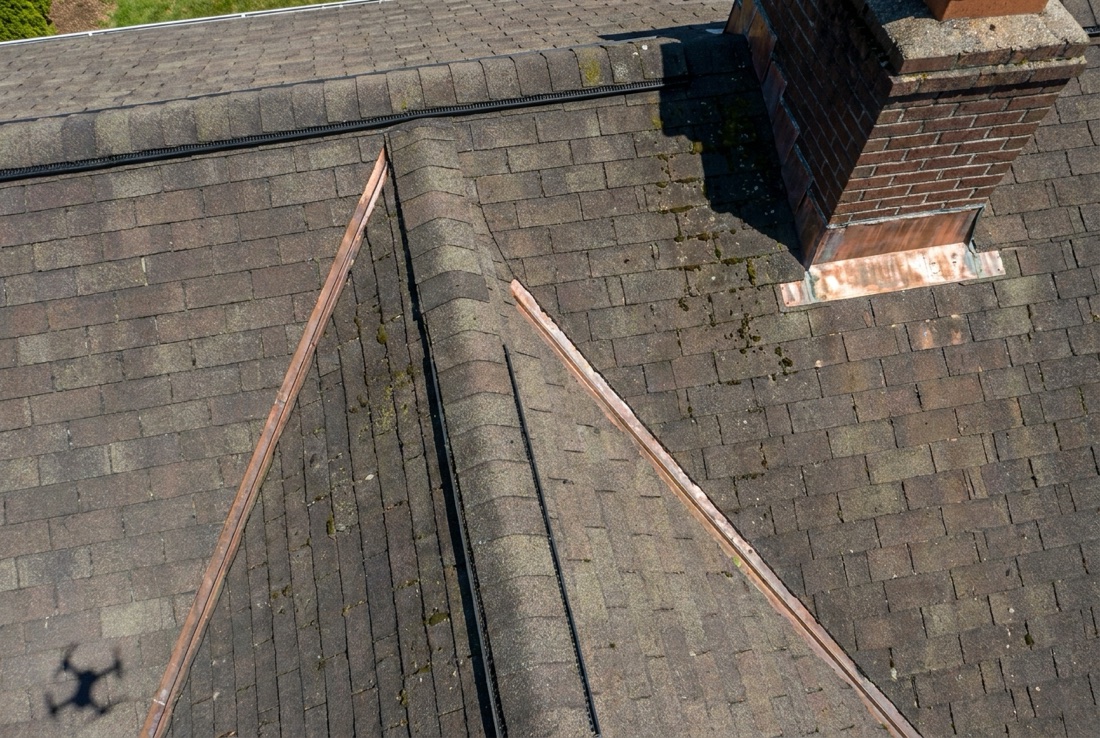
Storm damage is rarely obvious from the driveway. Wind creases hide on the leeward slopes, lifted shingles reseal loosely and look fine from the ground, and flashing damage tucks behind chimneys and dormers. A contractor who has already walked the roof arrives with a marked-up inspection report and can take the adjuster directly to every finding: this slope, this valley, this run of ridge cap. Adjusters are trained inspectors, but they are seeing your roof for the first time, sometimes late in a long day. A guided tour from someone who has been up there is not an insult to their skill. It is how thorough files get built.
Someone on your side speaks the estimate's language
Carrier estimates are built from line items: squares, waste factors, drip edge, ice and water barrier, decking, steep charges. When the adjuster asks how many layers are on the roof, whether the decking is plank or sheet, or what the flashing detail at the sidewall requires, a homeowner usually cannot answer and an unanswered question becomes a guess in the file. Your contractor answers those questions on the spot, in scope language, so the record reflects what the repair or replacement actually requires. That matters months later, because disagreements about roof claims are almost always disagreements about scope, and scope gets set now.
A second, independent record of the visit exists
The contractor photographs what was examined, notes which slopes were walked, where test squares were marked, and what was discussed. In the majority of claims that record simply sits in a folder. But if the carrier's estimate later comes back missing a slope that everyone stood on, or thinner than what the meeting covered, the documented visit is what turns your side of the story from a recollection into evidence. That is the quiet, unglamorous value of attendance, and it is the reason we treat every adjuster meeting as a documentation job first. If the estimate does come back light, the gap has established remedies, starting with a line-by-line comparison and a documented request for a second look, and escalating from there through the paths on our storm and insurance claims page. When the two accounts of the same roof genuinely do not line up, sorting the differences comes before arguing any of them, and two inspections reaching different conclusions takes them one line at a time.
03 / THE LINEThe hard boundaries: what your roofer must not do
Everything above works only because of what a contractor does not do at the appointment, and you should hold your roofer to these lines as firmly as we hold ourselves to them. A roofing contractor is not a party to your insurance contract. The claim belongs to you, the coverage decision belongs to your carrier, and the space between those two is regulated territory.
- A roofer does not negotiate coverage. Arguing with the adjuster about what the policy owes, demanding approvals, or bargaining over the settlement amount is claim negotiation. In Michigan, negotiating an insurance claim on a homeowner's behalf for compensation is the licensed work of a public adjuster or an attorney, and a contractor who does it anyway is operating outside their lane. What a contractor properly discusses is the roof: the damage, the measurements, and what a correct repair or replacement scope includes.
- A roofer does not promise outcomes. No contractor can guarantee your claim will be approved, and any roofer who says otherwise, or dangles a free roof, is telling you something important about how they do business. Carriers and adjusters may reach different conclusions than we would; our job is to make sure they reach them from a complete file.
- A roofer does not interpret your policy. Deductibles, exclusions, coverage bases, and endorsements are between you, your policy documents, and your carrier or a licensed advisor. We will happily explain what a scope item is; what your policy pays for it is not ours to declare.
- A roofer does not pressure you to sign anything at the meeting. Be cautious with any contractor who wants a contingency agreement or an assignment of claim benefits signed in the driveway before the adjuster arrives. Read anything you sign, on your own time.
These boundaries are not modesty theater. They exist because the professionals who handle claim disputes are licensed and regulated for a reason, and because a contractor who stays in the documentation lane is more credible with adjusters, which serves you. The division of labor across all three professions is mapped in our guide to public adjusters vs roofers vs attorneys.
04 / THE MEETINGHow the appointment runs when a contractor attends
Done right, the three-way meeting is uneventful, and uneventful is the goal. Here is the routine we follow when we meet an adjuster at a Macomb County home, and it is a fair template for judging any contractor you invite.
We arrive a few minutes before the appointment window with our inspection report, photos, and measurements from the earlier visit. Introductions are professional; the adjuster is a colleague in a process, not an opponent. On the roof, the contractor walks the same circuit the adjuster wants to walk and points out each documented finding, answering questions about materials, layers, decking, and details as they come up. Where the adjuster marks test squares or takes measurements, we photograph the same spots for our own file. If interior damage is part of the claim, the homeowner or the contractor walks the adjuster to every stain and soft spot on the list. Then the coverage conversation, if the adjuster has one to start, happens between the adjuster and you. We step back. That is the etiquette, and it is also the law of the lanes described above.
The best adjuster meetings are boring. Two professionals walk a roof, agree on what is there, and the file gets built once, completely, instead of twice through supplements.
One scheduling reality is worth knowing. After a major storm event, adjusters work long dockets and appointment windows stretch; Macomb County saw this at scale after the August 2023 storms behind federal disaster declaration DR-4757. Coordinating your contractor's calendar with the adjuster's window takes one phone call and is worth the small hassle, because rescheduling an adjuster visit can add weeks to a claim. Give your roofer the window as soon as the adjuster proposes it.
05 / OTHER LANESWhen the claim needs someone other than a roofer
A contractor at the adjuster meeting covers the documentation problem, which is the most common problem. It does not cover every problem, and part of being honest about this appointment is telling you when the right companion is a different professional entirely.
If the dispute is about money rather than scope, meaning the carrier acknowledges the damage but you believe the valuation is wrong, a licensed public adjuster represents policyholders in exactly that territory, typically for a percentage fee. If the claim has been denied, if you suspect the carrier is not handling it fairly, or if the amounts at stake justify legal costs, an attorney is the escalation path. And if the claim is straightforward, damage documented, coverage confirmed, numbers roughly aligned, you may need nobody at all beyond a competent contractor to do the work. The decision framework, including what each professional costs and when each one earns it, is the whole subject of our who-does-what comparison. The point here is narrower: inviting your roofer to the adjuster meeting is a free, low-stakes step that fits almost every claim, and it does not close the door on any of the others.
06 / THE SETUPSetting it up: three phone calls, in order
The logistics are simple, and the order matters. First, before the adjuster is even scheduled, get your own contractor inspection with photos and a written scope. It is the raw material for everything the contractor contributes at the meeting, and choosing that contractor carefully is its own subject; our guide on choosing your own roofer during a claim covers why the pick is always yours, never the carrier's. Ours is free, with no obligation, and the fastest way to book it is the instant estimator or a call to (586) 300-1746.
Second, when the adjuster calls to schedule, take the proposed window and relay it to your contractor before confirming, so one call locks both calendars. Third, confirm the day before, and have your paperwork ready: claim number, dated photos, the contractor's report. That is the entire setup. We can meet your adjuster on site anywhere in Macomb County, at no charge, whether or not you ever hire us for the roof.
It is worth being clear-eyed about the stakes, because they are the reason this appointment deserves preparation. A typical asphalt replacement here runs $9,000 to $18,000, with most homes landing $12,000 to $16,000, the same published canon on our pricing page and in our replacement cost guide; storm repairs, when a repair is all the damage calls for, run $350 to $3,200, with larger or complex work running higher. You can pressure-test any number against local figures with the 60-second cost calculator. Five-figure decisions get made from the file this meeting produces. Bring your witness. And if water is coming in while the process grinds forward, do not wait on anyone; our emergency tarping line runs 24/7, and the permanent work follows the claim.
- Yes, have your roofer at the adjuster inspection: it is your right, it costs nothing, and it makes the claim file more complete.
- The contractor's three contributions are pointing out documented damage, answering scope questions in the estimate's own language, and keeping an independent photo record.
- The adjuster still makes every coverage decision; a roofer who negotiates, promises approvals, or interprets your policy is out of their lane.
- Claim negotiation for compensation is licensed work in Michigan; valuation disputes belong to public adjusters, denials and bad-faith concerns to attorneys.
- Set it up in order: contractor inspection first, then relay the adjuster's window to your roofer before confirming, then confirm the day before with paperwork ready.
- We can meet your adjuster on site anywhere in Macomb County at no charge, and the free inspection that precedes it books in 60 seconds.
Questions we hear most
In most claims, yes. A contractor who has already inspected your roof can point the adjuster to every documented finding, answer technical scope questions on the spot, and keep an independent record of what was examined. The adjuster still makes the coverage call; the roofer's job is completeness, and it costs you nothing to have them there.
No. In Michigan, negotiating a claim on a policyholder's behalf for compensation is the licensed territory of a public adjuster or an attorney, not a roofing contractor. A roofer properly discusses the damage, the measurements, and what a correct repair scope includes, and leaves coverage and settlement conversations between you and your carrier.
No. We can meet your adjuster on site anywhere in Macomb County at no charge, with our inspection report and photos in hand, whether or not you hire us for the eventual work. Call (586) 300-1746 with the adjuster's proposed window, or book the free inspection first through the instant estimator, and we will coordinate the calendars.
- FEMA, disaster declaration DR-4757-MI, Michigan severe storms of August 2023 (Macomb County designated). fema.gov/disaster/4757
- Michigan Department of Insurance and Financial Services (DIFS), consumer insurance resources and complaint process. michigan.gov/difs
- Insurance Information Institute, consumer explainers on homeowners policy coverage, deductibles, and the claims process. iii.org