
JUMP TO A SECTION
A missing patch of shingles is one of the most common calls we get in Macomb County, and it usually starts the same way: a windy night, then a bald spot on the roof where a row of shingles used to be, or a few of them sitting in the yard the next morning. If nothing is actively dripping into the house, this is scheduled repair work, not an emergency, and how to replace blown off shingles is a smaller job than most homeowners expect, but a correct one involves more steps than sliding new shingles into the gap. This page is about the craft of that repair: how a pro actually does it, why the shingles around the bare spot get checked too, and what to expect when the new shingles do not vanish into the old ones. If wind just tore your roof open during an active storm and you are dealing with a claim, that is its own conversation in our storm and insurance claims guide; this page is about the fix itself.
01 / THE SHORT ANSWERWhat this repair is, and what it is not
Replacing missing shingles is repair-scale work. In Macomb County, roof repairs run $350 to $3,200, and larger or complex repairs can run higher; a small patch of blown-off shingles on one slope sits near the low end of that range. The job itself is straightforward in concept: remove what is left of the damaged course, slide new shingles in under the row above so water still runs downhill over every seam, and nail and seal them so the patch behaves like the rest of the field. Where homeowners get surprised is in the details, because a patch that only fills the visible hole and skips the surrounding checks tends to be the patch we get called back to fix.
is the Macomb County repair range a missing-shingle fix falls inside, with a small patch near the low end. Get a quick ballpark with the instant estimator, then a free inspection sets the exact price for your roof.
This guide stays focused on scheduled repair of a known bare spot, the kind of call that comes in days or weeks after the wind event, not while it is happening. If shingles are actively coming off your roof right now, the emergency step is stopping water from getting into the house, which is what our emergency roof repair crew tarps for around the clock; the permanent repair covered here gets scheduled once the roof is stable.
02 / THE METHODHow a pro replaces the missing shingles
There is a right order to this repair, and skipping steps is what turns a $400 fix into a leak six months later. Here is the sequence, roughly as it happens on the roof.
1. Clear the damaged course completely
Whatever is left of the torn shingles has to come out, not just the pieces that are already loose. That means pulling any nails still holding on ragged remnants and clearing the area down to sound underlayment, because leaving a torn stub under the new shingle creates a lump that the new course will never lay flat against.
2. Slip new shingles under the row above
Asphalt shingles overlap the course below them, so a repair patch cannot simply be laid on top of the gap. The row above the bare spot has to be lifted carefully, especially in cold weather when older shingles are stiff and crack if bent too far, and the new shingle slides in underneath it so the shingle above still covers the top edge of the new one, exactly the way water expects to find it. Get this step wrong and the patch becomes the one spot on the roof where water can work its way sideways under a seam instead of running over it.
3. Nail in the manufacturer's pattern, not just wherever it holds
Every shingle has a nailing zone, a printed line where fasteners belong so they catch the shingle below and stay covered by the course above. Nails set too high miss that reinforcement; nails set too low, or left exposed, are one freeze-thaw cycle from working loose and opening a hole exactly where you do not want one. A patch nailed correctly disappears into the fastening pattern of the rest of the roof; one nailed carelessly becomes the weak point the next wind storm finds first.
4. Hand-seal the tabs
New shingles carry a factory adhesive strip that bonds each course to the one below it, but that strip needs sun and warmth to activate, and a repair does not always land in warm weather. A pro hand-seals the new shingles with roofing-grade adhesive at the tabs so the patch is wind-secure the same day, rather than leaving it to rely on a strip that might not bond for months. Cold-season repairs in Michigan lean on this step more than warm-season ones, since a patch done in November has to hold through a full winter of freeze and thaw before summer sun ever reaches the strip.
5. Recheck the flashing lines the patch touches
If the bare spot runs anywhere near a valley, a chimney, a vent pipe, or a wall, the repair is not finished until the flashing at that edge is checked too. Shingles and flashing work as one system: a perfectly woven shingle patch that butts against flashing that is already lifted or rusted through will still leak, just a few inches from where the new shingles end. A thorough repair traces the water's whole path, not just the hole it originally found.
6. Clean up and a final walk of the surrounding field
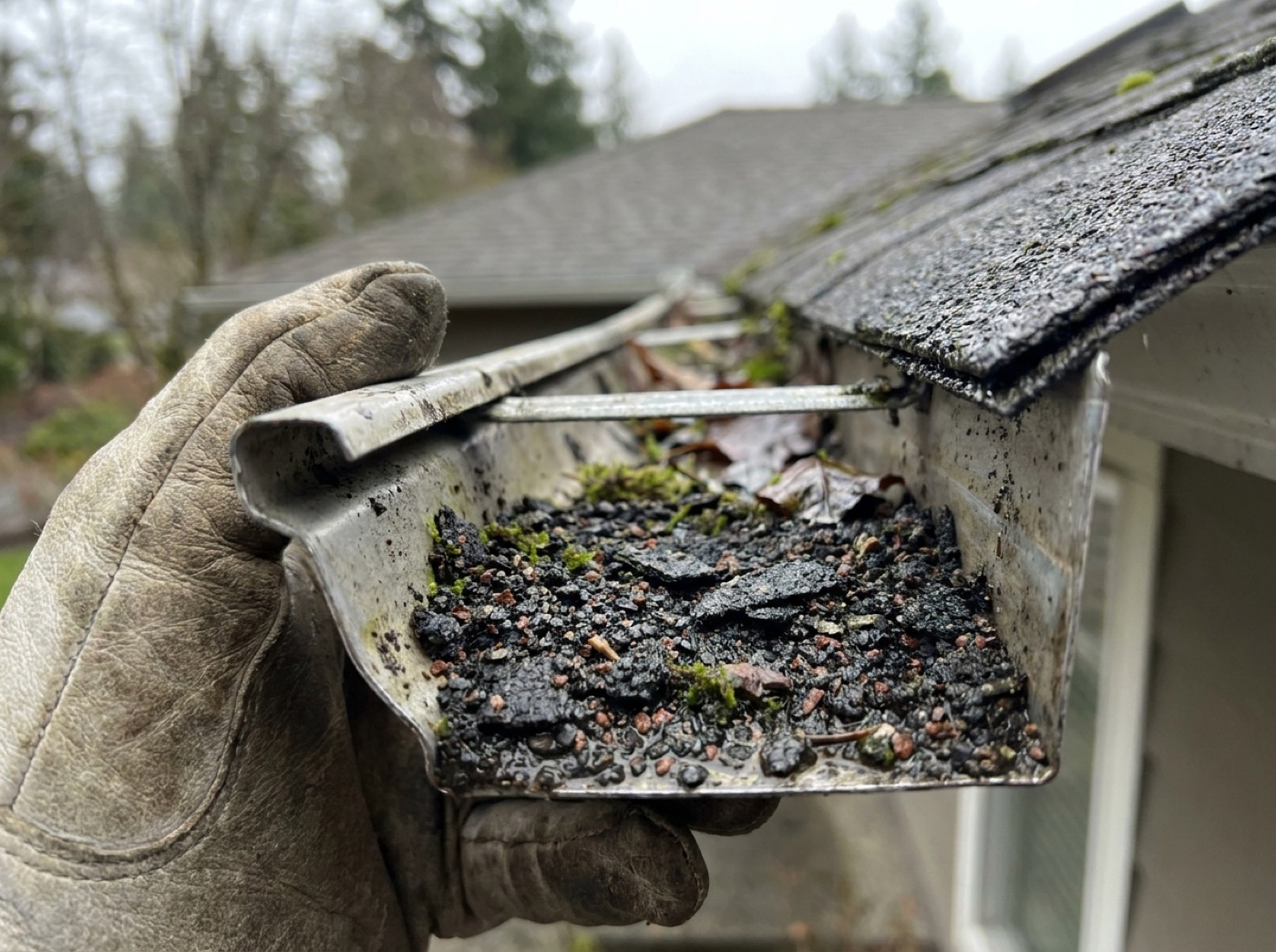
The last step is mundane but real: clearing loose granules and nail debris from the gutters and the roof surface, and walking the courses on either side of the patch one more time to confirm nothing was missed. A repair crew that leaves the roof cleaner than they found it, and can show you photos of the finished patch from the ground and, when practical, from the roof, is doing the job the way it should be done every time, not just when someone is watching.
03 / THE NEIGHBORSWhy the shingles around the bare spot matter as much as the hole
The shingles you can see are missing are rarely the whole story. Wind that tears one course off almost always tests the seal on the shingles around and above it too, even when those shingles stayed put. A shingle whose adhesive strip let go looks completely normal from the ground; it is one more gust away from joining the ones already in your yard.
Part of a correct repair is lifting the courses bordering the bare patch and checking the seal by hand. Where a tab has come unstuck but the shingle is otherwise sound, we reseal it in place rather than replacing shingles that do not need to be replaced. Where the surrounding shingles show cracking, brittleness, or granule loss along with the failed seal, that is a different signal, covered in section 05 below, and it changes the conversation from patch to pattern.
This is also where the deck itself gets a look. Once shingles are gone, the underlayment and the wood decking underneath sit exposed to weather until they are covered again, and if the shingles were missing for a while before anyone noticed, that decking can be damp underneath. A repair that skips checking the deck is gambling that nothing got wet; a repair that checks it and finds a problem is priced honestly, per sheet, before the new shingles go down. Most of the time the deck is fine and it is a two-minute check, but it is a check we do not skip.
How long the gap sat open matters more than most homeowners assume. A patch discovered and repaired within a few days of the storm that caused it is usually a clean fix: the exposed underlayment shed whatever rain fell on it, and the deck below stayed dry. A gap that sat through several more weeks of Macomb County weather, especially into a rainy stretch or a spring thaw, is a different conversation, because standing water and repeated wetting are what eventually reach the wood. That timing gap is exactly why we recommend calling about a bare spot as soon as it is noticed rather than waiting for a convenient week; the repair itself does not get more expensive by waiting, but what it uncovers underneath sometimes does.
A patch that only fills the hole you can see is treating the symptom. A patch that also rechecks the seal on every course around it is treating the roof.
04 / THE MATCHWhat to expect when the new shingles do not disappear
We say this plainly before any repair starts, because it is the part homeowners are least prepared for: new shingles on an aged roof will not vanish into the old ones. They will be close in color, but a trained eye, and often an untrained one, can pick out the patch, especially in its first year on the roof. That is not a sign of a bad repair. It is weathering and manufacturing, and it is worth understanding going in.
Your existing shingles have spent years in the Michigan sun losing granules and fading, so their color today is not the color they left the factory. A brand-new shingle in the same product line comes out looking brighter and fuller than your roof did even on the day it was installed, and it takes seasons of weather to settle toward the rest of the field. Manufacturers also adjust color blends over time and occasionally discontinue a shade, so the exact shingle on a roof installed ten or fifteen years ago may simply no longer be made. We match as closely as the current product line allows and tell you honestly what to expect, rather than letting it be a surprise on the ladder ride down. Our guide on matching shingles for a repair covers how pros close that gap, from attic spares to borrowing from a hidden slope, and when a visible mismatch is worth accepting versus when it argues for reroofing the whole slope instead.
The visibility of the patch is a real factor in the repair-versus-bigger-job decision. A patch tucked on a back slope nobody sees from the street is a different call than the same patch dead center on the front-facing slope of an aging roof. If the color gap will bother you every time you pull into the driveway, that is worth saying out loud before the work starts, not after.
There are a few ways a pro narrows the gap before falling back on the closest current product. If the original installer left a bundle or two of spare shingles in the garage or attic, and plenty of Macomb County homes have exactly that tucked away and forgotten, those spares have weathered on the same schedule as the roof and can be a near-perfect match. Where no spares exist, some crews will borrow a small number of shingles from a hidden slope, like a rear plane over a garage, and patch that lower-visibility area with the closest current product instead, keeping the best match on the roof's most visible face. Neither option is available on every job, which is why an honest conversation about the realistic outcome happens before the ladder goes up, not as a surprise afterward.
05 / THE LIFESPANHow long a well-done patch protects the roof
A properly woven, correctly nailed, and hand-sealed shingle repair is not a stopgap. Done right, it sheds water the same way the surrounding field does and holds up for as long as the rest of that section of roof has life left in it, which in practice means years, not one more season. The repair itself is not the weak point; what determines how long it protects the house is the condition of the roof it was patched into.
That is the honest caveat. If the roof around the patch is mid-life and otherwise sound, the repair simply becomes part of a roof with plenty of years ahead of it. If shingles are coming off in ordinary wind that never used to bother the roof, if the shingles that remain crack or curl when lifted, or granule loss has thinned whole slopes, those are signs the roof itself is nearing the end of its rated life, and a single patch is buying months where a wider conversation would buy more. Our roof leak repair cost guide breaks down what other repair scenarios run, and the roof replacement cost guide lays out the full replacement math for comparison. Some homeowners prefer to handle a very small, easily reached patch themselves; our DIY roof repair guide is honest about which repairs are reasonable to attempt and which ones are not.
One patch of missing shingles after one wind event is ordinary wear and a straightforward repair. Shingles that keep coming loose after routine weather, on a roof that never used to shed them, is a different signal: the seal across the whole surface has likely aged out, and repeat patches are a toll, not a fix.
The only way to know which situation your roof is in is to look at it directly, alongside the attic side of the deck. That is what a free inspection is for, and if the honest answer is a $400 patch, that is exactly what we will quote.
| WHAT YOU SEE | USUALLY MEANS | LIKELY PATH |
|---|---|---|
| One bare patch after one wind event | Localized wind damage, roof otherwise sound | Scheduled shingle repair |
| A few missing shingles more than once a year | Sealant aging across the roof, not just one spot | Repair now, plan for replacement timeline |
| Missing shingles plus cracking or curling nearby | Roof approaching end of rated life | Repair-or-replace inspection |
| Missing shingles plus soft or spongy decking | Water reached the wood, possibly before the shingles went missing | Deck repair alongside shingle repair |
None of these categories require guesswork on your end. They are exactly what an inspector is trained to sort out on the roof and in the attic, and the point of the free inspection is to tell you honestly which row of that table describes your house, rather than defaulting to whichever answer sells a bigger job.
- Replacing missing shingles is repair-scale work inside the Macomb County range of $350 to $3,200, with a small patch near the low end.
- A correct repair removes the damaged course fully, weaves new shingles under the row above, nails in the manufacturer's pattern, and hand-seals the tabs.
- The shingles bordering the bare spot usually need a seal check too, since wind that tears one course loose often loosens the ones around it.
- New shingles will not match the weathered roof perfectly; that is normal aging and color-blend change, not a sign of a bad repair.
- A well-done patch holds for as long as the surrounding roof has life left; shingles that keep coming loose in ordinary wind are the sign the roof, not the patch, is the real problem.
Questions we hear most
A correct repair removes what is left of the damaged course, slides new shingles in underneath the row above so water still runs over every seam, nails them in the manufacturer's marked pattern, and hand-seals the tabs since a factory adhesive strip may not bond right away in cool weather. The shingles bordering the bare patch also get checked, since the same wind that tore off the missing ones often loosens the seal on the shingles around them.
It will be close but rarely a perfect match, and we tell you that up front. Existing shingles fade and lose granules over years in the sun, so a new shingle in the same product line looks brighter until it weathers in, and manufacturers change color blends over time so the original shade may no longer be made. We match as closely as the current product line allows.
Replacing missing shingles is repair-scale work and falls inside the Macomb County repair range of $350 to $3,200, and larger or complex repairs can run higher. A small patch on one slope sits near the low end; a large area, hard access on a steep roof, or wet decking underneath pushes the number up. A free inspection gives you the exact price, no obligation.
- Manufacturer technical and warranty literature for the major asphalt shingle lines: GAF (gaf.com), Owens Corning (owenscorning.com), and CertainTeed (certainteed.com).
- Michigan Residential Code 2015, section R905.2 Asphalt Shingles: fastening, slope, and underlayment application requirements. up.codes: MRC chapter 9