
JUMP TO A SECTION
Macomb County's housing stock is older than the suburbs further north, and a roof is the single most expensive thing on a house that most buyers never actually look at. A general home inspection glances at it, notes what is visible from the ground or the eaves, and moves on to the furnace. That is not a knock on home inspectors; it is how the job is scoped. If you are under contract on a house with a roof more than ten or fifteen years old, or you simply want the biggest unknown in the deal answered before you close, a dedicated roof inspection is the cheapest insurance you will buy this year, because ours is $0 with no obligation.
Ranch and colonial homes built decades ago across Sterling Heights, Warren, Clinton Township, and the older sections of Mount Clemens and Roseville were often reroofed once or twice already, sometimes by a previous owner chasing the lowest bid rather than the right scope. That history does not show up in a listing photo. It shows up in the attic, in the flashing at the chimney, and in how many layers of shingles a tear-off crew finds once the work actually starts. A buyer who skips a roof-specific look is betting that none of that history matters. Sometimes it does not. The only way to know before you own it is to look.
01 / THE SHORT ANSWEROrder a roof-specific inspection during your due diligence window
Order it as soon as you are under contract, ideally the same week as your general home inspection, so the findings still land inside the negotiation period your purchase agreement gives you. Waiting until after the deadline has passed means any repair or credit conversation happens from a weaker position, or not at all. The roof answer you actually need is not "it looked fine from the driveway." It is a written scope with photos of the shingle field, the flashing, and the attic side of the deck, and a real number if something needs fixing before you sign the final paperwork.
This matters most in three situations: the roof's age is unknown or undocumented in the seller's disclosure, the general inspection report hedges its roof language or flags anything at all, or the home is simply old enough that the roof is a reasonable question regardless of what anyone says. None of those situations require you to be suspicious of the seller. They just require you to treat the roof the way you would treat the furnace or the foundation: as a system with a service life, worth confirming with someone whose job is roofs, not houses in general.
is the full range for an asphalt shingle roof replacement in Macomb County, with most homes landing $12,000 to $16,000 installed. That is the number a repair credit or price reduction gets measured against. Get a free, no-obligation inspection before your window closes.
Here is the same price ledger we publish on our own honest pricing page, so you can hold any quote you receive during the deal to the same standard.
02 / THE GAPWhy the general home inspection stops short of the roof
A general home inspection is a broad survey of a whole house in a few hours, and the standards that govern it typically describe the roof as something the inspector observes rather than something they walk. Steep pitches, wet or icy surfaces, and roofs the inspector judges unsafe to access are routinely excluded from the physical walk, and the report says so.
What a typical home inspection report says about the roof
Read the roof section of most general inspection reports closely and you will see careful, hedged language: shingles appeared serviceable from the ground or from the eaves at the time of the inspection, no obvious defects observed from accessible vantage points, further evaluation by a qualified roofing contractor recommended if concerns exist. That is not a shrug. It is an honest disclosure that the roof was viewed, not examined, and it is your invitation to get a roofing-specific look before you rely on that sentence to mean the roof is sound.
There is a structural reason for that hedging, and it is not laziness. A home inspector is evaluating dozens of systems in a two to three hour visit, on a schedule that repeats every day, and the standards that govern the profession are written around safety and reasonable access rather than a specialist's deep dive on any single component. Asking a generalist to also be a roofing expert, an HVAC expert, and a structural engineer in the same visit is not a realistic bar, and no home inspector claims to clear it for the roof specifically.
Where a roofing-specific inspection picks up
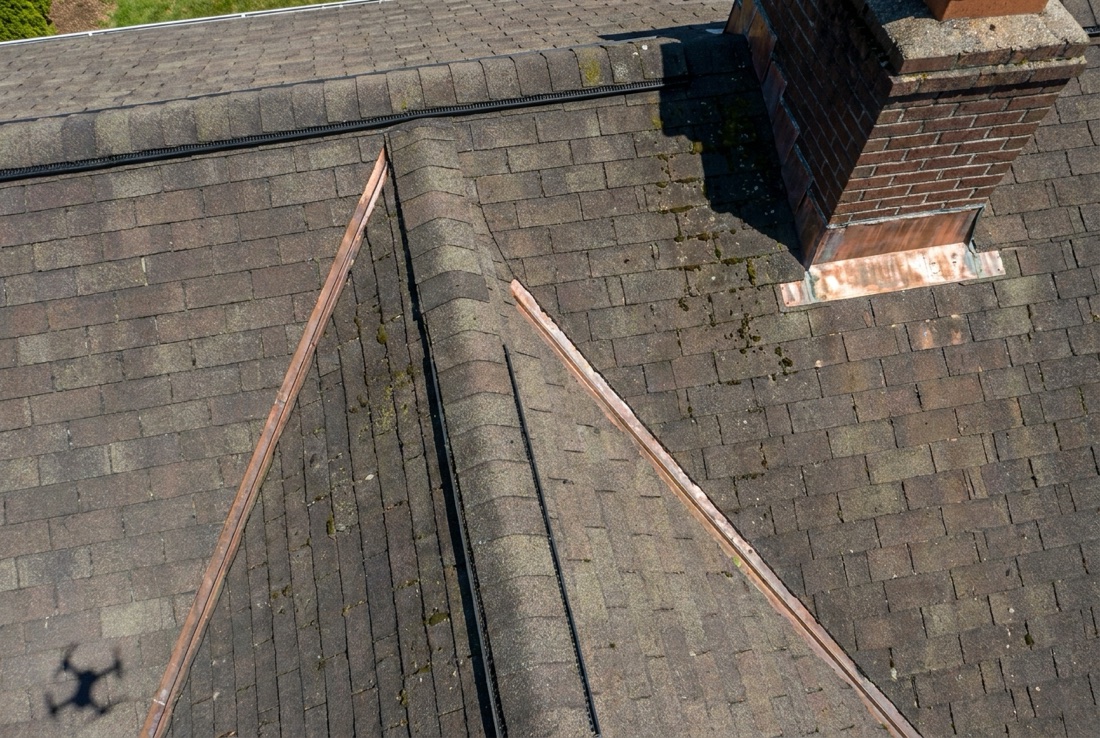
A roofer walks the field where it is safe to do so, lifts a sample of shingles to check the seal and the granule loss underneath, checks every flashing detail at valleys, chimneys, and sidewalls by hand, and goes into the attic to look at the underside of the deck for staining, daylight, or soft spots. None of that happens from the driveway. Our home inspection vs roof inspection guide walks through the scope difference in more depth if you want the full comparison before you decide whether you need both.
The gap is not a criticism of anyone in the transaction. It is simply two different professionals looking at the same object with two different tools and two different amounts of time. A buyer who understands the gap uses it: the general inspection covers the whole house cheaply and quickly, and a free roof-specific inspection closes the one gap that can carry a five-figure price tag.
03 / THE WINDOWTiming it inside your purchase agreement
Every purchase agreement spells out a due diligence or inspection contingency period, a set number of days to complete inspections and raise concerns before you are locked in. Check yours; do not assume it matches a house you bought before. Book the roof inspection the same day you schedule the general home inspection, not after you see the general report, because a roofer often needs a day or two of lead time and a coordinated visit costs you nothing extra in access fuss for the seller's agent.
Coordinate access through your agent the same way you would for the general inspection: a scheduled window, the seller or listing agent aware someone is coming, and enough notice that the crew is not standing on a driveway with no one home to let them into the attic. A roof inspection does not require anyone to be present for the whole visit, and it typically takes far less time than the general home inspection, so it rarely becomes a scheduling headache once it is on the calendar.
If the roof is under about ten years old with paperwork to prove it, a roof-specific inspection is a nice-to-have. If it is unknown age, near or past its rated life, or the general report hedges its language, book it before your contingency window closes, not after. Our full guides library covers every stage of the roof story from inspection through insurance if you want to keep reading.
04 / WHAT IT FINDSWhat a dedicated roof inspection reveals that the walkthrough cannot
The value of a roof-specific inspection is not that it is more thorough in a vague sense. It is that it produces specific, documented answers to the questions that actually decide whether you renegotiate:
- How many layers of shingles are on the roof, since a second layer means a full tear-off is required at replacement time, not a simpler overlay
- Whether the attic-side deck shows staining, soft spots, or active moisture, which points to a leak history the seller may not know about or may not have disclosed
- The condition of flashing at every valley, chimney, and wall intersection, the most common place a roof actually fails
- Granule loss, curling, cracking, and how much rated life is realistically left, using our roof life estimate guide as the reasoning behind the number
- Photo documentation of every finding, dated and organized by roof slope, so you and the seller are arguing over the same set of pictures instead of two different impressions
If the roof is fine, that is exactly what a straight inspector tells you, and you close with one less thing to worry about. If it needs work, you now have a written scope instead of a gut feeling, which is the entire difference in the next section.
The attic tells the truth the shingles can hide
Shingles can look presentable from the ground even on a roof with real problems, especially right after a seller has had gutters cleaned or a quick cosmetic touch-up done before listing photos. The attic is harder to stage. Water stains on the underside of the deck, rusted nail tips poking through the sheathing, compressed or discolored insulation below a specific rafter bay, and daylight visible around a vent boot all point back to a specific spot on the roof above, and none of them are things a seller can quietly fix the week before showings the way they might touch up paint or patch a driveway crack.
05 / THE LEVERAGETurning findings into negotiating leverage
A vague inspection line like "roof appears aged" gets you nowhere at the negotiating table, because it is not a number. A contractor's written scope with a real range attached is something an agent on either side can act on. From there you generally have three paths: ask the seller to complete the repair or replacement before closing, ask for a credit at closing sized to the contractor's estimate, or ask for a price reduction that reflects the roof's true condition.
An inspection finding without a dollar figure attached is an opinion. Once a contractor writes the scope and the price, it becomes a negotiating fact both sides can work with.
Sizing the ask correctly matters as much as making it. Our negotiating roof repairs after an inspection guide walks through how to convert a report line item into a defensible number using the same published ranges on this page, so you are not guessing and neither is the other side.
Sellers respond better to specifics than to alarm. "The roof is old and scary" invites a defensive reaction; "the roof-specific inspection found a soft section of decking above the kitchen and two courses of shingles with wind-lifted seals, and a contractor's written estimate to address it is attached" is something a listing agent can take to their client and act on the same day. The strength of your ask comes from the paper behind it, not the tone you use to deliver it.
06 / THE NUMBERSWhat it costs to fix what you find
Anchor every negotiation to real, published numbers rather than a contractor's back-of-truck guess. Most Macomb County asphalt shingle replacements run $9,000 to $18,000 installed, with most homes landing $12,000 to $16,000. Repairs run $350 to $3,200, and larger or complex repairs can run higher. If you want to test a specific roof's numbers before you make an ask, the cost calculator runs the same canon against your roof's size and material.
| SYSTEM | INSTALLED RANGE | NOTES |
|---|---|---|
| Asphalt shingle replacement | $9,000 to $18,000 | Most homes land $12,000 to $16,000 |
| Metal | $18,000 to $30,000 | Longest service life of common systems |
| Tile and slate | $20,000 to $36,000 | Premium look; structure must support the weight |
| Flat and commercial | $9,000 to $16,000 | Membrane systems, priced by area and detail work |
| Repairs | $350 to $3,200 | Larger or complex repairs can run higher |
If the finding is small, such as one cracked pipe boot or a section of loose ridge cap, keep the ask proportional; a five-figure demand over a few-hundred-dollar fix tends to sour a deal that otherwise works for everyone. If the finding is structural or the roof is genuinely at the end of its life, a full replacement estimate is the fair basis for the conversation, and a written quote carries far more weight than a description in an inspection report.
Age matters as much as condition when you decide which side of that line you are on. A roof at twelve to fifteen years with a couple of localized issues is usually a repair conversation, in the $350 to $3,200 range, and larger or complex repairs can run higher. A roof at or past the upper end of its rated life, especially one with multiple leak points or granule loss across large sections, is a replacement conversation, and pretending otherwise with a patchwork of small repairs just delays a bill that is coming regardless of who owns the house when it arrives.
07 / AFTER CLOSINGAfter closing: certification, financing, and getting a real number
Some lenders and some real estate transactions call for a roof certification rather than a full inspection report, a shorter written statement that the roof is watertight and expected to hold up for a stated period. That is a different document with different rules for who can issue it; our roof certification guide explains what it covers and when a deal actually needs one.
This comes up most often with government-backed loans, where an appraiser's roof callout can stall a closing until it is resolved, and with certain co-op or condo boards that want documentation on file before approving a purchase. Neither situation is common enough to plan around by default, but if your lender or your agent mentions a certification requirement mid-transaction, know that it starts with the same on-roof visit as everything else in this guide, not a separate specialty appointment.
If your inspection turns up a repair or replacement you want priced before you close or before you move in, start from the same free visit that produced the original findings. We run a $0, no-obligation inspection, walk you through what we found and why, and if financing helps the math work, we can walk you through it: as an illustration only, a $13,500 roof financed over 10 years at 9.9% APR works out to about $178 a month, subject to approval. See the full pricing sheet or start the free inspection request whenever you are ready.
Whether you are three days from your inspection deadline or you already closed and just want peace of mind before your first Michigan winter in the house, the process is the same: a technician on the roof and in the attic, photos of everything found, and a straight answer about whether you are looking at nothing, a repair, or a replacement. Mon to Sat, 7 to 7, and 24/7 emergency tarping if a leak turns up active between now and your scheduled visit.
- A general home inspection typically observes the roof from the ground or eaves; it is not a substitute for a roof-specific inspection.
- Book the roof inspection the same week as your general home inspection so findings still fall inside your contract's due diligence window.
- A dedicated inspection documents layers, decking condition, flashing, remaining life, and photos, the specifics a negotiation actually needs.
- Asphalt replacement runs $9,000 to $18,000, most homes land $12,000 to $16,000, and repairs run $350 to $3,200; anchor every ask to those numbers.
- Our roof inspection for buyers is $0 with no obligation, whether the roof needs nothing, a repair, or a full replacement.
Questions we hear most
If the roof is unknown age, near or past its rated life, or your general home inspection report hedges its roof language, yes. A general home inspection typically only views the roof from the ground or eaves, while a roofing-specific inspection walks the field and checks the attic side. Ours is free with no obligation, so there is no reason to skip it inside your contract's due diligence window.
Most asphalt shingle roof replacements in Macomb County run $9,000 to $18,000 installed, with most homes landing $12,000 to $16,000. Repairs run $350 to $3,200, and larger or complex repairs can run higher. A written contractor scope, not a guess, is what should anchor any repair credit or price reduction you negotiate.
Yes. A documented inspection with photos and, ideally, a contractor's written price gives you a specific basis to ask for a repair before closing, a closing credit, or a price adjustment. A vague report line without a number attached is much harder to negotiate around than a real scope and price.
- InterNACHI Standards of Practice for home inspections (scope of a generalist roof inspection). nachi.org/sop
- U.S. Department of Housing and Urban Development, appraisal and property condition requirements for government-backed loans. hud.gov