
JUMP TO A SECTION
An overlay, sometimes called a re-roof or a layover, is the practice of nailing a fresh course of shingles straight over the old ones instead of stripping the roof to bare wood first. It is cheaper on the day you write the check, and that is the whole of its appeal. A full asphalt replacement in Macomb County runs $9,000 to $18,000, most homes landing $12,000 to $16,000, and an overlay lands under that because it deletes one of the more expensive lines on the bill: the tear-off and disposal. The question this guide answers is not whether the overlay is cheaper today. It plainly is. The question is what that saving is really made of, and whether it is a discount or a loan against your next roof.
01 / THE SHORT ANSWERCheaper today, more expensive across two roofs
The honest one-line answer is this: an overlay saves you money on this roof and usually costs you more over the life of the next two. You skip tear-off labor and dumpster fees now, but you buy a hotter, shorter-lived shingle bed, you seal the deck's true condition out of sight, you use up the one-and-only extra layer that Michigan code allows, and you guarantee a heavier double tear-off when the layover eventually fails. None of that shows up on the day-one price, which is exactly why the day-one price looks so good.
That is also why our crews quote a full tear-off by default and treat the overlay as the exception rather than the rule. It is not a sales position; it is the arithmetic below. Before we spend a word defending it, here is the tradeoff laid out plainly, so you can decide how much weight to give the near-term saving against the long-term bill.
We do not publish an invented dollar range for overlays, because the honest number depends entirely on your roof and what the overlay hides. What we can show you is the mechanism: exactly which line the overlay deletes today, and exactly which lines it adds back, with interest, at the next reroof. The same standing ranges we quote from are on our honest pricing page, and the cost calculator runs them against your roof size.
02 / THE SAVINGWhat an overlay actually saves you today
To judge the overlay fairly, start with the real thing it does for you, because it is not nothing. A tear-off is genuine work and genuine weight. A crew strips every shingle down to the deck, a dumpster swallows several tons of old asphalt, and tipping fees are charged by that weight. Skipping it removes labor hours and disposal cost from the bill in one stroke. Our companion guide on what a roof tear-off costs breaks that line down on its own, and it is a meaningful slice of any replacement.
So the overlay saving is real and it is front-loaded. You feel all of it on day one, in a lower total than a tear-off quote for the same house. That is the entire case for an overlay, and it is worth stating clearly rather than waving away, because a homeowner staring at two numbers is right to notice that one is smaller. The trouble is not that the saving is fake. The trouble is that the saving is the only part of the transaction that arrives today. Everything the overlay costs arrives later, spread across years, which makes it easy to discount to zero when you are comparing two figures on a kitchen table. It is also the reason the question of how much tear-off adds to the price has such an awkward answer: on an honest replacement quote the removal is already inside the published total, so the figure a homeowner is really pricing is the overlay discount.
is where most Macomb County asphalt replacements land, inside a full range of $9,000 to $18,000, done as a proper tear-off to bare deck. An overlay sits below that because it removes the tear-off and disposal line. Get your own tear-off ballpark in about 60 seconds with the instant estimator.
03 / THE PRICE LATERWhat the overlay costs you down the road
Everything an overlay saves today, it borrows from four places. None of them sends a bill on install day. All four come due later, and together they are why the cheap roof is so often the expensive one.
A hotter bed and a shorter life
Shingles are asphalt, and asphalt bakes. Laid over an existing layer, the new shingles sit on a thicker, better-insulated bed that traps heat against them instead of letting the deck breathe it away below. A hotter shingle runs through its useful oils faster, so an overlay commonly reaches the end of its life sooner than the same shingle would have over a clean deck. You paid less up front and, in exchange, you shortened the very asset you were buying. Our guide on roof cost per year of life shows why a shorter service life quietly raises the true cost per year even when the sticker price was lower.
The deck you never got to see
The single biggest thing an overlay hides is the wood deck itself. A tear-off is the only moment anyone can see the whole deck, and it is where soft, rotted, or delaminated sheets get found and replaced before the new roof goes on. Cover the old shingles instead of removing them, and any bad decking underneath stays bad, sealed out of sight under two layers now. It does not heal. It keeps softening, and a nail driven into punky wood does not hold the way it does in sound sheathing, which is one more reason overlay shingles let go early. You did not save the decking repair. You postponed finding out you needed it, and made it harder to reach when you finally do.
The two-layer ceiling
Michigan follows the family of building codes that cap a roof at two layers of asphalt shingles. Once you overlay, you are at that ceiling. There is no third layover in your future; the next roof legally must be a full tear-off no matter what. An overlay does not just choose the cheaper option this cycle, it spends your last chance to ever choose it again. This is also why the permit conversation matters, and why an overlay still needs one pulled properly, a point our Michigan roof permit cost guide covers in full.
The double tear-off waiting at the end
Here is the debt coming due. When the overlaid roof fails, the crew that replaces it has to strip two layers instead of one: twice the weight, twice the disposal volume, more labor to reach the deck. A two-layer tear-off costs more than the single-layer tear-off you avoided the first time. So the tear-off you skipped did not vanish. It moved to the next cycle and grew on the way. You will pay for a tear-off eventually; the only choice the overlay gives you is whether to pay for one now or a bigger one later.
An overlay does not delete the tear-off. It defers it to your next roof and adds a layer to it. You are not skipping the bill; you are choosing to pay the larger version of it later.
04 / THE MATHThe two-cycle math, run honestly
The only fair way to compare an overlay to a tear-off is to stop looking at one roof and look at two roofs in a row, because that is the horizon the two-layer ceiling forces on you. Judge them across a full tear-off-to-tear-off cycle and the picture reorders itself.
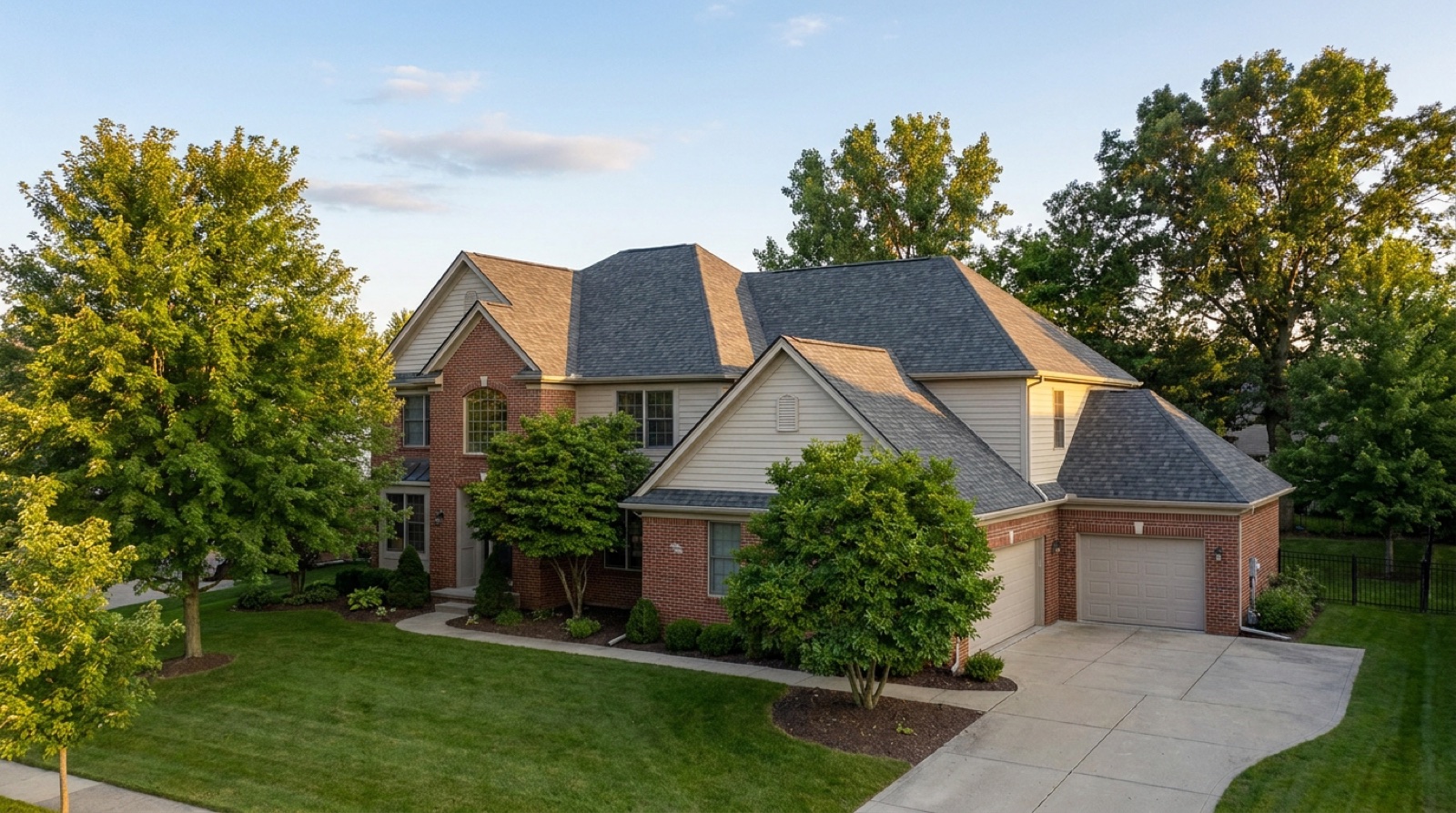
Run the tear-off path first. You pay the full replacement now, the crew inspects and repairs the deck while it is open, the shingles sit on a clean, breathing deck and reach their rated life, and when that roof eventually wears out, the next job is a normal single-layer tear-off again. Two clean cycles, each one starting from bare, sound wood.
Now run the overlay path. You pay less now and pocket the tear-off saving. The overlaid shingles run hotter and tend to wear out sooner, so the clock to the next roof is shorter, not longer. Any bad decking you never saw is still working against the fasteners the whole time. And when this roof fails, the next one is a mandatory double tear-off, the more expensive kind, possibly with decking repairs that have gotten worse in the dark. Line those two paths up and the overlay's day-one saving gets eaten from both ends: a shorter first cycle and a heavier bill to open the second one.
This is the same logic as our broader cost-per-year-of-life argument. A lower sticker price divided by a shorter life, plus a larger future tear-off, frequently lands above the tear-off path once you count both cycles. Not always, and the exact figures depend on your roof, which is what a free inspection settles. But the direction of the math is consistent, and it is why the overlay's saving is best understood as borrowed rather than earned.
An overlay is not a bid that promises good decking. It is a bid that agrees never to look. If the deck under your old shingles is already soft, the overlay seals that problem in and nails a new roof to failing wood. The cheapest quote is sometimes cheap precisely because it declines to find the expensive thing. Ask any overlay-only contractor how they intend to verify the deck without removing the shingles; there is no good answer.
05 / THE EXCEPTIONWhen an overlay can make sense
Honesty runs both ways, so here is the case where an overlay is a defensible call rather than a false saving. The stars have to line up. The existing roof must be a single layer, so the overlay stays inside the two-layer ceiling. The old shingles need to lie reasonably flat, because new shingles telegraph every curl and buckle underneath them. The deck has to be sound, which realistically means someone has verified it from the attic side and found no sag, no soft spots, and no water staining. And the honest reason for the overlay should be a genuine short horizon, not just a tight week.
The clearest example is a homeowner selling soon or on a fixed, unmovable budget, who understands they are buying time rather than a full-life roof, and who is told all of that in writing. Under those conditions an overlay is a legitimate tool, not a trick. What makes it a trick is when a contractor pushes the overlay to hit a low number and never mentions the hotter bed, the unseen deck, the code ceiling, or the double tear-off waiting at the end. The overlay is not the problem. The silence around what it costs later is.
It is worth being clear about what does not qualify as an exception, because this is where most bad overlays get sold. A roof that already carries two layers cannot be overlaid at all, full stop. A roof with curling, cupping, or heavily granule-worn shingles is a poor candidate no matter how tight the budget, because the new layer only mirrors the mess beneath it. And any roof with even a hint of interior staining, a spongy feel underfoot, or a sag between the rafters has told you the deck needs eyes on it, which is the one thing an overlay refuses to allow. When those signs are present, the cheaper-looking overlay is the more expensive decision, and it is usually the roofs that most need a tear-off that get pitched an overlay instead.
If your situation might be one of those exceptions, the way to know is not a phone estimate and it is not this page. It is eyes on the roof and eyes in the attic, checking the layer count and the deck before anyone recommends anything. That inspection is free, and it is the difference between an overlay chosen with the math in front of you and one sold to you in the dark. You can start from the estimator and we will take it from there.
06 / OUR POSITIONWhy we quote a full tear-off by default
Put all of it together and our default falls out on its own. We quote a tear-off to bare deck on almost every replacement because it is the version of the job where we can see what we are nailing into, fix the deck while it is open, give the shingles a breathing bed that lets them reach their rated life, and leave you a normal single-layer tear-off next time instead of a double. It is the more expensive quote today and the cheaper roof across the two cycles that Michigan code actually plans for.
When an overlay genuinely fits your roof and your horizon, we will say so and price it, with the tradeoffs written down rather than glossed over. When it does not, we would rather lose the low-bid contest than hand you a roof nailed to wood nobody looked at. That is the same standard behind our whole roof replacement service and every number on our pricing page: the quote should tell you what you are buying, including what it will cost you later.
- An overlay is cheaper today because it deletes the tear-off and disposal line, and that saving is real but entirely front-loaded.
- It costs you back later through a hotter, shorter-lived shingle bed, a deck nobody inspected, and Michigan's two-layer ceiling.
- The tear-off you skip does not disappear; it returns as a heavier, more expensive double tear-off on the next roof.
- Run the math across two cycles and the overlay's day-one saving is usually borrowed, not earned.
- An overlay can be defensible on a flat, single-layer, sound-deck roof with a short horizon, verified by inspection, not over the phone.
The one thing this guide cannot do is tell you which path fits your specific roof, because that turns on the layer count and the deck condition, and both are invisible from the driveway. Our inspection is $0 with no obligation, it checks the layers and the attic side of the deck with photos, and it produces the honest two-cycle comparison for your house instead of the general one on this page. If you want a tear-off ballpark first, the cost calculator runs our published ranges against your roof size, and the rest of our cost work lives in the guides library.
Questions we hear most
Yes, on the day you pay for it. An overlay deletes the tear-off and disposal line, so it sits below a full tear-off, which in Macomb County runs $9,000 to $18,000 for asphalt. The catch is that the saving is front-loaded and the costs are not. Across two roof cycles, the hotter shingle bed, the unseen deck, and the mandatory double tear-off next time usually make the overlay the more expensive path overall.
Michigan follows the code family that caps an asphalt roof at two layers. That means you can overlay once over a single existing layer, but never a third time. Once a roof carries two layers, the next replacement must legally be a full tear-off to bare deck. Overlaying spends your last chance to ever choose the cheaper option again, which is a real cost even though it never appears on the install-day bill.
New shingles laid over old ones sit on a thicker, better-insulated bed that traps heat against them instead of letting the deck breathe it away. Asphalt shingles run through their useful oils faster when they run hotter, so an overlay commonly reaches the end of its life sooner than the same shingle installed over a clean deck. A shorter life raises the true cost per year of the roof even when the sticker price was lower.
- FEMA, disaster declaration DR-4757-MI, Michigan severe storms of August 2023 (Macomb County designated). fema.gov/disaster/4757
- Michigan Residential Code 2015, section R908.3.1 Roof Re-cover: a re-cover is not permitted where the existing roof already has two or more applications of any type of roof covering. up.codes: MRC chapter 9
- Manufacturer technical and warranty literature for the major asphalt shingle lines: GAF (gaf.com), Owens Corning (owenscorning.com), and CertainTeed (certainteed.com).
- Your city or township building department: reroofing permit requirements and fee schedules are set locally in Macomb County; see the county directory of communities. macombgov.org