
JUMP TO A SECTION
Most homeowners meet stone coated steel by accident, standing in front of a house that looks like it wears cedar shake or barrel tile, then learning it is a metal roof. That reaction is the point of the product. It is a structural steel panel with a stone granule surface bonded to it, built to borrow the curb appeal of a textured roof while behaving like the metal system it actually is underneath. This guide covers how it is put together, how it holds up through a Macomb County winter, whether it is quieter than bare metal, what a hailstorm does to it, and the batten-versus-direct-to-deck installation choice that changes how the whole system performs. Pricing stays inside the honest range we publish on our pricing sheet: stone coated steel is a metal roof, and it prices within the same $18,000 to $30,000 metal canon as every other panel type.
01 / THE SHORT ANSWERWhat stone coated steel costs here
For a typical single family home in Macomb County, stone coated steel prices inside the metal band, $18,000 to $30,000 installed. That figure covers the full job: tear-off of the old roof, disposal, underlayment and ice barrier, the panel system and its fasteners or battens, trim and flashing, and the labor to install it correctly. Where a given roof lands inside that range depends on the same factors that move any metal job: roof size, pitch, how cut-up the roofline is, and whether the deck needs repair once the old roof comes off. For comparison, a standard asphalt shingle roof runs $9,000 to $18,000.
is the installed range for a metal roof in Macomb County, and stone coated steel prices inside it like any other panel system. The exact figure for your house depends on size, pitch, and roofline complexity. Run a quick ballpark with the instant estimator.
Do not expect stone coated steel to undercut plain painted panels by much, and do not expect it to cost dramatically more either. The stone granule finish is a coating process on the same structural steel base every other steel roof uses, not a different category of material. The bigger lever on price is still the shape of your roof and the condition of the deck underneath the old shingles, which is exactly why our roof replacement cost guide is worth reading alongside this one if you want the full picture of what sets any roof number.
02 / THE CONSTRUCTIONHow stone coated steel is actually built
Strip away the shake or tile appearance and the base of the system is a stamped or roll-formed structural steel panel, similar in gauge and strength to the steel used under painted metal shingle systems. What sets stone coated steel apart is what happens to that panel after it is formed. The steel is coated with a bonding layer, then natural or ceramic-coated stone granules are pressed into it under heat and pressure so the granules key into the surface rather than sitting on top of it as loose grit. The result is a panel that is structurally a metal roof but visually reads as a textured shingle or tile from anywhere but arm's length.
Interlocking panels, not individual shingles
Unlike three-tab or architectural shingles, which are individual pieces nailed in overlapping courses, stone coated steel panels typically interlock on all four sides, top, bottom, and both edges, and are fastened through the panel into the deck or battens beneath. That interlock is a meaningful part of the wind performance story, because adjoining panels lock into each other rather than relying purely on adhesive seal strips the way asphalt shingles do. The stone surface also means each panel is doing two jobs at once: shedding water like metal and hiding the metal like a textured roof.
The stone coating is the wear layer
The granule layer is not purely cosmetic. It protects the painted or coated steel underneath from UV exposure and from the direct impact of hail and debris, and it is the surface that eventually shows wear if it ever does, through gradual granule loss at high-traffic edges or exposed high points, similar in principle to how an asphalt shingle loses granules over the decades. Because it is a factory-applied, heat-bonded process rather than paint alone, the coating is meaningfully more durable than a painted finish exposed directly to the weather, though exact wear performance and warranty terms vary by manufacturer and product line. See the spec sheets and warranty documents each stone coated steel manufacturer publishes for its own lines.
03 / THE LOOKWhy it convincingly reads as shake or tile
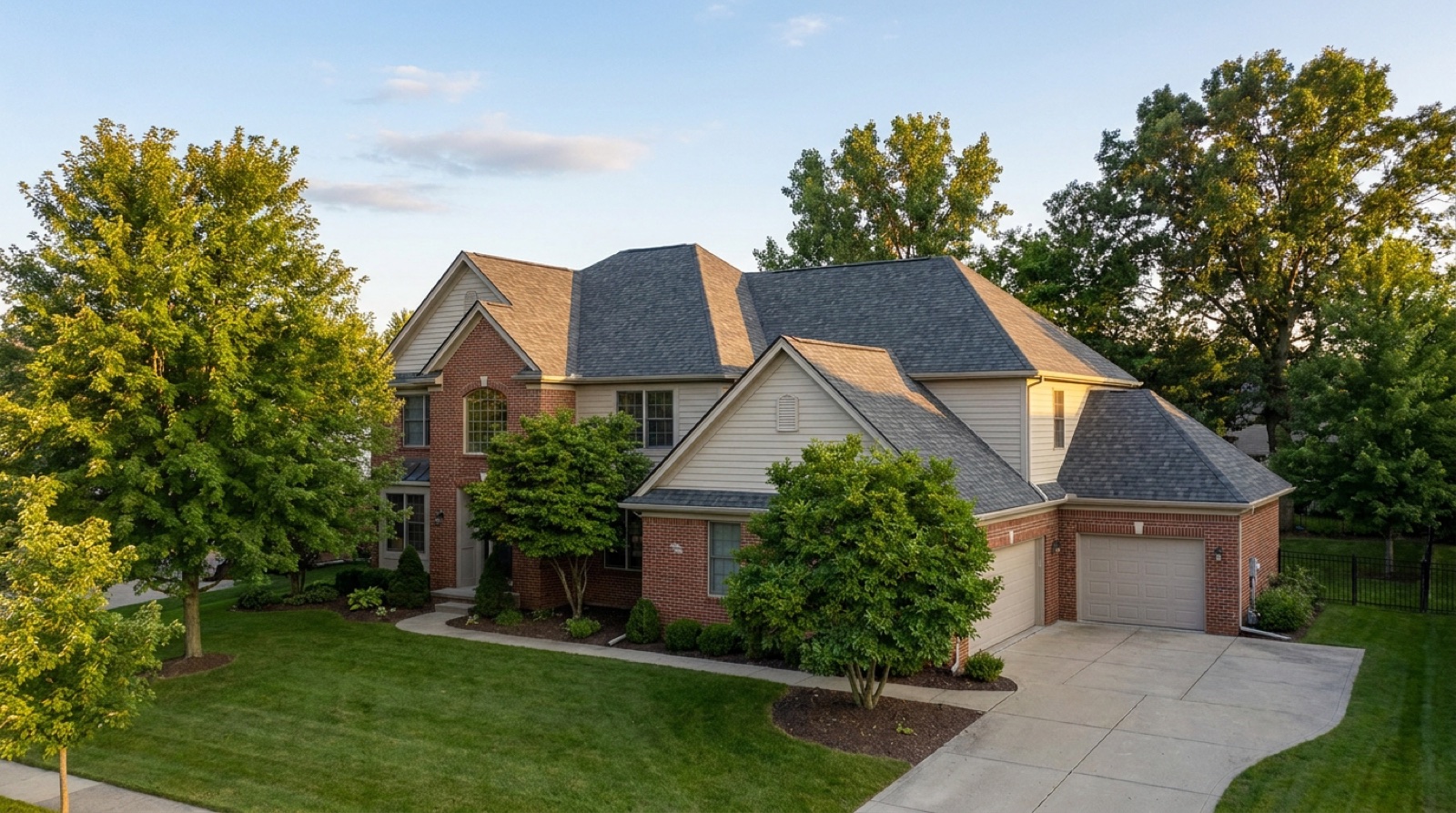
Vertical standing seam panels have a clean, modern, distinctly metal look that some homeowners want and others actively avoid, especially on a traditional ranch or colonial where crisp vertical lines can read as too rural or too contemporary for the neighborhood. Stone coated steel exists largely to solve that problem. The panels are stamped and textured to mimic the shadow lines, butt edges, and irregular surface of wood shake, or the rolled profile of barrel tile, and the stone granule finish breaks up the light the way a rougher material does, instead of the flat sheen of a painted metal panel.
From the street or from a passing car, the effect holds up well. Most people do not clock a stone coated steel roof as metal at all; they read it as an upgraded shingle or a tile roof, which is exactly the reaction homeowners choosing this system are usually after. Up close and on a ladder the stamped, repeating pattern and the panel seams give it away, but that is not the vantage point a roof is judged from. For a subdivision where the architectural review board or the neighbors expect a traditional silhouette, stone coated steel offers a way to get metal's performance without a visual departure from the block.
This is also the reason stone coated steel and metal shingles get compared constantly. Both chase the same goal, a textured, traditional look on a metal base, and the practical differences come down to panel size, coating process, and installation detail rather than a fundamentally different concept. If you are choosing between the two, our metal shingle roof guide walks the sibling system in the same depth, and our stone coated steel versus standing seam comparison covers the choice for homeowners who are sold on metal but torn between the textured look and clean vertical panels.
04 / HOW IT PERFORMSFreeze-thaw, quiet, and hail in a Michigan climate
Three questions come up on almost every stone coated steel conversation in Macomb County: does it hold up to freeze-thaw cycling, is it quieter than a bare metal panel, and what happens when hail hits it. Here is each one in plain terms.
Freeze-thaw and Michigan winters
Steel does not absorb water the way an organic shingle mat can, so it does not swell, crack, or delaminate through repeated freeze-thaw cycles the way a lower-grade or aging asphalt shingle eventually can. The interlocking panel system also sheds snow and meltwater efficiently once it clears the panel surface, which matters in a climate that runs through dozens of freeze-thaw cycles every winter. The parts of the system most exposed to that cycling are the fasteners, the flashing details, and any sealant used at penetrations, which is why correct installation detail matters as much as the panel material itself. Ice dams remain a heat-loss and ventilation problem more than a roofing-material problem; a stone coated steel surface can help shed snow before it accumulates, but it does not replace proper attic ventilation and ice barrier at the eaves.
Quieter than bare, painted metal
One of the most common objections to metal roofing is rain noise, and it is a fair one to raise about a smooth painted panel installed with minimal underlayment or without a solid deck beneath it. Stone coated steel changes that equation in two ways: the textured granule surface breaks up and dampens the sound of raindrops compared with a smooth painted panel, and the system is installed over a solid deck with underlayment, the same buildup a shingle roof gets, rather than the open-framed construction that made the barn-roof-in-the-rain reputation. The result is a system that reads noticeably quieter than a bare exposed-fastener panel and closer to what an asphalt shingle roof sounds like from inside a finished attic or top-floor bedroom.
Hail: cosmetic dents versus real damage
Hail is where the stone coating earns real credit. The granule layer absorbs and disperses impact energy before it reaches the steel panel underneath, which means stone coated steel generally shows less visible denting from moderate hail than a smooth painted panel of the same gauge, and it will not puncture the way an aging asphalt shingle can under a severe hit. That does not make it hail-proof. Large or unusually hard hail can still dent the underlying steel, and a hard enough impact can dislodge or chip the granule coating at the strike point, which is a cosmetic issue rather than a leak risk in most cases. Insurers evaluate hail damage differently by material and some policies carry a cosmetic-damage exclusion specific to metal roofing, so reading that endorsement before you buy matters more for stone coated steel than for asphalt. Our hail damage on metal roofs guide covers that distinction and the insurance angle in full.
The stone coating is not decoration on top of the performance story. It is doing real work, breaking up rain noise and absorbing hail impact before either one reaches the steel.
05 / THE INSTALLBattens or direct-to-deck: the choice that changes everything
Stone coated steel can be installed two structurally different ways, and the choice affects ventilation, panel life, and how the roof handles moisture, not just labor time. Getting this right is one of the reasons the installing crew matters as much as the panel brand.
Direct-to-deck installation
In a direct-to-deck install, the panels fasten straight through synthetic underlayment into the solid roof deck, the same general approach used for asphalt shingles and painted steel panels. It is the faster, more common approach on a straightforward reroof and it keeps the roof profile lower, which can matter at transitions to existing trim, gutters, or adjoining lower roofs. The tradeoff is that any moisture that does find its way under a panel has less room to drain and dry before it reaches the deck.
Batten systems
A batten system adds a layer of horizontal furring strips, and sometimes a counter-batten layer running vertically underneath them, between the deck and the panels. That gap creates a drainage and ventilation channel behind the roofing surface, giving any incidental moisture a path to drain and the underside of the panels a chance to dry rather than sitting against the deck. Battens also let the installer shim out minor deck irregularities so panels lie flatter and interlock more cleanly. The tradeoff is added material, more labor hours, and a slightly higher overall roof profile, which is a factor on homes with tight trim or transition details.
Neither method is universally correct. A well-built, well-ventilated attic on a straightforward roofline can perform fine direct-to-deck, while a complex roof, a history of moisture issues, or a manufacturer specification for the chosen panel line may call for battens. This is exactly the kind of detail a free inspection is meant to resolve on your specific roof rather than guess at from a brochure, and it is a fair question to ask any contractor bidding the job: which method are they specifying, and why.
06 / THE REAL NUMBERHow to get an exact price, free
Everything above narrows the range. Only one thing produces your actual stone coated steel number: someone measuring your roof, checking its pitch and complexity, and inspecting the deck. Our inspection is $0 with no obligation, and it covers the roof surface, the flashing, the ventilation, and the attic side of the deck, with photos of everything we find. If stone coated steel is the system you want, you get a real scope and a real installation method specified for your house, not a brochure estimate.
A note on timing. Stone coated steel is a specialized install, closer in skill requirement to standing seam than to asphalt, and the crews who install it well book up fastest once the southeast Michigan season is running, typically late spring through fall. Getting an inspection early in the year means choosing your install week rather than taking what is left. The price canon on this page does not move by season, but your scheduling leverage does. And if a storm is part of your situation, Macomb County was included in federal disaster declaration DR-4757 after the August 2023 storms, and our storm and insurance claims page covers documentation and what a contractor can and cannot promise about a claim outcome.
Want a ballpark before anyone visits? The instant estimator uses the same published ranges you see here, and you can browse every metal and premium guide in our guides library or start from the roof replacement service page for the full scope of what a replacement includes.
- Stone coated steel is a structural steel panel with a heat-bonded stone granule finish, and it prices inside the standard $18,000 to $30,000 metal canon.
- The stone coating is not just cosmetic: it dampens rain noise and absorbs hail impact better than a smooth painted panel of the same gauge.
- It reads as shake or tile from the street, which is why it fits neighborhoods where a vertical standing seam profile would look out of place.
- Installation happens either direct-to-deck or over battens, and that choice affects drainage and moisture performance more than labor time.
- The exact number and the right installation method for your roof come from a free inspection, not a brochure.
Questions we hear most
Stone coated steel prices inside the standard metal range for Macomb County, $18,000 to $30,000 installed, the same canon as painted steel panels and standing seam. Where your job lands inside that range depends on roof size, pitch, roofline complexity, and deck condition. A free inspection is the only way to get an exact number.
Generally yes. The textured granule surface breaks up and dampens rain noise compared with a smooth painted metal panel, and the system installs over a solid deck with underlayment rather than the open framing that gives bare metal its barn-roof reputation. Most owners find it sounds closer to an asphalt shingle roof than to exposed metal.
The stone coating absorbs and disperses impact energy, so stone coated steel generally shows less visible denting from moderate hail than smooth painted metal and will not puncture the way an aged asphalt shingle can. Severe hail can still dent the underlying steel or chip the granule coating at the impact point, and some insurance policies carry cosmetic-damage exclusions specific to metal roofing worth reading before you buy.
- FEMA, disaster declaration DR-4757-MI, Michigan severe storms of August 2023 (Macomb County designated). fema.gov/disaster/4757
- Manufacturer technical and warranty literature for the major asphalt shingle lines: GAF (gaf.com), Owens Corning (owenscorning.com), and CertainTeed (certainteed.com).
- Manufacturer rated service-life and warranty documentation: asphalt shingle lines (GAF, Owens Corning, CertainTeed) and metal roof systems via the Metal Construction Association. metalconstruction.org