
JUMP TO A SECTION
Most homeowners who call about a leak have never had a roof repaired before, and the not-knowing is its own kind of stress on top of the stain on the ceiling. Is someone going to be up there all day? Does the whole family need to plan around it? Is this going to turn into a bigger project the moment a crew starts pulling shingles? The honest answer is that a professional roof repair follows a predictable sequence, and most component repairs, a boot, a section of shingles, a flashing detail, are finished in a matter of hours, not days. This guide walks that sequence in order: the inspection, the quote, scheduling around Michigan weather, the repair visit itself, and the cleanup that should happen every time. It also covers what actually stretches a job past a single visit, so you know the difference between a normal delay and a red flag.
01 / THE SHORT ANSWERThe process in one paragraph
A roof repair starts with a free inspection, where a roofer traces the problem to its actual source rather than just the spot where water showed up inside. That inspection produces a written quote, usually the same day or within a day or two. Once you approve it, the job gets scheduled around the weather, since shingle work needs a dry roof and reasonable temperatures. The repair visit itself is short for most jobs: a crew arrives, does the fix, checks the surrounding area for related damage, and cleans up, including a magnetic sweep of the yard for stray roofing nails. For a typical repair in the $350 to $3,200 range, that whole visit is measured in hours.
covers most roof repairs in Macomb County, and larger or complex repairs can run higher. The instant estimator gives you a starting ballpark, and the free inspection turns it into a written number tied to the actual scope of work.
02 / THE FIRST VISITThe inspection: finding where the water really enters
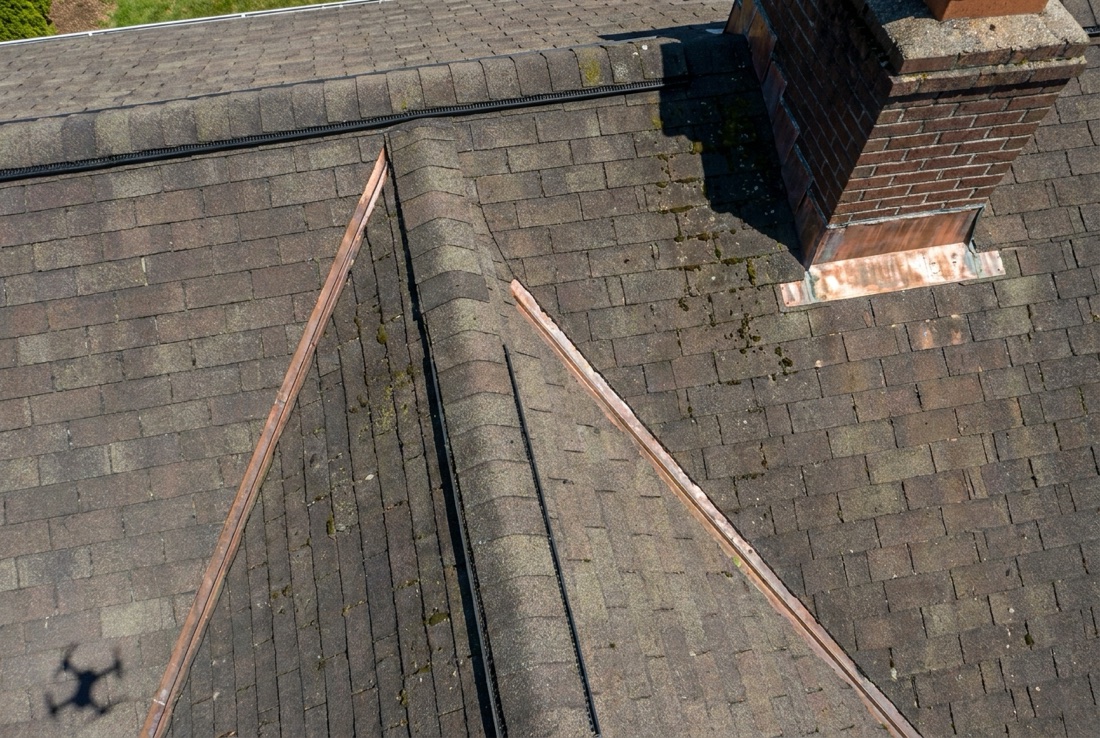
The inspection is the most important step in the whole process, because the price and the plan both come from it. A roofer who is doing this right does not stop at the ceiling stain. Water rarely drips straight down from the hole it came through, it runs along the underside of the deck, down a rafter, and shows up on a ceiling several feet from where it actually entered. That means a real inspection covers the roof surface, the flashing at every wall, chimney and valley, the pipe boots, and the attic side of the deck, looking for the true entry point rather than the visible symptom.
This is also when photos get taken, of the roof and of the attic if it is accessible, so that the quote that follows is tied to specific, documented damage instead of a guess made from the ground. If a storm caused the damage, this is the same documentation that matters for an insurance claim, and our storm and insurance claims guide covers what that process adds to a repair.
A thorough inspection takes longer on a complicated roof than a simple one, since it means walking every slope, checking every penetration, and pulling back a corner of insulation in the attic to look for staining on the underside of the deck. It is also the point where a roofer should be checking the gutters and downspouts, since a clogged or disconnected gutter backing water up under the first course of shingles looks like a roof leak but is really a drainage problem, and the fix is different and usually cheaper.
03 / BEFORE THE CREW ARRIVESThe quote, and scheduling around the weather
After the inspection, you get a written quote that names the actual scope, which boot, which section of shingles, which flashing detail, and whether a decking allowance is included in case the deck is found soft once the shingles come off. A quote that only says "reseal" or "patch" without naming what failed is worth a second opinion, because sealant smeared over a failed flashing detail buys a season and reopens the following spring.
Once you approve the quote, the job goes on the schedule, and in Macomb County that schedule bends around the weather more than people expect. Shingles need to be dry and pliable to seal properly, so a repair crew is not going to be up on a wet roof or in a hard rain, and cold shingles below about 40 degrees can crack instead of sealing cleanly. That does not mean nothing happens during bad weather. If there is an active leak, 24/7 emergency tarping stops the water while the permanent repair waits for a workable window, often the same week. Our guide on roof repair cost in Michigan breaks down how these tiers of repair price out once the scope is set.
What a written quote should include
A quote you can trust names four things: the specific problem found during the inspection, the materials going in to fix it, whether a decking allowance is included in case soft wood is found underneath, and what workmanship warranty covers the finished repair. If any of those four is missing, it is worth asking why before you sign. A quote that is just a single dollar figure with no scope attached is the single most common way a homeowner ends up paying for a repair that does not actually solve the problem.
04 / THE VISIT ITSELFWhat actually happens the day of the repair
For most component repairs, the crew arrives, sets up safely, and works the specific area named in the quote. A pipe boot replacement is a fast, contained job: the old rubber boot comes off, a new one goes on, and the surrounding shingles are checked and resealed. A section of wind-damaged shingles takes longer, since the crew feathers new shingles into the field, reseals the area, and checks the courses above to make sure the wind did not loosen more than shows from the ground.
Flashing and valley work is the slowest of the common repairs, because it is precise sheet-metal work, cutting new counter flashing into a chimney's mortar joints, or reworking a valley that channels water off half the roof, rather than a quick swap of parts. Even so, a single flashing detail is typically a same-day repair. The exception is when the crew opens the area and finds the deck underneath is soft or rotted, which changes the scope mid-job in a way we cover in the next section.
Before any of that starts, a crew typically stages the materials they will need based on the written quote, sets up ladders or roof jacks safely, and covers or moves anything below the work area, landscaping, patio furniture, an air conditioning unit, that could catch debris or a dropped tool. On a job with more than one issue found during the inspection, a boot and a section of storm-damaged shingles, say, the crew usually works through them in the order that makes the most sense structurally, lower and more urgent leaks first, cosmetic or secondary items after.
Cleanup and the magnetic nail sweep
A repair is not done when the last shingle is nailed down. A professional crew clears debris from the roof and gutters, checks that no tools or materials were left behind, and runs a magnetic sweep of the ground around the house to pick up stray roofing nails before they end up in a driveway, a lawn mower tire, or a bare foot. If a crew leaves without doing this, ask about it. It is a normal, expected part of the job, not an upsell.
05 / THE EXCEPTIONSWhat stretches a repair past a single visit
Most repairs finish in the window described above, but three things reliably push a job longer, and knowing them ahead of time keeps a normal delay from feeling like something went wrong.
Hidden decking rot
Nobody can see the condition of the wood deck until the shingles and underlayment come off over the damaged area. If a leak has been running long enough to soften or rot the plywood underneath, that wood has to be cut out and replaced before new shingles or flashing go back on, and that is discovered mid-repair, not before. Our roof decking replacement guide covers what this looks like and how it is priced when it is found. An honest quote states how this will be handled if it turns up, rather than assuming the wood is perfect.
Rain delays
A repair that is scheduled for a dry day can still get pushed if Michigan weather does not cooperate. Shingle work needs a dry, workable roof to seal correctly, so a crew rescheduling around an unexpected rain system is doing the job right, not stalling. If your roof has an active leak while you wait for a workable window, tarping is available around the clock to keep water out in the meantime.
Material matching lead times
If your shingles are an older style or color that is no longer in regular stock, sourcing a close match can take longer than the repair itself. This mostly affects visible, cosmetic matching on an otherwise straightforward shingle repair, and a good roofer will tell you upfront whether your shingles are a common, readily available match or something that needs a special order.
A crew that calls ahead to reschedule around rain, or that pauses to show you photos of rotted decking before cutting it open further, is doing the job right. A crew that goes silent for days without explanation, or that starts work and disappears mid-repair, is not. The difference is communication, which is the last piece of a good process.
06 / WHAT TO EXPECTWhat a professional process feels like
Across every step, from the first phone call to the final sweep, the thing that separates a professional repair from a frustrating one is communication. You should know, before the crew shows up, roughly what they are doing and roughly how long it should take. If the scope changes because of what the crew finds, decking rot being the most common reason, you should hear about it with photos before the work continues, not find out after the invoice arrives. And if weather pushes the schedule, you should hear that directly rather than wonder why no one showed up.
That standard applies whether your repair is a simple boot swap or something bigger. If you are still not sure whether what you are dealing with is a repair or something that points toward replacement, our can my roof be repaired guide walks through how that call gets made, and the roof repair service page covers what we handle day to day.
- A roof repair follows a set sequence: free inspection, written quote, scheduling around the weather, the repair visit, and cleanup with a magnetic nail sweep.
- Most component repairs, boots, shingle sections, a single flashing detail, finish in hours during one visit.
- Hidden decking rot, rain delays, and material matching lead times are the three things that reliably stretch a job longer.
- An honest quote names the actual scope and states how decking will be handled if it is found soft, rather than assuming the wood is perfect.
- Good communication, being told about delays and scope changes before they happen, is what a professional process feels like start to finish.
Questions we hear most
Most component repairs, a pipe boot, a section of shingles, a single flashing detail, are finished in a few hours during one visit. Flashing and valley work can take longer because it is precise sheet-metal work, and any repair can stretch if the crew finds soft decking underneath that needs to be replaced first.
You do not need to be on the roof, but it helps to be reachable in case the crew finds something during the inspection or the repair that changes the scope, like decking rot, and wants to show you photos before continuing. Most crews can complete a straightforward repair without you present as long as they can reach you by phone.
Shingle work needs a dry roof to seal correctly, so a repair scheduled during unexpected rain typically gets rescheduled to the next workable window. If you have an active leak in the meantime, 24/7 emergency tarping stops the water while you wait for the permanent repair.
- FEMA, disaster declaration DR-4757-MI, Michigan severe storms of August 2023 (Macomb County designated). fema.gov/disaster/4757
- Manufacturer technical and warranty literature for the major asphalt shingle lines: GAF (gaf.com), Owens Corning (owenscorning.com), and CertainTeed (certainteed.com).
- National Roofing Contractors Association, technical guidance for steep-slope roof systems. nrca.net