
What Wind Speed Are Michigan Roofs Actually Built For?
Every new roof in Macomb County is engineered to a number almost no homeowner has seen. It lives on a wind speed map in the Michigan Residential Code, and it decides how your shingles are rated and nailed.
Ask ten homeowners what wind speed their roof was built to survive and you will get ten guesses, most borrowed from shingle wrappers or hurricane coverage on the news. The real answer is a mapped value printed in the Michigan Residential Code, the statewide code that governs how houses here are built. Building officials call it the design wind speed, engineers call it Vult, and every structural wind requirement on your roof traces back to it. Where the number comes from, what it means, and how it ends up dictating the nail count on a bundle of shingles is the story of this note.
01 /Where the number is written down
The Michigan Residential Code sets out climatic and geographic design criteria for every jurisdiction in the state, and wind leads that list. The code presents wind design values as a map of ultimate design wind speeds, and the figure that applies to a house is read off that map for the site where it stands. We hold this page to the rule we hold a damage report to: the controlling figure gets cited from the code itself, not paraphrased from memory. The Michigan Residential Code 2015 wind map, Figure R301.2(4)A, puts Macomb County in the 115 mph ultimate design wind speed zone (3-second gust, Risk Category II).
Two details about the map matter before the number itself. First, the mapped speed is a 3 second gust measured 33 feet above open terrain, not a sustained wind, so it is already a peak value rather than an average. Second, ordinary houses are Risk Category II structures, and the map values for homes are drawn for that category; a hospital is designed to a higher line on the same map.
02 /Ultimate versus basic: why the number sounds so high
Here is where most confusion starts. Older code editions published basic wind speeds, sometimes written Vasd, meant for traditional allowable stress design. Modern editions publish ultimate wind speeds, written Vult, which bake the storm safety factor directly into the mapped value instead of applying it later in the math. The building did not get stronger when the maps changed; the bookkeeping moved. An ultimate speed is deliberately a rarer, more extreme gust than the old basic speed described.
The code provides an exact conversion between the two vocabularies: the basic speed equals the ultimate speed multiplied by the square root of 0.6, about 0.775. To see the scale, a mapped ultimate value of 115 mph converts to a basic speed of about 89 mph. That arithmetic is why a salesman quoting the ultimate map figure and a spec sheet quoting a basic figure can both be right about the same roof while sounding 30 mph apart. When you compare the design number against the gusts area stations have actually logged, keep the scales straight; our ledger of the strongest winds ever recorded around Macomb County is the companion piece for that exercise.
03 /How the map number reaches your shingles
A design wind speed is useless until it flows down into hardware, and the residential code routes it there in two ways. First, asphalt shingles must carry a wind resistance classification under ASTM D7158, and the code table governing shingle selection keys the required class directly to the mapped speed for the site. Second, fastening: shingles must be attached per the code and the manufacturer's instructions, and those instructions shift with the design wind speed. The most familiar shift is the jump from four nails per shingle to six. Which pattern the code and the wind map actually demand in Michigan is its own note, and we wrote it: four nails or six, what code and wind maps say.
The same number also touches parts of the roof nobody photographs. Drip edge attachment, underlayment fastening, and the uplift resistance of the deck connections all trace back to the wind criteria the code assigns the site. The shingle is just the visible end of a load path the design speed sizes from the ridge down.
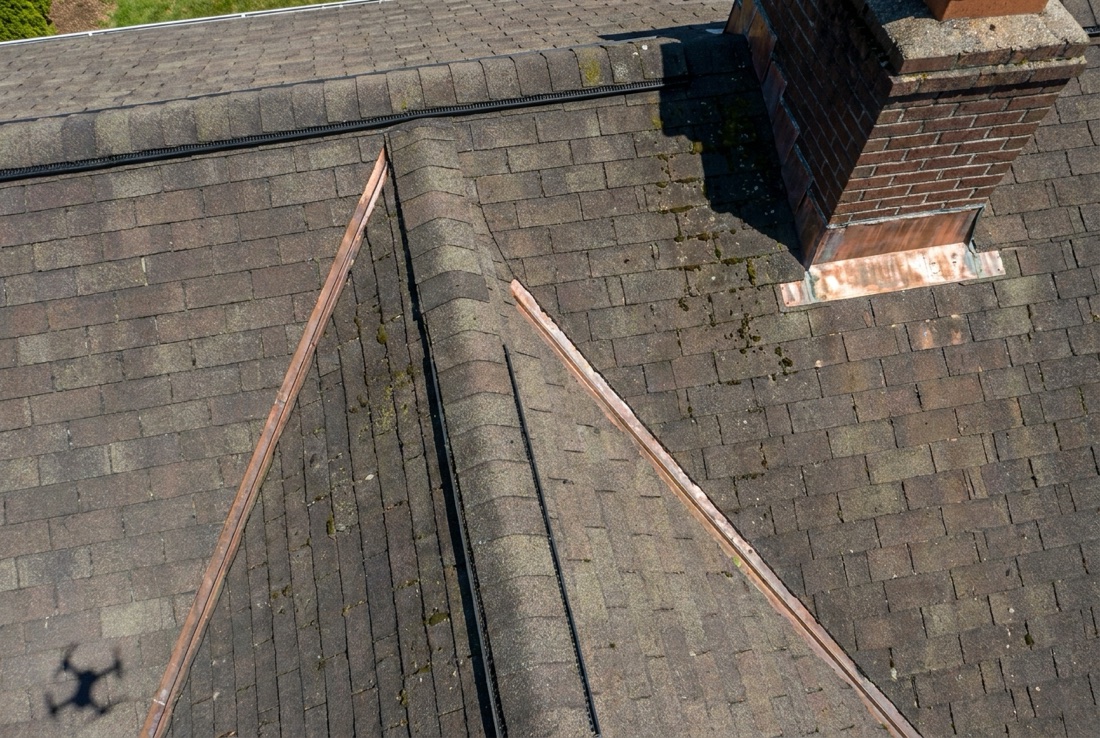
A design wind speed describes what a code compliant roof should resist when every shingle is nailed on the line, with the right count, into sound decking. High nails, overdriven nails, and skipped fasteners quietly subtract from the mapped number, and the roof gives no warning until a gust collects the difference. When we assess a roof we check the fastening the code assumed, not just the shingles the map rated.
04 /Reading the number like a roofer
Treat the design wind speed as a floor, not a forecast. It tells you the minimum performance a new, correctly built roof in Macomb County must be engineered for, under the code edition in force when it was permitted. That last clause matters more than people think, because Michigan updates its residential code on a cycle and older roofs were built to older books. Which edition actually covers your house right now is the subject of our companion note on which building code covers your roof in Michigan.
Practically: if your roof predates the current maps, or a storm has already tested it, the question is no longer what it was designed for but what condition it is in today. We inspect fastening, sealant bond, and wind damage across Macomb County for free, no cost and no obligation, and our storm damage service documents anything a gust has already taken. Wind repairs are honest work, not automatic replacements; repairs run $350 to $3,200, larger or complex repairs can run higher, and the 60 second cost calculator frames the numbers before anyone climbs a ladder. For deeper background, the guides library covers the rest of the codebook in plain language.
- National Weather Service, Detroit/Pontiac forecast office: southeast Michigan forecasts, warnings, and event records. weather.gov/dtx
- ASTM D7158, standard test method for wind resistance of asphalt shingles
- ASCE 7 wind speed conversion, Vasd equals Vult multiplied by the square root of 0.6