
What Size Hail Damages a Roof? The Thresholds on Record
Every hail report comes with a size comparison: pea, quarter, golf ball. What homeowners actually want to know is which of those objects can hurt the roof. There is a written record for both halves of that question, and this note pairs them: the official size scale on one side, published impact testing on the other.
Hail size is the first number everyone reaches for after a storm, and it is a genuinely useful one, as long as you know what it can and cannot tell you. A size on the news is a measurement of the stones, not a verdict on your shingles. The verdict depends on the size, the age and temperature of the roof it hit, and the wind behind it. So this note works like a ledger with two columns: first the official ruler, the size comparison scale that storm spotters and the National Weather Service use, and then the damage thresholds that published impact research has actually put on record for asphalt shingles. Read together, they tell you when a hail report is trivia and when it is a reason to get eyes on the roof.
01 /The ruler: how hail size gets reported
Nobody measures hail with calipers in the middle of a thunderstorm. Spotters compare the largest stones they find to common objects, and NOAA publishes a reference scale that translates those objects into diameters so every report means the same thing. See NOAA's Storm Events Database. The rungs of the ladder homeowners hear most often:
One rung on that ladder carries official weight. The National Weather Service uses quarter size, 1 inch diameter, as its hail criterion for a severe thunderstorm. That line was drawn where it was for a reason: around an inch is where hail stops being a curiosity and starts being a property damage event. Two reading notes before we move to the shingle side. Spotters report the largest stone found, so a storm logged at quarter size dropped mostly smaller stones and possibly a few larger ones. And hail swaths are narrow, so the size recorded at one intersection can be very different from what fell on a roof a mile away. We wrote a full walkthrough on pulling these reports for your own street in our note on how to read NWS storm reports for your area.
02 /The thresholds: where shingle damage starts on record
The damage side of the ledger comes from impact testing, not folklore. Research groups, most prominently the Insurance Institute for Business and Home Safety, have fired and dropped hail sized ice at roofing materials under controlled conditions and published where asphalt shingles start to fail. See IBHS roof research. The consistent shape of those findings: at around 1 inch, the same quarter size line the NWS draws, standard asphalt shingles begin to bruise, and by golf ball size, 1.75 inches, fractures become common rather than occasional.
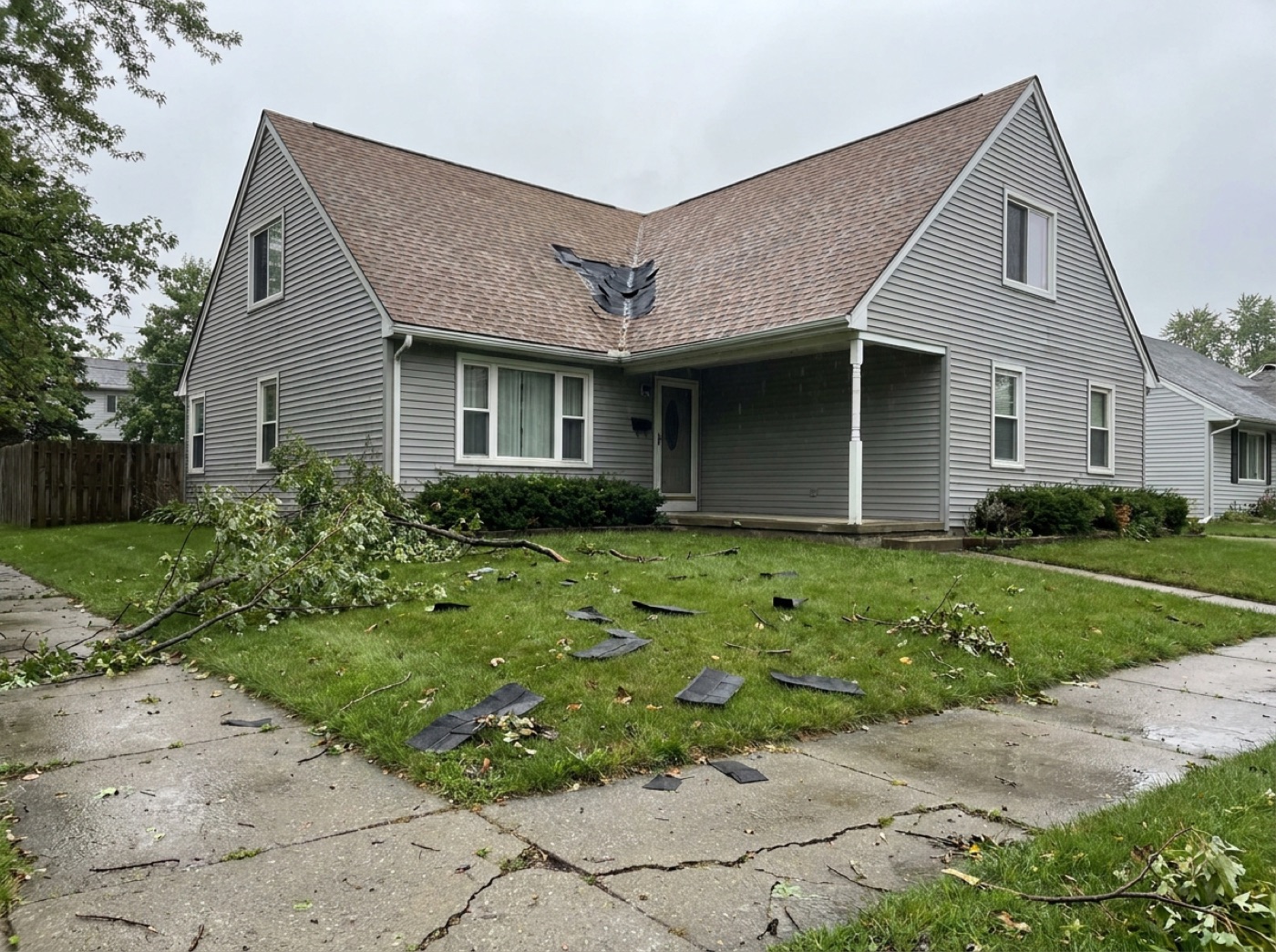
A bruise is the injury that matters and the one nobody sees from the driveway. The stone crushes granules into the asphalt and can fracture the fiberglass mat underneath while the surface looks nearly normal. The mark reads as a dark, soft spot about the size of the stone that made it, and the fracture beneath it is permanent. A bruised shingle keeps shedding water for a while, then ages fast at exactly that spot, which is why hail damage so often surfaces as leaks a season or two after the storm that caused it.
The same testing world produced the rating system on new shingle wrappers. UL 2218, the standard impact test, drops steel balls of increasing size on the shingle: Class 1 through Class 4, with Class 4 taking a 2 inch ball without visible fracture. Class 4 products have been moving into the Michigan market for exactly this reason, and we cover what they cost and what they claim in our Class 4 impact shingle market note.
03 /Why the threshold moves
If the record supported one clean number, this note would be one line long. It does not, and the research says so plainly. The damage threshold slides with at least four variables. Age is the big one: asphalt embrittles and granule adhesion weakens over Michigan summers and winters, so a fifteen year old shingle can bruise from hail a new one would shrug off. Temperature at impact matters, because a cold shingle is a brittle shingle, and a spring hailstorm can hit a roof that is still stiff from winter. Hailstones themselves vary, from slushy and soft to layered, dense ice, so two storms with identical reported sizes can leave very different roofs behind. And wind adds speed to the stone, so wind driven quarter size hail can strike with energy closer to something a size class larger falling straight down.
The reported size is the largest stone found at one point in a narrow swath, striking roofs of every age and temperature at once. Quarter size hail is where the record says damage becomes possible, not guaranteed, and smaller hail is not automatically innocent on an aged roof. The only way to settle it for your address is an inspection, not a chart.
04 /What to do with the thresholds
Use the numbers as a screening test. If a storm dropped quarter size or larger over your part of Macomb County, the published record says your shingles were inside the damage range, and that earns a look from someone who knows what a bruise feels like underhand. How often that actually happens here is its own question, and we keep the local ledger in our note on how often hail actually hits Macomb County. Our inspections are free, no cost and no obligation, and we photograph what we find so you have documentation either way. Many hail findings are repairs rather than replacements, and repairs run $350 to $3,200, with larger or complex repairs running higher. If a replacement conversation is on the table, the 60 second cost calculator uses the same published ranges we quote in person.
What hail damage looks like slope by slope, and how a claim actually proceeds, belong to the storm lane rather than this data note. Start with the storm damage service page for the response playbook, and the storm damage and insurance claims guide for the paperwork side. We can meet your adjuster on site and walk the roof together; we never promise what a carrier may approve, but we can make sure the file is complete. And if a storm has water coming in tonight, the 24/7 emergency tarping line answers.
- NOAA National Centers for Environmental Information, Storm Events Database: county-level wind, hail, and tornado records for Macomb County. ncdc.noaa.gov/stormevents
- National Weather Service, severe thunderstorm criteria: hail threshold of 1 inch diameter (quarter size)
- Insurance Institute for Business & Home Safety, roof research and the FORTIFIED Roof standard. ibhs.org
- UL 2218, standard for impact resistance of prepared roof covering materials (Class 1 to Class 4)