
JUMP TO A SECTION
The phone calls this guide is written for almost never come the week of a storm. They come in the dead of winter, when an ice dam finds the shingles the wind loosened back in August and a bedroom ceiling stains overnight. They come during a home sale, when the buyer's inspector walks the roof nobody else has walked in years and the report lands in your inbox with photos. And the first question is always the same: the storm was months ago, is it too late to file a claim? The honest answer is that it may not be, but the situation is more delicate than a fresh claim, and the way you handle the next two weeks matters. Late-discovered storm damage may still be claimable inside your policy's deadlines, carriers have real contract language they can lean on to push back, and the whole conversation usually turns on whether the damage can be tied to a dated event. This guide walks all three parts: why roof damage surfaces late in the first place, which policy clauses actually control the timing, and how weather records and disaster declarations can anchor a months-old loss to a specific day. The wider playbook for every storm scenario lives on our storm and insurance claims page; this page is for the homeowner who found the damage late.
01 / THE SHORT ANSWERLate is a problem. It is usually not a verdict.
Start by separating two dates that homeowners tend to blur together: the date the damage happened and the date you discovered it. Homeowner policies cover losses from covered events, and the loss happened when the wind or hail hit your roof, not when the water finally reached your drywall. Discovering damage months later does not, by itself, erase coverage for a loss that occurred during the policy period. What late discovery does do is complicate the file, because every policy also carries duties about how quickly you report a loss once you know about it, and because time gives a carrier room to ask whether what you found is storm damage at all or simply wear.
So the practical answer has two halves. First, once you discover damage you believe came from a storm, the clock that matters most is the one that starts now: report promptly, document immediately, and do not sit on the discovery while another season passes. Second, the hard outer limits, including the suit limitation period commonly built into Michigan policies, are real and unforgiving, and they are measured in ways that make a claim from last year's storm very different from a claim from three years ago. Those hard numbers get full treatment in our guide to the Michigan roof claim filing deadline, which is the authority page on the timing rules; this guide assumes you are inside them and shows you how to make a late file credible.
A late claim is not a lost claim. It is a claim that has to work harder for the same result: the damage must be documented now, tied to a dated event, and reported without further delay. Every week between discovery and report is a week the file has to explain.
02 / THE HIDINGWhy storm damage surfaces months after the storm
It helps to understand why this happens so often, because the mechanism is also the argument you will be making to the carrier. Wind damage is frequently invisible from the ground. A gust strong enough to tear shingles off a neighbor's roof can simply break the adhesive seal strips on yours, leaving every shingle in place but no longer bonded to the course below. The roof looks fine from the driveway. Then winter arrives, wind-driven snow and ice-dam meltwater work under the unsealed tabs, and the leak appears months after the event that caused it, often several feet away from the entry point once the water has traveled along the deck.
Hail works the same way on a longer fuse. A hail bruise crushes the granule layer and fractures the mat underneath without opening an immediate hole. The damaged spots then shed granules and weather at an accelerated rate, and the roof that passed a glance in September shows bald bruising by spring. Freeze and thaw cycles, which southeast Michigan supplies in quantity, widen every one of these small failures each time water expands in them.
The discovery moments are predictable. A winter or spring leak is the most common. A pre-sale inspection is the second, and it carries its own deadline pressure because the transaction will not wait. Gutter cleaning turns up shingle fragments and heavy granule wash. A contractor working next door mentions what they can see of your slopes. None of these mean you were careless; a homeowner is not expected to walk their roof after every storm. But the moment one of them happens, you are on notice, and the duties in the next section attach.
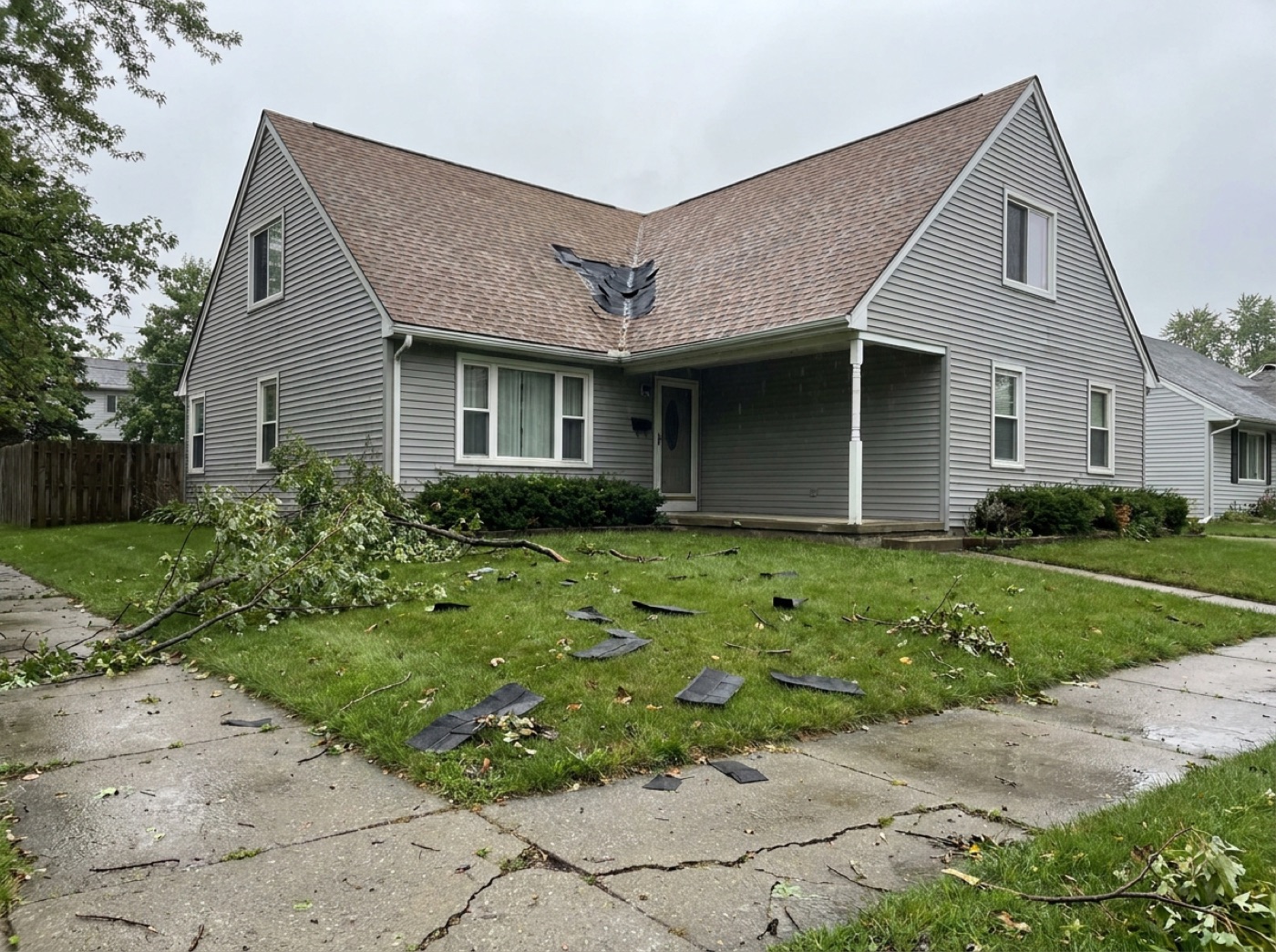
03 / THE CONTRACTThe two clauses in play: prompt notice and the hard deadline
Two pieces of policy language control a late claim, and they work differently. The first is the prompt-notice clause. Nearly every homeowner policy requires notice of a loss given promptly, or as soon as practicable, once the insured knows about it. Those phrases are deliberately elastic, and that elasticity cuts both ways. It protects the homeowner who genuinely could not have known about hidden damage until a leak appeared. It also gives the carrier room to argue, and this is the argument late claims most often meet, that the delay prejudiced its ability to investigate: that the roof weathered another two seasons, that the damage got worse on your watch, that a fresh inspection can no longer separate the storm's work from time's. The answer to that argument is not a clever phrase. It is a record showing you reported promptly after discovery and that the damage pattern matches a documented event.
The second piece is the hard outer limit. Michigan homeowner policies commonly carry a suit limitation period, often one year, tied to the state's statutory fire policy provisions, and how that period is measured and tolled is exactly the kind of specific we state only with the statute in front of us; it is cited in the sources below and treated fully in the filing deadline guide. The practical translation is blunt: a claim discovered and reported a few months after a storm is usually working inside the system as designed. A dispute allowed to drift past its first anniversary needs professional advice, promptly.
04 / THE EVIDENCEDating the damage: weather records and DR-4757
A fresh claim points at the sky: the storm was Tuesday, the shingles are in the yard. A late claim has to reconstruct that connection, and the good news is that the weather leaves a paper trail. The National Weather Service and NOAA's storm events records document wind gusts, hail reports, and dates for events down to the county level, and your own records help too: the dated photo you happened to take of the yard that week, a neighbor's reroof after the same event, news coverage of the outage. What the file is assembling is a simple syllogism. A documented storm crossed Macomb County on a known date; your roof shows damage consistent with that kind of event; no other event explains it. Our guide on proving the storm date for a roof claim walks the sources one by one.
Macomb County has a worked example sitting on the public record. After the severe storms of August 2023, the county was included in federal disaster declaration DR-4757. For any homeowner whose damage traces to that event, the argument about whether a storm happened is already over: the federal government dated it, named it, and designated Macomb County. What remains is tying your roof to it, which is what a documented inspection is for. Wind events of that scale broke seal strips and lifted flashing on roofs whose owners never saw a reason to look, and some of that damage surfaced through the following winter and beyond, exactly the pattern this guide describes. We wrote up the declaration and what it can mean for a claim in our DR-4757 roof insurance guide.
A late claim is an argument about dates. The homeowner who shows up with a named storm, a dated discovery, and a documented roof is not asking the carrier to take their word for anything.
One caution belongs here. Dating the damage is evidence work, not wishful thinking. If an inspection finds wear, failed workmanship, or age rather than storm damage, forcing it into a claim helps no one and can hurt you. Part of what an honest inspection buys is a straight answer about which one you have, before the carrier is involved at all.
05 / THE FILINGHow to file a late-discovered claim, step by step
The sequence for a late claim is the standard claim sequence with the volume turned up on documentation and the timeline written down. Start the day you discover the damage. Photograph the interior stain or the inspection finding, dated, before anything is cleaned or painted. Write down how the damage was discovered and the date, in a sentence or two, while it is fresh. If water is actively entering, mitigate temporarily: buckets, plastic, a properly installed tarp. Your duty to prevent further damage begins at discovery, and our tarping line runs 24/7 for exactly this. What you should not do is permanently repair the roof before it has been inspected, because the repair can erase the evidence the whole claim rests on.
Next, get the roof documented by someone who knows what storm damage looks like. Our inspection is $0 with no obligation: every slope photographed, seal strips checked by hand, soft metals examined for strikes, the attic side read for the water path, all of it in writing with dates. Then report the claim, and report it carefully. Give the discovery date and the facts of the discovery, identify the storm you believe caused the loss if the evidence supports one, and resist the urge to fill gaps with guesses. Saying the roof was damaged sometime last year when your file points to a specific August wind event is throwing away your best card; guessing wrong about dates can quietly damage a truthful claim.
From there the claim runs the normal course: an adjuster inspection, a coverage decision, an estimate if the loss is covered. Expect the adjuster visit to matter even more than usual, because the age question will be live on every slope. Have your file assembled and walk them to every finding. We can meet your adjuster on site and point to what we documented, though the decision is always the carrier's, and no contractor can honestly promise a claim outcome.
Never backdate, guess, or let anyone coach the story. A late claim survives on credibility, and one stretched fact can cost the file more than the delay ever did. Report what you know, date what you can prove, and let the weather records and the roof speak.
06 / THE STAKESWhat is actually at stake in dollars
Whether a late claim is worth filing at all is arithmetic before it is anything else, and the arithmetic starts with your deductible. If the damage is a localized repair, Macomb County roof repairs run $350 to $3,200, and larger or complex repairs can run higher. A repair estimate that barely clears your deductible may not be worth the claim history, and we will tell you when that is the case. If the storm compromised the roof broadly, replacement numbers apply: a full asphalt replacement here runs $9,000 to $18,000 installed, with most homes landing $12,000 to $16,000. Those are the published ranges from our honest pricing page, and the 60-second cost calculator turns them into a ballpark for your own roof size before anyone visits.
is what a full asphalt replacement runs in Macomb County, with most homes landing $12,000 to $16,000. That scale is why carriers scrutinize late files, and why the documentation in this guide is worth the effort. Get your own ballpark from the instant estimator first.
Late discovery adds one more line to the math: any damage that occurred between the storm and your discovery may be argued about, which is another reason the report should happen promptly once you know. And if the claim is denied or falls short, the roof still needs fixing; a documented inspection prices the repair path and the replacement path side by side, so you are deciding with numbers either way.
07 / OUR ROLEWhere a roofer honestly fits, and the next step
A claim has two decision-makers, you and your carrier, and a roofing contractor is neither. What we contribute to a late claim is the thing it is starving for: evidence with dates on it. The free inspection produces a written, photographed record of what the roof shows today, an honest read on whether it is storm damage or wear, and, when the damage pattern matches a documented event, the connective tissue between your roof and the weather record. If a claim makes sense, we can meet your adjuster, and if the work is approved we build it to the agreed scope and produce the completion paperwork. If a claim does not make sense, you will hear that from us plainly, along with what the fix costs out of pocket.
- Late discovery does not automatically bar a claim: the loss happened when the storm hit, and damage found months later may still be claimable inside your policy's deadlines.
- Two clauses control the file: prompt notice, which starts mattering the day you discover the damage, and the hard suit limitation covered in our Michigan filing deadline guide.
- The carrier's main lever on a late claim is delay: answer it with dated discovery photos, a prompt report, and a documented inspection.
- Weather records date the loss: NWS and NOAA storm records, and for August 2023, federal disaster declaration DR-4757 naming Macomb County.
- Never guess dates or stretch facts; a late claim survives on credibility.
- The stakes run from repairs at $350 to $3,200 up to full replacements at $9,000 to $18,000, and a $0 inspection tells you which conversation you are in.
If you just found damage and the storm was months ago, the worst move is another month of waiting. Request the free inspection through the instant estimator, or call and we will get eyes on the roof, put the findings in writing, and give you a straight answer about whether there is a claim worth making. The rest of the storm and insurance series, from documentation checklists to depreciation recovery, lives in the guides library.
Questions we hear most
Often yes, if you are inside your policy's deadlines. Coverage attaches when the loss happened, not when you found it, and hidden wind or hail damage that surfaces through a winter leak or a sale inspection may still be claimable. Report promptly once you discover the damage, because prompt-notice clauses give carriers room to push back on delay, and check the hard timing rules in our Michigan filing deadline guide.
With records rather than memory. National Weather Service and NOAA storm data document wind and hail events by date and county, and for the August 2023 storms Macomb County was included in federal disaster declaration DR-4757, which dates that event on the public record. A documented inspection then ties the damage pattern on your roof to that kind of event. Dated photos from around the storm and neighbors' repairs from the same event help too.
They may raise the delay, usually by arguing it prejudiced their investigation or that the damage is wear rather than storm damage, and no contractor can promise how a carrier will decide. What strengthens a late file is a prompt report after discovery, dated photos of what you found, a documented inspection, and a named, dated storm event. If a claim is denied, you still get the repair and replacement numbers from the same inspection, so you can decide the next step either way.
- FEMA, disaster declaration DR-4757-MI, Michigan severe storms of August 2023 (Macomb County designated). fema.gov/disaster/4757
- NOAA National Centers for Environmental Information, Storm Events Database: county-level wind, hail, and tornado records for Macomb County. ncdc.noaa.gov/stormevents
- Insurance Information Institute, consumer explainers on homeowners policy coverage, deductibles, and the claims process. iii.org
- Michigan Department of Insurance and Financial Services (DIFS), consumer insurance resources and complaint process. michigan.gov/difs