
JUMP TO A SECTION
Type this question into a search bar and you will get answers ranging from a confident and wrong number to a wall of statutory text with no instructions attached. Neither helps a homeowner standing in the driveway looking at lifted shingles. So let us be precise about what the question actually contains, because it is really two questions wearing one sentence. The first is how quickly you must tell your insurance company about the damage. The second is how long you have before the legal door closes on a claim the carrier will not pay. Those deadlines are different in kind, different in length, and different in consequence, and mixing them up is one of the more expensive mistakes a Michigan homeowner can make. This guide walks both clocks: the prompt-notice duty written into your policy, the hard suit limitation that Michigan homeowner policies commonly carry, how a dated regional event like the August 2023 storms behind federal declaration DR-4757 starts the practical countdown, and what to do at each point on the timeline. One promise up front, and it cuts both ways: nothing on this page is legal advice, the controlling language is your own policy and the statutes we cite in the sources below, and when a real deadline is close, the professional to call is a licensed Michigan attorney, not a roofing website. What a roofer owes you is the practical timeline and honest documentation, and that is what you will find here. The full claims playbook lives on our storm and insurance claims page; this page is the clock.
01 / THE SHORT ANSWERTwo deadlines, not one
Here is the honest summary. Your duty to report the damage starts immediately: Michigan homeowner policies typically require notice given promptly, or as soon as practicable, and while those phrases have no fixed day count, they are enforceable duties, not suggestions. Your window to sue the carrier over a claim is a separate, harder line: Michigan policies commonly carry a one-year limitation on bringing an action, a structure tied to the statutory fire-policy provisions in Michigan insurance law, and that period can be paused, or tolled, in certain circumstances while the carrier is considering the claim. The exact operation of that statute is precisely the kind of detail we refuse to paraphrase from memory, so it lives in the sources below as a verified citation rather than as a confident sentence here. What we can say confidently is the practical rule that keeps homeowners out of trouble on both clocks at once:
Report the damage the week you find it, respond to every carrier request promptly, and do not let a disputed or unpaid claim drift toward its first anniversary without professional advice. A homeowner who follows those three habits almost never has a deadline problem, whatever the fine print of their particular policy says.
02 / THE DISTINCTIONReporting a claim is not the same as suing on one
The confusion usually starts with the phrase itself. When people hear there is one year to file, some hear a year to report the damage, and conclude they can sit on a storm-hit roof until next summer. That is the wrong reading, and it is worth pulling the two actions apart completely.
Reporting: opening the file
Reporting, sometimes called first notice of loss, is the phone call, app entry, or online form that tells your carrier a loss happened. Its deadline is the soft one: promptly, as soon as practicable, or similar policy language. Soft does not mean toothless. A carrier faced with late notice can argue the delay prejudiced its ability to investigate, that intervening weather made the damage worse, or that wear and storm damage can no longer be told apart. Michigan's Department of Insurance and Financial Services publishes consumer guidance on what to expect when filing, cited below, and the theme running through it is speed and documentation. Report first, argue details later. The step-by-step mechanics, from the first photos to the final depreciation check, are in our guide to filing a roof insurance claim in Michigan.
Suing: the hard boundary behind the file
Suing is what happens when the process breaks down: the carrier denies a claim you believe is covered, pays a fraction of a documented scope, or stops responding entirely. The limitation period is the boundary on that option, and unlike the notice duty, it does not bend to good intentions. Once it passes, a court will generally not hear the dispute, no matter how strong the underlying claim was. This is why the distinction matters so much: the reporting clock determines how smooth the claim is, but the suit clock determines whether you have any leverage left when the claim goes wrong. Most homeowners never need the second clock. Every homeowner should know it exists, because carriers certainly do.
The notice deadline decides how your claim goes. The suit deadline decides whether you still have a claim at all. Homeowners who only track the first one are trusting the process to never break.
03 / THE HARD LINEThe one-year limitation, carefully stated
Michigan regulates the minimum content of fire and homeowner policies through statutory provisions, and among them is a limitation on how long a policyholder has to bring suit on a claim. In Michigan homeowner policies this limitation is commonly one year from a point defined by the statute and the policy language, and Michigan law addresses how that period interacts with the time a carrier spends considering a claim, which is where tolling enters the picture. Tolling means the countdown can pause, commonly described as running from the date of loss but suspended between the time you give notice and the time the carrier formally denies liability. Whether and exactly how that applies to a given claim depends on the statute's current text, the policy's language, and the facts, which is why the citation sits in our sources marked for verification rather than being quoted here from memory.
Three practical consequences follow, and they hold under any careful reading. First, the date of loss matters enormously, which is why tying your damage to a documented storm date is worth real effort. Second, a formal denial letter is not just a disappointment, it is a starting gun: once the carrier has denied liability in writing, whatever remains of the limitation period is running, and the dated letter in your file is the evidence of when. Third, an unresolved claim approaching one year old is a claim that needs a professional opinion now, not after the anniversary. None of this is a reason to panic over a routine claim moving normally. It is a reason to keep a dated log, keep every letter, and treat the first anniversary of your storm as a hard checkpoint.
Notice what this section did not do: it did not tell you that you definitely have one year, or that tolling definitely saves you. Policies differ, endorsements differ, and statutes get amended. The homeowner move is to read the suit-against-us clause in your own policy, and the moment real money and a real dispute are on the table, put the question to a licensed Michigan attorney who can read your policy against the current statute. That costs less than being wrong by one week.
04 / THE SOFT CLOCKWhy waiting is risky even inside the window
Suppose the hard deadline is comfortably far away. Waiting is still the most expensive passive decision a storm-hit homeowner can make, for reasons that have nothing to do with statutes. Evidence degrades. Wind-lifted shingles reseal partially, crease marks weather, and the crisp signature of storm damage blurs into the general appearance of wear. Michigan's freeze and thaw cycles actively enlarge the damage: water that entered through a storm breach refreezes, pries the opening wider, and by spring the carrier is looking at a mess it can plausibly attribute to neglect of the original loss. Your policy's duty to mitigate cuts the same direction, since a homeowner who knew about damage and let it sit may find the worsened portion of the loss excluded.
There is also the mundane problem of memory and paperwork. A claim reported the week of the storm comes with fresh photos, an exact date, and a homeowner who remembers which direction the wind came from. A claim reported months later starts with a shrug, and rebuilding the timeline from weather records and neighbor anecdotes is harder than it sounds. It can be done, and our guide to filing a roof claim months after the storm walks exactly that recovery, but nobody who has done it recommends starting there on purpose. If you suspect damage and are not sure, that is precisely what a free inspection answers: we photograph the roof slope by slope, put what we find in writing, and tell you honestly whether there is storm damage worth reporting at all. You can request one in about a minute through the instant estimator.
Most blown deadlines do not look like procrastination. They look like a homeowner waiting for a contractor to call back, waiting for a second opinion, waiting for spring, waiting for the adjuster to reinspect, each wait reasonable, the sum fatal. Put the storm date and its first anniversary on your calendar the day you find damage, and let every other wait happen inside that frame.
05 / THE WORKED EXAMPLEDR-4757: how a dated storm starts the practical clocks
Abstract deadlines get clearer with a real event, and Macomb County has one on the public record. After the severe storms of August 2023, the county was included in federal disaster declaration DR-4757. A declaration like that does two useful things for a homeowner's timeline. First, it fixes the date: nobody has to argue about whether a major wind event occurred, because the event is documented at the federal level. Second, it starts every practical clock at once, and visibly. The notice duty began when a homeowner knew or reasonably should have known their roof was damaged, and for thousands of roofs that meant the week of the storm itself.
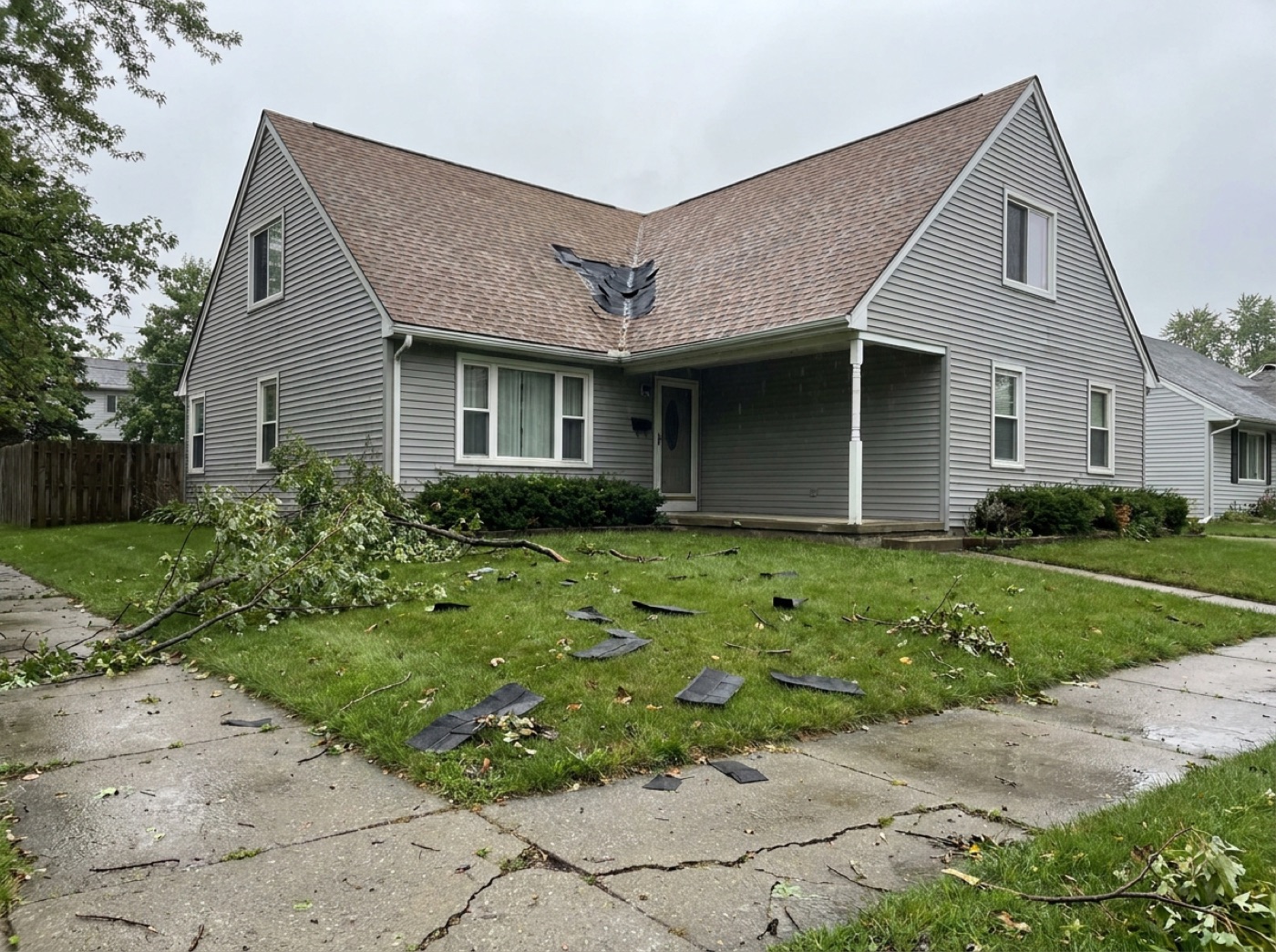
Now run the clocks forward from August 2023 and the lesson writes itself. A homeowner who reported that month has long since resolved the claim, well inside any reading of the deadlines. A homeowner who discovered a leak the following winter, traced it to the storm, and reported promptly on discovery had a harder file but a live one, the months-after-storm scenario linked above. And a homeowner first connecting today's ceiling stain to that 2023 event faces a genuinely uphill case on both clocks: the notice duty measured in years rather than days, and a suit limitation that, however tolled, has had a long time to run. Uphill is not automatically hopeless, because policy language, discovery dates, and tolling rules produce real exceptions, but it is exactly the situation where the next call should be to your carrier and, if real money is disputed, to an attorney. The pattern generalizes to every storm after this one: the event date is the anchor, everything is measured from it, and the homeowner who moves in the first week never has to learn the exceptions.
06 / THE TIMELINEWhat to do at each point on the clock
Here is the whole timeline as a checklist, from the day of the storm to the one-year checkpoint. It compresses the full filing process, which the step-by-step guide covers in depth, down to the moves that protect your deadlines specifically.
- Day 0 to 7: photograph the roof and any interior damage with dated photos, tarp what needs tarping and keep the receipts, and report the loss to your carrier. Write down the claim number, the handler's name, and the storm date. Put the storm's first anniversary on your calendar.
- Week 1 to 4: get an independent inspection so you know what the roof actually needs, be present for the adjuster visit with your photos assembled, and start a one-line-per-call log of every contact with the carrier.
- Month 1 to 3: read the carrier's estimate against published pricing, submit documented supplements for anything the scope missed, and keep every letter. If the carrier goes quiet, send polite written status requests; how long each phase should take is covered in our guide to Michigan insurance claim response times.
- Any formal denial, whenever it lands: keep the dated letter, because the remaining limitation period is likely running from it. This is the moment to escalate: a DIFS consumer complaint costs nothing, and an attorney consultation is cheap insurance on a five-figure dispute.
- Month 9 to 12: if the claim is still unresolved for any reason, get professional advice before the anniversary, not after. Do not assume tolling saved you; have someone qualified confirm it.
It is worth being blunt about why the deadline discipline matters in dollars. A full asphalt replacement in Macomb County runs $9,000 to $18,000 installed, with most homes landing $12,000 to $16,000, and repairs run $350 to $3,200. Those are the same ranges published on our honest pricing page, and they are the stakes on the table in a roof claim: a missed deadline can convert a covered five-figure loss into a personal expense. If you want the number for your own roof before you weigh any of this, the 60-second cost calculator runs the same canon against your square footage, which is exactly the figure to hold next to your deductible when deciding whether a claim is worth filing at all.
07 / THE EDGE CASESWhen the calendar gets complicated, get help
Most claims never touch the hard deadline. The ones that do tend to share a shape: late-discovered damage, a denial the homeowner believes is wrong, a lowball scope under negotiation for months, a carrier that stopped answering, or a loss tangled in a sale, an estate, or a condo association's master policy. Every one of those is an edge case where the general rules above meet specific facts, and the honest answer from a roofing company is the same for all of them: we are not the professional for that part. A licensed Michigan attorney reads your policy against the current statute; DIFS takes consumer complaints about claim handling at no cost; and your own declarations page is the controlling document underneath everything.
What we are the professional for is the evidence under the argument. Our inspection is $0 with no obligation: dated photos of every slope, the attic side checked, and a written read on whether the damage is storm-caused, wear, or nothing to worry about. We can meet your adjuster on site, document supplements when a scope misses real items, and build the roof correctly once the claim resolves, but the coverage decision is always the carrier's and no contractor can promise a claim outcome. If a storm hit your roof and the clock has already started, whether you know the storm date or not, the free inspection is the first move that makes every later move easier. The rest of the library, from adjuster visits to depreciation checks, is in our guides collection.
- Two clocks run on every Michigan roof claim: a prompt-notice duty that starts immediately, and a suit limitation that Michigan policies commonly set at one year, subject to tolling rules we cite rather than paraphrase.
- Reporting a claim and suing on one are different acts with different deadlines; having time left to sue does not mean it is safe to delay reporting.
- A formal written denial likely starts the remaining countdown, so keep the dated letter and escalate promptly.
- Waiting is expensive even inside the window: evidence blurs, freeze and thaw enlarges damage, and the duty to mitigate can exclude the worsened portion of the loss.
- DR-4757 shows how a dated regional event anchors every clock; report in the first week and the exceptions never matter.
- Near a real deadline with real money disputed, the right professional is a licensed Michigan attorney, and the right first document is a $0 inspection report with dated photos.
Questions we hear most
There are two deadlines. Your policy requires you to report the damage promptly, or as soon as practicable, which in practice means days, not months. Separately, Michigan homeowner policies commonly carry a one-year limitation on suing the carrier over a claim, tied to statutory fire-policy provisions, and that period can be tolled in certain circumstances while the claim is under consideration. The controlling language is your own policy and the statute, so verify your dates with a licensed Michigan attorney when a deadline is close.
Reporting is the notice you give your carrier that a loss happened, and its deadline is the soft, prompt-notice duty in your policy. Suing is the legal action available if the carrier denies or underpays a claim you believe is covered, and it faces a hard limitation period that a court will generally enforce once it passes. The reporting clock affects how smoothly the claim goes; the suit clock decides whether you have any legal leverage left if it goes badly.
It depends on your policy and your facts, and at this distance the timing questions are real on both clocks. Late-discovered damage may still be claimable in some circumstances, particularly where the damage could not reasonably have been found earlier, but the notice duty and the suit limitation have both had years to run. Get the roof inspected and documented, then put the deadline question to your carrier and, if real money is involved, to a licensed Michigan attorney. No contractor can promise a claim outcome.
- FEMA, disaster declaration DR-4757-MI, Michigan severe storms of August 2023 (Macomb County designated). fema.gov/disaster/4757
- Insurance Information Institute, consumer explainers on homeowners policy coverage, deductibles, and the claims process. iii.org
- Michigan Department of Insurance and Financial Services (DIFS), consumer insurance resources and complaint process. michigan.gov/difs