
JUMP TO A SECTION
Most homeowners open a roof inspection report, skim the first page, and land on a bottom line: replace, repair, or fine for now. That instinct is understandable, but it skips the part of the document that actually protects you. A report is a structured argument, built from ratings, photos, and priority tiers, and each piece is doing a specific job. Once you know what each section is supposed to say, a vague or padded report stands out immediately, and a thorough one becomes easy to trust because you can see the reasoning, not just the conclusion.
01 / THE SHORT ANSWERWhat you are actually holding
A roof inspection report is a dated, itemized account of what an inspector found on a specific roof, organized by location and severity, with photos tying each finding to a specific spot. It is not a quote and it is not a sales pitch, though the two sometimes get blended together in practice. The strongest reports separate what was seen from what it means from what it costs, in that order, so you can evaluate the evidence before you ever get to a number. If a report jumps straight from a photo to a dollar figure with nothing connecting them, that is the first sign to slow down and ask questions.
Read any finding in the report and ask: could I picture exactly where on the roof this is, and could I tell the difference between a real problem and normal wear from this description alone? If the answer is no, the line is too vague to act on, and you should ask the inspector to point to it in person or on a labeled photo. Our companion guide on questions to ask a roof inspector has the full list for exactly this situation.
It also helps to know who the document is written for, because that shapes what gets included. A report meant for a homeowner deciding whether to repair or replace reads differently from one written to satisfy a lender's underwriting checklist or to support an insurance claim. The same roof can generate three different documents depending on the audience, and none of them are wrong, but a homeowner comparing a contractor's inspection to an insurance adjuster's summary should not expect them to look identical or cover the same ground line for line.
02 / THE STRUCTUREAnatomy of a report, section by section
Formats vary between companies, but a competent roof inspection report almost always breaks into the same handful of sections, in roughly this order. Knowing the shape ahead of time makes it much faster to find the part that matters to you.
Summary or executive overview
A short paragraph or a few bullet points up top stating the roof's age if known, the general condition, and the headline recommendation. This section exists so a homeowner or an agent can get the gist in thirty seconds, but it should never be the only part you read, because it necessarily compresses the detail that justifies the conclusion.
Roof identification and scope
The material type, the approximate number of slopes and squares, and a note on what was and was not accessible, such as whether the inspector walked the roof or observed from a ladder, and whether the attic was entered. This section sets the boundaries of the whole report. A finding about attic moisture means nothing if the scope section says the attic was not accessible that day.
Findings by location
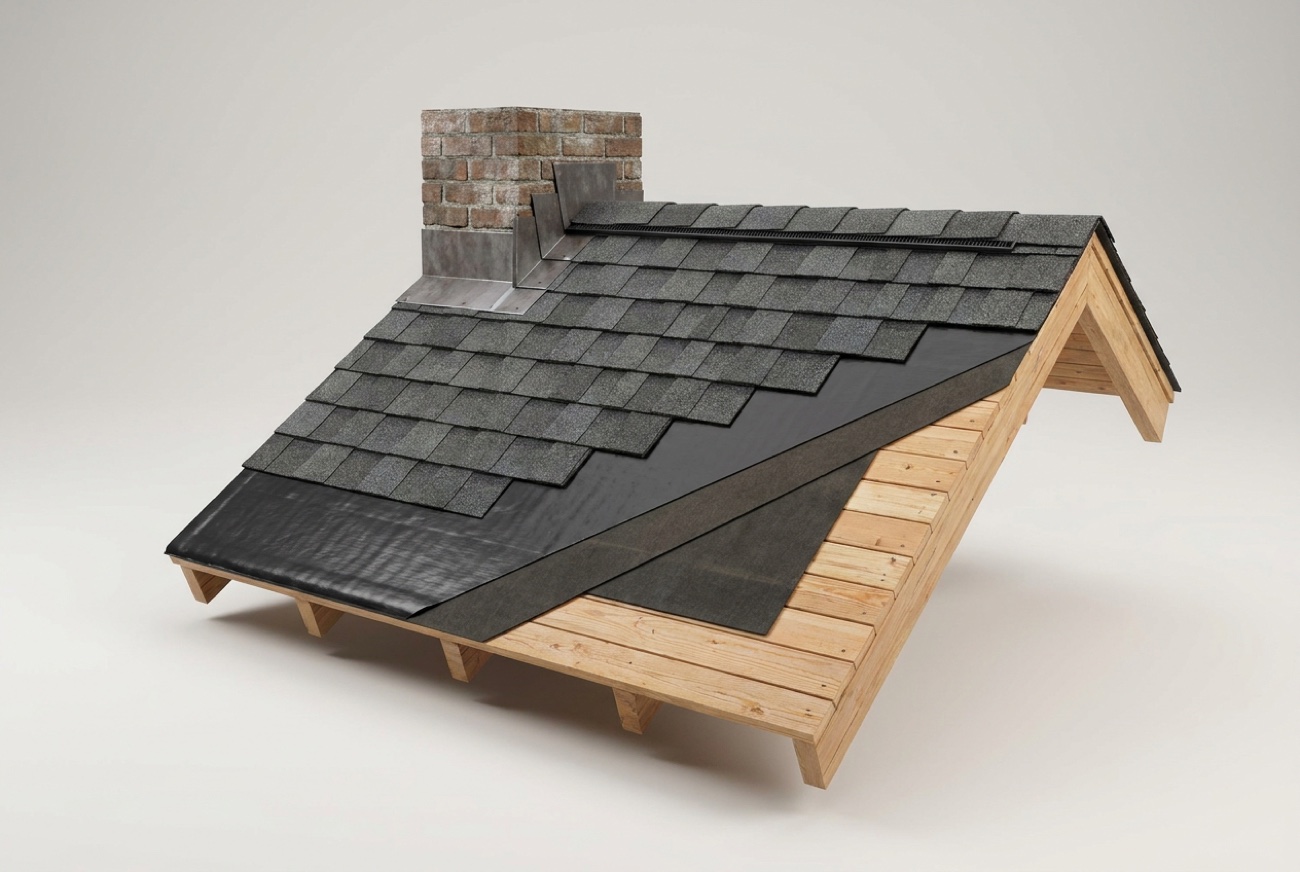
The core of the document, usually organized by roof slope or by system: field shingles, ridge, valleys, flashing, penetrations, gutters, and attic side. Each finding should reference a location specific enough to find again, such as "south slope, lower third, near the chimney" rather than just "shingles."
Photo appendix or inline photos
Photos labeled to match the findings list, ideally with a wide context shot and a close-up for anything called out as a problem. A report with findings but no matching photos is asking you to take its word for it, which is a reasonable thing to push back on.
Recommendation and next steps
The closing section translates the findings into a suggested path: monitor, repair, or replace, sometimes broken into immediate versus near-term items. This is the section most likely to carry a sales angle, so it deserves the most scrutiny, and it should trace back cleanly to specific findings earlier in the document rather than introducing new claims of its own.
The order most homeowners should actually read it in
The document is usually printed with the summary first, but that is not necessarily the smartest reading order. A more useful path is to start with the scope section so you know what was actually checked, jump to the findings and photos next so you are looking at evidence before conclusions, and read the summary and recommendation last, now armed with enough context to judge whether they actually follow from what came before. Reading it in the order it was written is fine for a clean bill of health; reading it in this order is what catches a recommendation that has quietly outrun its own evidence.
03 / THE RATINGSCondition ratings and life-expectancy language
Most reports rate overall condition on some version of a simple scale, such as good, fair, or poor, sometimes with a numeric score layered on top. The scale itself is less important than whether the report explains what earned that grade. "Fair" attached to a list of specific findings, granule loss on the south slope, one cracked pipe boot, minor flashing separation at the chimney, is useful. "Fair" with no supporting detail is just an opinion wearing a label.
Life-expectancy language deserves its own read-through, because it is the line homeowners fixate on most and the one most often stated with more confidence than the underlying evidence supports. A report that says a roof has "5 to 7 years of remaining service life" is making an estimate, not measuring a fact, and a careful report will say so directly, noting that the estimate assumes normal wear continues at its current pace with no major storm event in between. Watch for the difference between an estimate presented as a range with stated assumptions, which is honest, and a single hard number presented as certain, which usually is not.
Numeric scores, sometimes seen as a single figure out of 10 or a percentage, deserve the same scrutiny as a word label. A score is only as good as the categories it averages together, and a roof can post a decent-looking overall number while hiding one serious localized problem underneath a lot of fine detail elsewhere. If a report gives you a single score, ask what it is built from. A breakdown by shingle condition, flashing, ventilation, and structure that you can inspect separately is far more useful than one blended figure, because it lets you see whether the average is hiding a weak spot rather than describing a uniformly fair roof.
04 / THE DISTINCTIONDeficiency versus observation, and why it matters
This is the single most useful distinction in the whole document, and the one most homeowners have never been taught to look for. An observation is a neutral note about something the inspector saw: the roof has two layers of shingles, there is a satellite dish mount on the north slope, the ridge vent is an older style. A deficiency is a finding that something is not performing as it should and needs attention: a cracked pipe boot, a section of missing granules down to the mat, a soft spot in the decking. Both belong in a good report, but they are not the same thing, and a report that blurs them, treating every observation as if it were a deficiency, inflates the apparent urgency of the roof's condition.
A practical test: for any line item that reads like a problem, ask whether the report states what normal looks like for comparison. "Granule loss noted" on its own is an observation, because every asphalt roof sheds some granules with age. "Granule loss to bare mat exposing the underlying fiberglass" is a deficiency, because it names the point where wear becomes a functional failure. The best reports make that line explicit; weaker ones leave you to guess which side of it a finding falls on.
An observation tells you what is there. A deficiency tells you what is not working. A report that cannot tell you which is which cannot really tell you what your roof needs.
Side by side, the pattern is easy to spot once you know to look for it. "Ridge vent present, older continuous-slot style" is an observation: it tells you what exists with no judgment attached. "Ridge vent baffle collapsed on the north slope, allowing wind-driven rain intrusion" is a deficiency: it names a specific failure and a specific consequence. Both lines might appear on the same report about the same ridge vent, and both are legitimate, but only one of them belongs in a repair estimate. If a report's cost section references the vent at all, it should be citing the second line, not the first.
05 / THE TIERSPriority tiers, decoded
Many reports sort deficiencies into priority tiers, often labeled something like immediate, near-term, and monitor, or a similar three-way split. The tiers are meant to help you sequence spending, and they are genuinely useful when the report explains the reasoning behind each placement rather than just assigning a label.
| TIER | WHAT IT MEANS | A GOOD REPORT SAYS |
|---|---|---|
| Immediate | Active or near-term water intrusion risk | Which specific opening or failure point, and why it cannot wait |
| Near-term | Wear that will become a deficiency without attention | A rough timeline, and what triggers escalation to immediate |
| Monitor | Normal aging worth tracking, not yet actionable | What would change the assessment at a future inspection |
A report that puts everything in the immediate tier, with no near-term or monitor items at all, is a pattern worth noticing. Real roofs, even aging ones, almost always have a mix of severities, because deterioration is uneven across slopes, ages, and exposure. A uniformly urgent report is not impossible, but it should come with correspondingly clear photos and explanations for every single item, not just the summary line.
The tiers should also reconcile with the overall condition rating from the section above. A roof rated "fair" should not carry a findings list where half the items are marked immediate, because that combination describes a poor roof wearing a fair label. When the tiers and the overall rating pull in different directions like that, it is a sign the report was assembled inconsistently, whether by rushing the write-up or by adjusting one section after the other was already set, and it is worth asking the inspector to walk through the mismatch directly rather than assuming either number is the accurate one.
06 / THE RED FLAGSWhen a report is built to sell you a roof
Most inspectors and reports are straightforward, but the format itself can be used to manufacture urgency, and it helps to know the tells. None of these appear in isolation on a fair report; watch for them clustering together.
- Vague findings with dramatic language. Phrases like "significant deterioration observed throughout" with no slope-by-slope detail and no matching close-up photos.
- Photos that could be any roof. Wide shots with no visible landmark tying the image to your specific house, or close-ups with no wide shot for context.
- Every finding lands in the top priority tier. As noted above, a uniformly urgent report without proportionate documentation is a pattern to question.
- The recommendation section introduces new claims. A jump to "this roof is a safety hazard" that is not supported by anything in the findings above it.
- Pressure tied to the report itself. Language suggesting the offer or the price is only valid if signed same day, which is a sales tactic riding on the back of a technical document.
- No stated scope or limitations. A report that never says what was and was not inspected leaves no way to know what its conclusions actually cover.
- The inspector arrives already carrying materials or a written estimate. A visit framed as an inspection that shows up with a signed proposal ready to go before anyone has looked at the roof has the sequence backward.
None of this means every urgent-sounding report is wrong. Storm damage genuinely can affect an entire roof uniformly, and a roof at the end of its rated life genuinely can have widespread findings. The point is not to distrust urgency on principle; it is to expect urgency to be documented at the same level of detail as any other finding, slope by slope, with photos, not asserted in a paragraph and left there. Our guide on free roof inspection scams covers the door-knocking version of this same pattern in more detail.
07 / OUR STANDARDWhat a Macomb Roofing Pros free inspection report includes
We built our own reporting standard around the same distinctions covered above, because we would rather you understand exactly what we found than take a summary line on faith. Every free inspection includes a slope-by-slope walkthrough of the shingle field, flashing, valleys, and gutters, plus the attic side of the deck, with photos tied to each finding and a plain-language note on whether it is an observation or something that needs attention. If the roof only needs a repair, that is what the report says, and repairs in Macomb County typically run $350 to $3,200 depending on scope. If it needs a full replacement, the report explains why in the same section-by-section format this guide just walked through, not just a bottom-line number.
There is no cost or obligation to have us look, and there is no pressure attached to the visit itself. You can start the process from the instant estimator, or if you already have a report in hand from somewhere else and want a second read on it, call and we will walk through it with you section by section using everything covered above.
- A report is a structured argument: what was seen, what it means, then what it costs, in that order.
- Learn the five common sections (summary, scope, findings, photos, recommendation) so you can find and evaluate the part that matters.
- An observation notes something present; a deficiency notes something not performing as it should. Good reports keep the two distinct.
- Priority tiers should come with reasoning, not just a label; a report where everything is "immediate" deserves a closer look.
- Vague language, mismatched photos, and same-day pressure are the tells of a report engineered to sell rather than describe.
Questions we hear most
An observation is a neutral note about something the inspector saw, like the roof having two layers of shingles. A deficiency is a finding that something is not performing as it should, like a cracked pipe boot or granule loss down to the bare mat. A good report keeps the two clearly separate rather than treating every observation as urgent.
Treat it as an estimate, not a fact. A careful report states its assumptions, such as normal wear continuing at the current pace with no major storm in between, and gives a range rather than a single confident number. Estimates presented with no assumptions or ranges deserve more skepticism.
Yes. Every free inspection includes a photo-documented, section-by-section report covering the shingle field, flashing, gutters, and the attic side of the deck, with observations and deficiencies noted separately. There is no cost or obligation, and if the roof only needs a repair, the report says that.
- InterNACHI Standards of Practice for home inspections (scope of a generalist roof inspection). nachi.org/sop
- Manufacturer technical and warranty literature for the major asphalt shingle lines: GAF (gaf.com), Owens Corning (owenscorning.com), and CertainTeed (certainteed.com).
- Michigan Attorney General, Consumer Protection resources (home repair and contractor complaints). michigan.gov/ag: consumer protection