
JUMP TO A SECTION
Every roof insurance claim funnels through one appointment. You can photograph the damage perfectly, report the loss promptly, and keep an immaculate paper file, but at some point a person with a clipboard, a camera, and a ladder arrives at your house, and what that person sees and records becomes the working version of your loss. That appointment is the adjuster inspection. It is shorter than most homeowners expect, more procedural than most homeowners expect, and far easier to get right when you know the sequence in advance. This guide walks the appointment itself: how it gets on the calendar, how long it commonly runs, where the adjuster goes and in what order, what ends up in their notes and photos, and what the file does after they leave. It deliberately does not cover how to identify hail bruising or wind creasing; that is a different subject for a different day. This is about the meeting. It is also honest about the limits: every carrier runs the visit a little differently, nothing here is legal or insurance advice, and no contractor can promise a claim outcome. What a homeowner controls is preparation and witnesses, and this page covers both. The full claim sequence around this appointment lives on our storm and insurance claims page.
01 / THE APPOINTMENTWhat the adjuster inspection is, and is not
The adjuster is the insurance company's investigator. Their job at your property is to verify that a loss occurred, tie it to a covered cause, measure its extent, and document all of it well enough that an estimate can be written from the file. They are not there to negotiate with you, approve the claim on the spot, or hand you a check from the truck, and a homeowner who expects any of those three things usually leaves the appointment frustrated for no reason. The visit produces a record. Decisions come later, from the record.
It helps to know which kind of adjuster is standing in your driveway. A staff adjuster works directly for your carrier. An independent adjuster is a contractor hired by the carrier, common after regional storm events when claim volume spikes. Both perform the same inspection and feed the same process; the difference matters mostly for who you call afterward with questions. Our guide to staff vs independent adjusters covers the distinction in full.
The adjuster visit is an evidence-gathering appointment, commonly 30 to 90 minutes, that turns your roof damage into the written and photographed record your entire claim will be decided from. Prepare for it like it matters, because it does.
02 / THE CALENDARScheduling: from claim number to a knock on the door
The inspection gets scheduled after you report the loss to your carrier and receive a claim number. Within a few days of that call, the assigned adjuster typically reaches out directly by phone, text, or email to set a date. After a large regional storm, when thousands of Macomb County homeowners are filing at once, that contact can take longer and appointment slots can stretch out by weeks. That lag is normal, it is not a signal about your claim, and it is one more reason the dated photos you took on day one matter so much.
When the adjuster calls, three small moves make the whole claim smoother. First, write down their name, company, and direct number; if an independent firm is handling the inspection, note both the firm and your carrier's claim number together. Second, ask what they want available: some adjusters want attic access, some want you to walk the interior with them, and knowing in advance beats scrambling while they wait. Third, if you want your roofing contractor present, and you are entitled to have them there, schedule around the contractor's availability too. One call to us with the adjuster's proposed window is usually all it takes; we can meet your adjuster on site, and the case for doing so is laid out in our guide on whether your roofer should meet the adjuster.
Expect the visit itself to be businesslike. Adjusters after a storm event are working a full docket of properties a day, which is why the appointment commonly runs 30 to 90 minutes rather than an afternoon. A straightforward single-slope loss on a ranch can be shorter; a large home with interior damage, multiple roof planes, and an attic walk can run longer. The length of the visit is not a verdict on your claim either. A short visit can mean the damage was obvious and easy to document.
03 / THE WALKTHROUGHWhat the adjuster actually examines
Most inspections follow the same rough circuit, outside to inside. Knowing the circuit tells you what to have unlocked, uncovered, and accessible before the truck arrives.
The ground walk
The visit usually starts with a slow lap of the house at ground level. The adjuster is looking at the property as a whole: the condition and age of the exterior, collateral indicators on soft metals like gutters, downspouts, and window wraps, screens, siding, and anything in the yard that tells the story of the storm. They will often photograph each elevation of the house, meaning each of the four sides, whether or not it shows damage. Those baseline photos protect everyone; they establish what the property looked like on the inspection date.
The roof itself
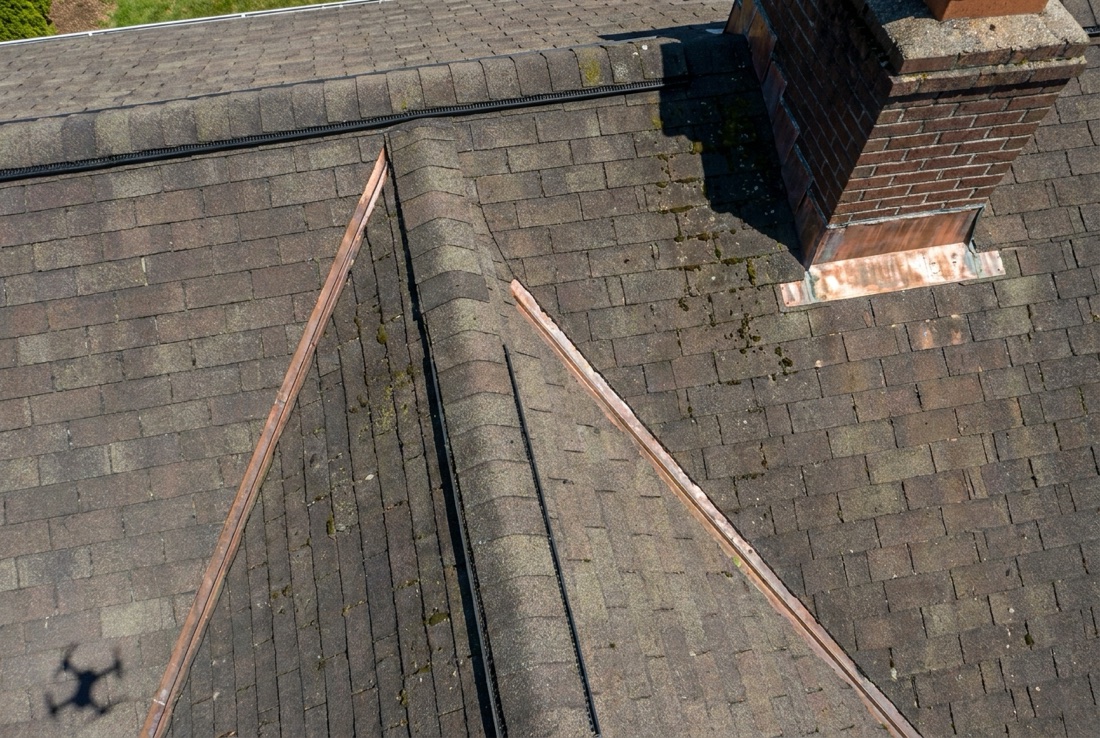
Next comes the ladder. On walkable roofs the adjuster typically gets on the surface and works slope by slope, photographing each plane, marking test areas, and measuring the roof as they go. On steep or complex roofs they may inspect from the ladder at the eaves, use a drone, or in some cases send a specialty ladder crew separately. They count and photograph roof features too: vents, pipe boots, flashing details, skylights, chimneys. Measurements matter as much as damage photos, because the estimate that eventually pays for the work is built from the same dimensions being taped or sketched during this pass. Everything gets logged with the software on their tablet or phone, usually with photos annotated by slope and direction.
Interior and attic, when damage reaches inside
If you reported ceiling stains, wet insulation, or interior leaks, walk the adjuster to every one of them. Interior damage that never makes it into the file rarely makes it into the estimate. The adjuster will photograph stains, measure affected rooms, and sometimes ask for attic access to see the underside of the roof deck, so know where your attic hatch is and have a clear path to it. This is the part of the visit homeowners most often shortchange, because by the time the adjuster comes inside the appointment feels almost over. Slow it down. Point at everything on your list.
The notes, the photos, and what they become
Everything observed becomes an entry in the claim file: annotated photos, slope-by-slope condition notes, roof measurements, interior room dimensions, and a recorded statement of what you told the adjuster about when and how the damage appeared. That file is what a reviewer, sometimes the adjuster themselves and sometimes a desk examiner who has never seen your house, uses to write the carrier's estimate. When that estimate arrives, our guide on how to read the adjuster's estimate decodes it line by line.
04 / THE PREPHow to prepare: documents, damage list, access
You cannot control what the adjuster concludes. You can absolutely control what they see and what they are handed, and preparation is where an average appointment becomes a strong one. The night before, assemble three things.
- The paper. Your claim number, your policy declarations page, your dated photos from the day of the storm, any contractor inspection report you already have, and receipts for tarping or other temporary mitigation. Hand copies over or offer to email them; do not surrender your only originals.
- The damage list. A simple written list of everything you have noticed, room by room and side by side: the ceiling stain in the back bedroom, the shingles in the neighbor's yard, the dented downspout on the west wall. Appointments move fast and memory fails under pressure. A list means nothing gets skipped.
- The access. Unlock the gates, put the dogs inside, move vehicles off the driveway so the ladder has a place to land, clear a path to the attic hatch, and plan to be home. An adjuster who cannot reach a slope or a room documents less, and less documentation is never in your favor.
During the visit itself, your job is host and witness, not narrator. Answer questions plainly and honestly, stick to facts and dates rather than theories about causes, walk them to everything on your list, and take a few photos of your own as the inspection happens, including where test squares were marked and which slopes were walked. If a question needs speculation to answer, it is fine to say you do not know. Do not sign anything during the visit without reading it, and do not feel pressure to characterize the damage; that is what the evidence is for.
Macomb County saw this at scale after the August 2023 storms that put the county inside federal disaster declaration DR-4757: thousands of inspections, stretched schedules, and adjusters working long dockets. The homeowners who came out ahead were the ones with dated photos, a written damage list, and a contractor's report waiting in a folder, because the paperwork carried the appointment even when the appointment was short.
05 / YOUR WITNESSYour right to have your own contractor present
You are entitled to have your own roofing contractor at the adjuster inspection, and in our experience it is the single most useful thing a homeowner can arrange for the appointment. The reasons are practical, not adversarial. Your contractor has usually been on the roof already and knows exactly where the damage is, so nothing gets missed because a slope was inconvenient to reach. They speak the same technical language as the adjuster, so questions about flashing details, decking, or code items get answered on the spot instead of by email three weeks later. And they are a second set of photographs and notes, which matters if the carrier's estimate later disagrees with what you believe was seen.
We can meet your adjuster on site, and when we do, the routine is simple: we arrive before the appointment, walk the roof or the eaves with the adjuster, point out everything our own inspection documented, answer measurement and repair-method questions, and stay out of the coverage conversation entirely. Coverage is between you and your carrier. What a contractor brings is completeness, and completeness is what protects you if the file needs a second look later. If the estimate comes back lighter than the damage, the path is a documented disagreement, and our guide to requesting a claim reinspection walks that path step by step.
The adjuster inspection is not a fight to win. It is a record to complete. Everything a homeowner does to prepare is really doing one thing: making sure the record is whole.
06 / AFTERWARDAfter the adjuster leaves: what happens to the file
The truck pulls away and, for most homeowners, nothing visible happens for a while. Here is what is happening out of sight. The adjuster uploads the photos, measurements, and notes to the carrier's claim system and writes or forwards the inspection report. An estimate gets built from the file, either by the field adjuster or by a desk reviewer. The carrier then issues a coverage decision and, if the claim is approved, an estimate and payment paperwork. Timelines vary by carrier and by how busy the storm season is; days to a few weeks is common, longer after major events. If weeks pass with silence, call the claim number and ask for status. Polite persistence is part of the process.
Three outcomes are possible, and each has a next move. If the claim is approved, the estimate becomes the budget for the work, and reading it correctly matters because roof replacements here are five-figure projects; a typical Macomb County asphalt replacement runs $9,000 to $18,000, and most homes land $12,000 to $16,000, the same canon on our pricing page and in our replacement cost guide. If the estimate is approved but thin, missing slopes, rooms, or line items you know were discussed, that is a documentation gap, and a reinspection request backed by your contractor's report is the remedy. If the claim is denied, the denial letter must state the reasons, and those reasons can be reviewed against your own evidence before you decide what to do next. None of these outcomes can be promised in advance, by us or anyone.
One more practical note: the adjuster visit prices the loss, not the roofer. You still choose your own contractor, and you should choose one the same careful way you would without a claim. If you want to sanity-check the numbers on any estimate against real local ranges, the 60-second cost calculator runs the same published figures, and a free inspection through the instant estimator gets our documented read on your roof before or after the adjuster's. Repairs, where a repair is all the damage calls for, run $350 to $3,200, and larger or complex work can run higher. If you have an active leak while you wait on the process, our emergency tarping line runs 24/7; tarping is the emergency service, and the permanent work follows the claim.
- The adjuster inspection is an evidence-gathering appointment, commonly 30 to 90 minutes, that produces the photos, measurements, and notes your claim is decided from.
- The carrier schedules it after you report the loss; after big storm events the wait stretches, and that lag says nothing about your claim.
- The circuit runs ground walk, roof, then interior and attic; walk the adjuster to every item on your written damage list.
- Prepare three things: your paperwork, a written damage list, and physical access to gates, driveway, roof, and attic.
- You have the right to have your own contractor present, and we can meet your adjuster on site at no charge.
- No decision happens in the driveway. The estimate and coverage decision come from the file, and gaps in the file can be challenged with a reinspection request.
Questions we hear most
Commonly 30 to 90 minutes for a typical single family home. A simple, obvious loss on a small roof can be quicker, while a large home with multiple roof planes, interior damage, and an attic walk can take longer. The length of the visit is not a signal about the outcome; short visits often just mean the damage was easy to document.
Yes, whenever possible. You are the one who can hand over documents, point out every item on your damage list, walk the adjuster to interior stains, and provide attic access. If you truly cannot be there, arrange for your roofing contractor to meet the adjuster in your place and make sure gates, the driveway, and the attic path are accessible.
Yes. You are entitled to have your own contractor present, and it is usually worth doing. A contractor who has already inspected the roof can make sure every slope and detail gets documented, answer technical questions on the spot, and keep an independent photo record. We can meet your adjuster on site; the coverage decision itself always remains between you and your carrier.
- FEMA, disaster declaration DR-4757-MI, Michigan severe storms of August 2023 (Macomb County designated). fema.gov/disaster/4757
- Michigan Department of Insurance and Financial Services (DIFS), consumer insurance resources and complaint process. michigan.gov/difs
- Insurance Information Institute, consumer explainers on homeowners policy coverage, deductibles, and the claims process. iii.org