
JUMP TO A SECTION
A handful of streets in Macomb County still carry the roofs they were built with. Older housing stock around Mount Clemens, Romeo, and a few other historic pockets went up with real quarried slate, and in most cases the slate itself is still doing its job decades later. What tends to fail on those roofs is not the stone. It is everything holding the stone in place and sealing it against the house: the nails, the step flashing at the walls, the valley metal, and the copper or lead work around chimneys. A homeowner who calls about a leaking slate roof is almost always calling about a metal problem wearing a stone disguise, and the difference matters, because the right fix for a metal problem is a repair or a restoration, not a full tear-off of a roof that may have another century left in it.
01 / THE REAL CULPRITWhy flashing and fasteners fail long before the slate does
Quarried slate is dense stone, and dense stone weathers slowly. The materials fastening it down do not get the same advantage. Slate is traditionally hung with nails driven through pre-punched holes, and on the oldest roofs in the county those nails are sometimes plain steel rather than the corrosion-resistant copper or stainless fasteners a slate roofer would spec today. Steel nails rust, rust expands, and an expanding nail shank eventually loosens or shears inside its hole. A slate does not need to crack to come loose. It only needs the nail holding it to fail.
The metal that does the real sealing
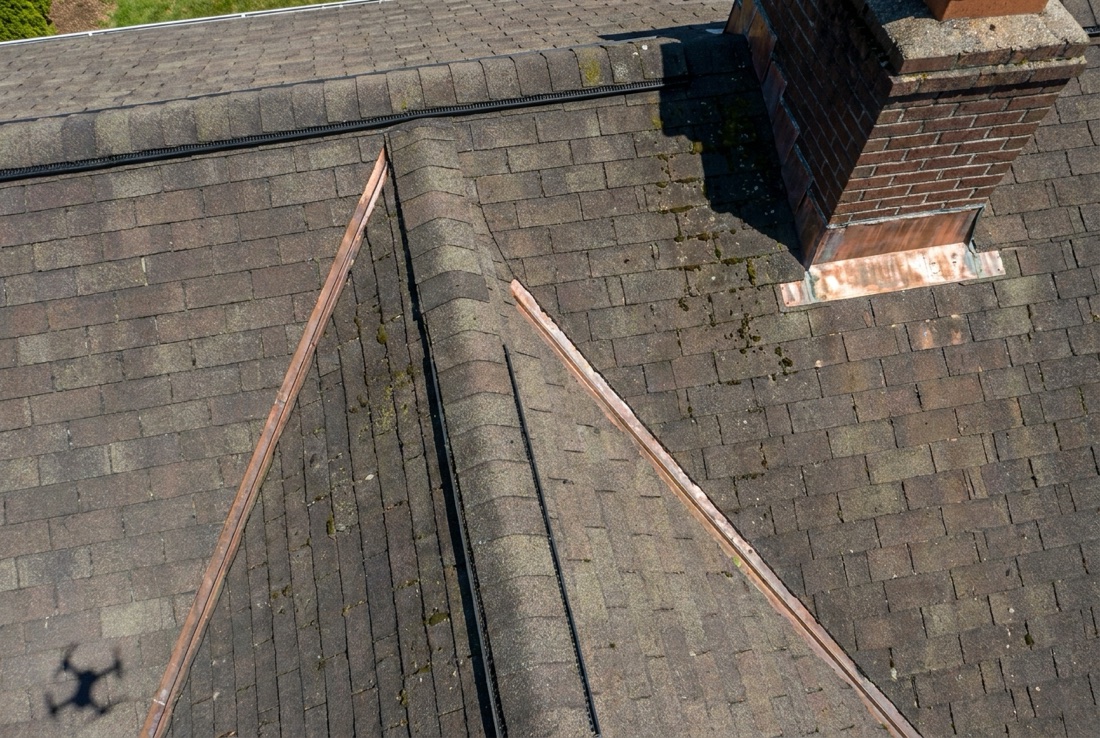
Flashing carries even more of the burden. Step flashing along a wall, the open or closed valley metal where two roof planes meet, and the counterflashing and cricket work around a chimney are what actually keep water out of those transitions, and slate simply sits on top of the system rather than sealing it. Older installations sometimes used galvanized steel that has since rusted through, or thin flashing that was undersized for the exposure it gets. Once a flashing detail opens up, water finds its way under the surrounding slates whether the stone itself is perfect or not, and the leak shows up on a ceiling that can be well away from where the water actually entered.
A leak on a slate roof is rarely a slate problem at first. It is almost always worth checking the flashing and fasteners before anyone talks about replacing the field.
Reading the symptoms correctly
A slate that has slipped out of its course, a dark stain at a valley after rain, rust streaking below a chimney cricket, or a slate that sounds hollow or loose when tapped are all classic flashing-and-fastener symptoms rather than signs of the stone wearing out. Granule loss and mat fatigue, the failure pattern that ages an asphalt roof, has no equivalent on real slate, because there is no asphalt mat to fatigue. That is the whole reason a well-installed slate roof can outlast the generation that put it up: the stone was never the weak link to begin with.
02 / MATCHING THE PIECEMatching and salvaging replacement slate
Slate ages one piece at a time rather than as a whole field, which is good news for repair cost but raises a different problem: finding a replacement piece that actually matches what is already on the roof. Slate quarries vary by region, era, and even by specific bed of stone, and color, thickness, and texture can all differ enough between sources that a mismatched patch stands out for years.
Where matching slate actually comes from
The best source is often the house itself. Many older slate roofs were installed with a modest reserve of extra pieces, sometimes tucked in an attic or outbuilding, set aside by the original crew for exactly this situation. When that reserve does not exist or has run out, a reclaimed slate dealer who salvages material from period-appropriate roofs being removed elsewhere is usually the next call, since reclaimed stone shares the age, weathering, and often the exact quarry origin of what is already on the roof. New quarried slate can work for larger restoration sections where an entire slope is being redone in one pass, but blending a handful of brand-new pieces into a decades-weathered field rarely looks right on its own.
When an exact match is not realistic
Sometimes there is no honest path to an invisible match, particularly on a roof where the original quarry stopped producing that specific stone long ago. In that case the honest conversation is about where the mismatch will be least visible: a rear slope over a front slope, or a spot away from the roofline a passerby's eye naturally lands on. A slate roofer who tells you upfront that a perfect match is not possible, and shows you the closest options before any work starts, is doing the job the right way. One who never raises the question is either not looking hard enough or not planning to look at all.
03 / THE WRONG CREWWhy an asphalt-trained crew should not touch your slate
Slate work is closer to masonry restoration than it is to shingle repair, and the skills do not transfer automatically. A crew that spends most of its year on asphalt tear-offs can do real damage to a slate roof simply by walking it the way they would walk a shingle roof: slate cracks under weight distributed the wrong way, and a roofer without slate experience can break more pieces getting to a repair than the repair itself involved. Proper technique uses roof jacks, planks, and a walking pattern that respects how the stone is actually laid, not the instincts built from a career in asphalt.
The stone itself rarely fails first. The flashing, the fasteners, and the details around chimneys and valleys usually give out long before a well-graded slate does, and fixing them takes a slate roofer's eye, not an asphalt crew's habits.
The tools matter too. Pulling a damaged slate correctly uses a slate ripper to cut the hidden nail from underneath, sliding the piece free without disturbing the courses around it. A crew unfamiliar with the tool often resorts to prying, which can crack neighboring slates that were perfectly sound before the repair started. And a common shortcut, smearing roofing cement or caulk over a failing flashing detail instead of rebuilding it correctly, buys a season at best and usually traps water against the deck in the meantime, which is worse than the original leak.
None of this means a slate roof requires a specialty firm for every small task, but it does mean the question is worth asking directly before anyone gets on the roof: how many slate roofs has this crew actually repaired, and can they describe the flashing detail they are planning to fix rather than just the symptom they are planning to cover. A roofer who welcomes that question is usually the right one to hire.
04 / THE DECISIONRepair, restore, or replace: the honest decision tree
Most existing slate roofs in Macomb County fall into one of three buckets, and the right move depends on how widespread the problem actually is, not on the age of the roof by itself.
| SITUATION | USUAL CALL | WHY |
|---|---|---|
| One or a few slipped, cracked, or missing slates; flashing sound | Targeted repair | Isolated damage with a healthy system around it |
| Flashing failing at several details; slate field still solid | Restoration | The stone has years left; the metal needs rebuilding |
| Widespread slate cracking, delamination, or a deck that is failing underneath | Replacement | The system as a whole has reached the end of its service life |
A targeted repair addresses one bad slate, one failed flashing run, or one leaking valley without touching the rest of the roof, and it is the right call whenever the damage stays contained and the surrounding material is sound. A restoration is a larger project, usually a full rebuild of the flashing across the roof, chimney work, and replacement of whatever slates have failed along the way, while keeping the original field of stone in place. It is the right call on a roof where an inspection shows the slate itself still has real life left but the metal around it has aged out. Replacement, the least common outcome on a genuine slate roof, becomes the honest answer only when damage to the stone itself is widespread rather than isolated, or when the deck underneath has failed and needs to come off anyway.
The mistake we see most often runs in one direction: a homeowner told they need a full replacement when a restoration of the flashing would have solved the problem for a fraction of the cost, because the crew making that recommendation was not equipped to do the restoration work correctly. If you are weighing whether your existing slate roof needs a full system replacement, our structural weight guide and our broader slate roofing guide both cover what a genuine end-of-life slate roof looks like, so you have the comparison in front of you before agreeing to anything.
05 / BUDGETING THE WORKWhat repair and restoration actually cost
Slate repair sits inside our standard repair range, the same published ledger that covers every material on this site.
A single slipped slate or one failed flashing run sits at the lower end of that repair range. A larger job, several flashing details, a chimney rebuild, and a handful of slate replacements in one visit, moves toward the upper end, and a genuinely large or complex repair can run higher still. A full restoration, where most or all of the flashing across the roof gets rebuilt while the original slate field stays in place, is a bigger scope than a single repair line item, and where it lands depends entirely on how much flashing work the roof needs and how many slates need matching and resetting along the way. The only honest way to know which side of that line a given roof sits on is a physical inspection of the flashing, the fasteners, and the slate field together, not a phone estimate.
It is worth naming the number on the other end of that spectrum too. Full replacement of a genuine slate or tile roof runs $20,000 to $36,000 installed, the top of our published price canon, and it is a very different project from even an extensive restoration. Seeing both figures side by side is the point: on most existing slate roofs, the repair or restoration path costs a fraction of a full replacement, which is exactly why we start every slate call with an inspection instead of a replacement pitch.
06 / THE REAL ANSWERHow a free inspection settles the question
Everything above narrows the range. The only way to know whether your roof needs a repair, a restoration, or a genuine replacement is someone getting onto the roof and into the attic to look at the slate, the flashing, the fasteners, and the deck together. Our inspection is $0 with no obligation, and on an existing slate roof it covers the condition of the field, every flashing detail we can access, and the attic side of the deck, with photos of everything we find. If the honest answer is a small repair, that is exactly what we will tell you and price.
Timing matters more here than on an ordinary asphalt call. Slate work is skilled, patient, and slower than most roofing, and the small number of crews who do it well in southeast Michigan book up fastest once the season is running, typically late spring through fall. A homeowner who starts the conversation early in the year is choosing their own install window; a homeowner who calls after a leak has already stained a ceiling is taking whatever is left on the schedule. Older Macomb County homes on historic streets rarely have identical roofs to their neighbors, so a repair scoped for one house down the block will not necessarily match yours, which is another reason a real inspection beats a guess every time.
If your slate roof is also carrying storm damage, from wind, hail, or a fallen limb, that changes the conversation again, because insurance may be part of the answer. Our storm and insurance claims guide walks through documentation and what a contractor can and cannot promise about a claim outcome. For a rough sense of numbers before anyone visits, the instant estimator and the cost calculator both run against the same published ranges on this page, and our roof repair page covers the broader repair process we use across every material, slate included.
- On most existing slate roofs, the flashing and fasteners fail long before the stone itself does; a leak is rarely a slate problem at first look.
- Matching a replacement slate works best with the roof's own reserve pieces or reclaimed period slate, not mismatched new stone dropped into a weathered field.
- An asphalt-trained crew can crack sound slate simply by walking it the wrong way; ask any crew how many slate roofs they have actually repaired.
- Repair, restoration, and replacement are three different scopes: isolated damage is a repair, failing flashing across a sound slate field is a restoration, and widespread slate or deck failure is a genuine replacement.
- Targeted slate repairs run $350 to $3,200, the same canon as every other material; full replacement runs $20,000 to $36,000 and is the least common honest outcome.
- A free inspection of the slate, the flashing, and the attic side of the deck is the only way to know which of the three you actually need.
Questions we hear most
Usually not. Real slate typically outlasts the flashing, fasteners, and metal details around it, so a leak is far more often a failed flashing run, a loosened nail, or a slipped slate than a sign the stone itself is failing. A free inspection of the flashing and the slate field together tells you which one you actually have before anyone talks about replacement.
Only if they have real slate experience. Walking a slate roof, pulling a damaged piece with the correct tool, and rebuilding a flashing detail properly all take skills that do not transfer automatically from asphalt work, and a crew without that experience can crack sound slates or cover a failing detail with sealant instead of fixing it. Ask directly how many slate roofs a crew has repaired before hiring them.
A targeted repair, such as one slipped slate or one failed flashing run, typically runs $350 to $3,200, the same canon range as repairs on any other roofing material, and larger or complex work can run higher. A fuller restoration that rebuilds flashing across the roof while keeping the original slate field is a bigger scope, and the only way to price it accurately is a free, no-obligation inspection.
- National Roofing Contractors Association, technical guidance for steep-slope roof systems. nrca.net
- Michigan Residential Code, 2015 edition, adopted with Michigan amendments by the LARA Bureau of Construction Codes, in effect since February 8, 2016. michigan.gov/lara: code books