
JUMP TO A SECTION
Ask a roofer which material lasts the longest and almost every honest answer starts with slate. It is quarried stone, split and sized by hand into roofing shingles, and it is the only common roofing material that regularly outlives the generation that installed it. That reputation is earned, and it is also the reason a slate roof is not a simple upgrade you order the way you order architectural asphalt. The stone that gives slate its century-class reputation is also heavy enough to force a real conversation about the structure underneath it, and that conversation, more than the price tag, is what decides whether a given Macomb County house can genuinely have one. This guide walks the material honestly: why it lasts, what the weight demands, how it gets repaired instead of replaced, and where it actually fits among the county's homes, forever houses and grand old streets rather than the average ranch reroof.
01 / THE CENTURY ARGUMENTWhy quarried slate outlasts almost everything else on a roof
Slate is not manufactured. It is cut from stone that formed over geologic time, split along its natural grain into thin, dense shingles, and graded by hardness and thickness before it ever reaches a roof. That origin is the whole story behind its reputation. A properly graded, correctly installed slate roof is prized for a service life measured in generations rather than decades, the kind of roof homeowners install once and their grandchildren inherit rather than replace. Architectural asphalt is engineered to perform well for a season count; slate is quarried stone that simply does not weather the way an asphalt mat does, because there is no asphalt binder to oxidize and no granule layer to shed.
is the installed range for a real slate or tile roof in Macomb County, the top of our published canon. Where a specific house lands inside it depends on the roof size, the pitch, and what the framing needs before a single piece goes down. Run a quick ballpark with the instant estimator, though on a slate project the framing conversation matters more than the estimate ever can.
None of that longevity is automatic. Grade matters: harder, denser slate resists weathering better than softer stone, and cheap or improperly graded material can fail well short of its reputation. Installation matters too, because slate is fastened with exposed nails through pre-punched holes, and a nail set too tight or too loose creates a weak point long before the stone itself would ever fail. The honest version of the century argument is that quarried slate has the physical properties to outlast the house around it, provided the grade, the fastening, and the flashing detail are all done correctly the first time.
02 / THE WEIGHTWhat the structural weight review actually checks
Here is the fact that separates slate from every other material on this site's price canon: it is heavy, often several times the installed weight of an asphalt roof over the same square footage. A roof framed decades ago for a light shingle mat was not necessarily framed to also carry that much additional dead load indefinitely, and finding out after the fact is not a mistake anyone wants to make on a five-figure project. That is why a genuine slate quote never starts with a measurement of the roof surface. It starts with a structural review of what is holding the roof up.
Rafters, sheathing, and spacing
The review looks at the rafters or trusses themselves, their size and spacing, the span they cover, and the condition of the decking they carry. Older Macomb County homes built with full-dimension lumber and tighter rafter spacing sometimes have more built-in capacity than a modern truss roof designed to a lighter shingle load, but that is a finding, not an assumption. Nobody can responsibly tell a homeowner their framing is ready for slate without actually measuring it, and any contractor who skips straight to a price without this step is pricing a guess, not a roof.
When an engineer gets involved
On a straightforward review, an experienced roofer can often confirm capacity by inspecting the attic side of the deck directly. When the numbers are close, when the home has an unusual framing history, or when the roofline is complex enough that load is not distributed evenly, a structural engineer's sign-off is the responsible next step before committing to slate. That extra scrutiny is not a sales tactic. It is the difference between a roof that carries its own weight for a century and one that stresses a structure it was never designed to sit on.
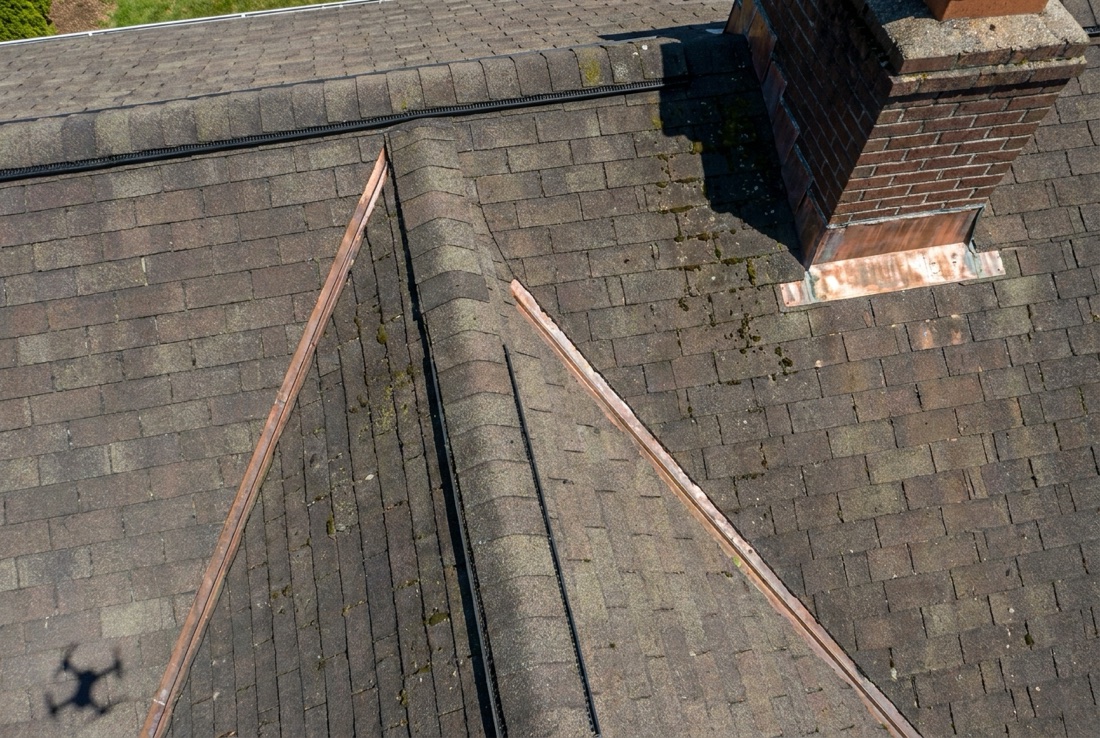
The practical upshot: on many Macomb County homes, the structure is the real gatekeeper for slate, not the budget. A homeowner who can afford the top of the price canon may still be told the framing needs reinforcement first, or that the honest answer is a lighter alternative. That is a harder conversation than a simple quote, and it is the one we would rather have up front than after tear-off has already started.
Age cuts both ways here. A house built decades ago with full-dimension rafters on tight centers can sometimes carry slate more easily than a newer home framed with engineered trusses sized precisely for a lightweight shingle load and nothing more. That is exactly why an assumption based on the age or style of a house is not a substitute for the review itself, and it is why the same structural question gets asked whether the house in front of us is a 1920s colonial or a custom build finished last year.
03 / THE QUIET ADVANTAGESlate's quiet advantage: fixing one piece, not the whole field
A property most homeowners never hear about until they own a slate roof is how differently it fails compared to shingles. Asphalt roofs tend to age as a field: granule loss, seal failure, and wind lift happen broadly across the whole surface at roughly the same rate, which is why they get replaced as a system on a schedule. Slate ages piece by piece. A single slate can crack from an impact or work loose from its nails while every other piece around it remains sound, and the honest fix is to address that one piece, not the whole roof.
How a single slate gets replaced
A trained slate roofer uses a slate ripper to cut the hidden nails holding a damaged piece in place, slides the broken slate out without disturbing the surrounding courses, and fastens a matching replacement with a lead or copper tab rather than re-nailing through the face. Done correctly, the repair is close to invisible from the ground and does not shorten the life of the roof around it. This is skilled, patient work, closer to masonry restoration than shingle repair, and it is why a general roofing crew without slate experience should not be the one touching an existing slate roof.
The stone itself rarely fails first. The flashing, the fasteners, and the details around chimneys and valleys usually give out long before a well-graded slate does.
That quote points at the real failure pattern on an aging slate roof. Step flashing, valley metal, and the copper or lead details around penetrations have a shorter service life than the stone itself, and most slate roof problems trace back to a flashing detail rather than the slate. Our chimney flashing guide and the anatomy of step and counterflashing it covers apply just as directly to a slate roof as to an asphalt one, and understanding that distinction is what separates a targeted, honest repair from an unnecessary full re-slate.
04 / WHERE IT BELONGSGrand old homes, historic streets, and the forever house
You do not see slate on every street in Macomb County, and there are honest reasons for that. Most of the county's housing stock is postwar brick ranches, colonials, and split levels, framed and built for conventional shingle roofs on a builder's schedule, and that housing wave leaned toward affordable, fast-installed asphalt rather than quarried stone. So a genuine slate roof here is uncommon, but it is real, and it shows up in a few predictable places rather than at random.
The first is older, architecturally distinctive homes among the county's oldest streets that were built with slate originally, where the framing was sized for the weight from the start and the honest move is to keep what the house was designed to carry. The second is custom, high-end new construction, where the owner wants a forever roof to match a forever house and the structure is engineered for slate from the foundation up, not retrofitted into it later. In both cases slate is a deliberate choice made with eyes open, not the default pick for a typical reroof, and that is the honest frame to bring to the decision.
If your home falls outside either category, that does not mean the look is out of reach. Composite and polymer slate look-alikes are built to mimic the appearance at a fraction of the weight, which sidesteps the structural question that stops real slate on an ordinary house. Our synthetic slate pros and cons guide walks that honest tradeoff in full, including where the look-alike genuinely holds up and where it does not, so you can weigh it against the real material with clear eyes.
There is also a legitimate middle case worth naming honestly: a home that already carries real slate, installed when the house was built, that is simply aging. Those roofs deserve a different conversation than a new installation. The framing already proved it can carry the weight, often for decades, and the right move is usually a targeted restoration of the flashing and any distressed sections rather than a full tear-off. That is a repair and restoration question first, and a replacement question only if the review shows the roof has genuinely reached the end of its service life.
05 / BUDGETING HONESTLYBudgeting honestly for a genuine slate roof
Slate and tile share the top tier of our published price canon, and it is worth seeing that number next to the rest of the ladder before you commit to it.
| SYSTEM | INSTALLED RANGE | NOTES |
|---|---|---|
| Asphalt shingle replacement | $9,000 to $18,000 | Most homes land $12,000 to $16,000 |
| Metal | $18,000 to $30,000 | Longest common service life short of stone |
| Tile and slate | $20,000 to $36,000 | Structure must be verified to carry the weight |
| Repairs | $350 to $3,200 | Single-piece slate repair is usually at the low end |
The honest budgeting note is that many genuine slate projects land above the entry point of that range in practice, not below it. Structural reinforcement, if the review calls for it, is real added cost on top of the roofing figure, and it is not optional once the numbers say the framing needs it. A homeowner planning around the low end of the canon should treat the structural review as the step that either confirms that number or changes the scope of the project entirely, before any material is ordered.
That is also why slate rewards a long ownership horizon more than almost any other material choice on this site. Amortized over the decades slate is built to serve, the annual cost of a well-installed slate roof can compare favorably to reroofing in asphalt every couple of decades, but that math only works if you are the kind of owner who plans to stay. If you are weighing the whole ladder of materials rather than slate specifically, our roof replacement cost guide covers the full set of factors that move any roof's price, and our metal versus asphalt comparison is the right read if slate's weight and cost turn out to rule it out for your house.
06 / THE REAL ANSWERHow a free inspection settles the weight question
Everything above narrows the range and explains the tradeoffs. Only one thing settles whether your specific house can carry real slate: someone getting into the attic and onto the roof to look at the framing directly. Our inspection is $0 with no obligation, and on a premium material inquiry it covers the roof surface, the flashing details, and, critically, the rafters, sheathing, and structure from the attic side, with photos of everything we find. If your home can genuinely carry slate and that is what you want, you get a real scope and a real price, not a range. If the honest answer is that the structure favors a lighter system, that is exactly what we will tell you, before any contract is signed.
Timing matters more on slate than on asphalt. It is skilled, unforgiving work, and the small number of crews who install and repair it well in southeast Michigan book up fastest once the season is running, typically late spring through fall. A homeowner who starts the structural conversation early is choosing their install window; one who calls at the peak of the season is taking whatever is left. Start with the instant estimator for a rough sense of the numbers, use the cost calculator to run the canon against your own roof size, or browse the full price sheet on our honest pricing page before you call.
Once a slate roof is up, the maintenance conversation shifts too. Instead of a shingle-count on a replacement schedule, an existing slate roof benefits from a periodic walk of the flashing details, valleys, and any slates that look loose or displaced after a hard winter, since catching one working slate early is a small repair and ignoring it invites water into the deck below. A free inspection is the same starting point whether your slate is brand new, decades old, or something you inherited with the house and have questions about. We will tell you honestly what condition it is in, whether it needs a repair, a restoration, or nothing at all right now.
- Real quarried slate is prized for a service life measured in generations, not decades, when properly graded, fastened, and flashed.
- Weight, not price, is the true gatekeeper: most slate projects require a structural review of the rafters, sheathing, and framing before any bid is final.
- Slate ages piece by piece rather than as a field, so a cracked or loosened slate is usually a targeted repair, not a full re-slate.
- Slate genuinely belongs on grand older homes built for it originally and on custom builds engineered for the weight from the start, not on a typical Macomb County ranch retrofit.
- A real slate or tile roof runs $20,000 to $36,000 installed, and many honest projects land above the entry point once structural work is factored in.
- The only way to know if your house qualifies is a free inspection that checks the attic side, not just the roof surface.
Questions we hear most
A properly graded, correctly installed slate roof is built for a service life measured in generations rather than decades, and dense quarried stone handles Michigan freeze-thaw cycles well because it absorbs very little water. The details that fail first are usually the flashing and fasteners around it, not the slate itself, which is why maintaining those details matters as much as the stone's own durability.
Not automatically. Slate is heavy, often several times the installed weight of an asphalt roof, and a home framed for shingles may need a structural review, and sometimes reinforcement, before it can carry the load safely. That review is the real first step of any honest slate project. When the framing does not support it, a lightweight synthetic slate look-alike is usually the better path.
Usually not. Slate ages piece by piece rather than as a whole field, so a single cracked or loosened slate is normally repaired individually by a trained slate roofer, without disturbing the surrounding courses. A full re-slate becomes the right call only when damage is widespread or the underlying flashing and fasteners have reached the end of their own service life.
- Michigan Residential Code, 2015 edition, adopted with Michigan amendments by the LARA Bureau of Construction Codes, in effect since February 8, 2016. michigan.gov/lara: code books
- National Roofing Contractors Association, technical guidance for steep-slope roof systems. nrca.net