
JUMP TO A SECTION
Most homeowners look at their roof and their gutters as two separate things. An inspector looks at the eave, the narrow strip where the roof edge, the fascia board, and the soffit panel all meet, and reads it as one continuous system with a single job: get water off the shingles and away from the house without ever letting it double back. When that system is working, the eave is boring. When it is not, the eave is the most honest witness on the property, because it shows the damage in wood and paint long before anyone notices a stain on a ceiling. This guide covers how we read that edge during a roof inspection, both from the ground and from a ladder, and what the common symptoms usually mean about the roof above.
01 / THE SHORT ANSWERWhat soffit and fascia problems usually mean
Soffit is the material under the roof overhang, running horizontally between the fascia and the wall, and it usually has vents built in to let outside air into the attic. Fascia is the vertical board that caps the rafter ends and holds the gutters. Neither one is part of the roof's water-shedding surface, but both sit directly under it and directly behind the gutter line, which means both take the fallout when something upstream is not working.
Peeling paint and staining on fascia or soffit is almost never a paint problem. It is a moisture problem wearing a paint problem's clothes. The fix that lasts starts above the fascia, not with a new coat of paint on it.
The three symptoms homeowners notice most, peeling or bubbling paint, soffit panels that sag or show water rings, and gaps that let in wasps, squirrels, or bats, almost always trace back to one of three sources: a drip edge that is missing, bent, or too short to direct water into the gutter; a gutter that has pulled away, clogged, or lost its pitch so water sits against the fascia instead of draining; or ventilation and moisture escaping the attic through the soffit itself rather than through the roof's proper exhaust path. Telling which of the three is at work is most of what a soffit and fascia inspection is for.
02 / FROM THE GROUNDReading the eave from the ground
A useful eave check does not require a ladder to start. Walking the perimeter of the house with binoculars and looking specifically at the underside of the roof overhang catches a surprising amount before anyone climbs anything.
- Paint condition on the fascia board. Even, uniform weathering across every run of fascia is normal aging. Paint that is peeling, bubbling, or discolored in one section but not the others points to a localized water source directly above that spot, usually a gutter or drip edge problem confined to that run.
- Sagging or discolored soffit panels. A soffit panel that dips visibly below its neighbors, or shows a brown watermark ring, has been wet enough for long enough to lose structural integrity or stain. Vinyl soffit sags from heat and prolonged moisture; wood soffit rots and can eventually drop a panel entirely.
- Gutter line straightness. Sight down the gutter run from one end. A wave or dip in the line means a hanger has pulled loose from the fascia, which usually means the fascia underneath it is softening from repeated water contact, not simply that a screw backed out.
- Streaking below the soffit vents. A grayish or dark streak running down the fascia from a soffit vent slot can indicate warm, moist attic air condensing and staining its way out, which is a ventilation clue as much as an eave clue.
None of this replaces a hands-on check, but it tells an inspector, or a homeowner doing a preliminary walk, exactly which sections of the eave deserve the ladder first instead of spending equal time on 150 linear feet of trim that mostly looks fine.
Timing helps too. The clearest window to read an eave in Macomb County is right after a hard rain or right after a winter thaw, when whatever the eave has been hiding is still wet, dark, or actively dripping. A dry summer afternoon can make a chronically wet section of fascia look almost normal, because the wood has had days to surface-dry between problems. Homeowners doing their own ground check get more useful information walking the perimeter the same afternoon a storm passes than picking a random dry day two weeks later.
03 / FROM THE LADDERWhat a ladder inspection adds
Every ground-level clue gets confirmed or corrected once someone is at the eave with a hand on the material. Soft fascia gives under light pressure from a probe tool, even where the paint still looks intact, and that softness is the real test, since paint can hide a surprising amount of rot underneath for a year or two before it finally shows. A probe check at the fascia, especially anywhere a gutter hanger has pulled or a downspout discharges, catches rot while it is still a fascia repair instead of a fascia-plus-decking repair.
Up close, an inspector also confirms whether the drip edge, the metal flashing that should direct roof water into the gutter, is present, properly lapped over the fascia, and extending far enough to clear the gutter's back edge. A drip edge that stops short or was never installed lets water run down the fascia face on every rain instead of into the gutter, which is one of the most common and most preventable causes of fascia rot on Michigan homes built or re-roofed before the practice became standard.
Soffit vents get a closer look as well, since from the ground it is hard to tell a clear, unobstructed vent slot from one that insulation has pushed against from inside the attic. A blocked soffit vent does not just choke attic airflow; it also means moist attic air has fewer places to go, and some of it finds its way out through the seams around the soffit panel itself, which is often the real explanation behind the streaking mentioned above.
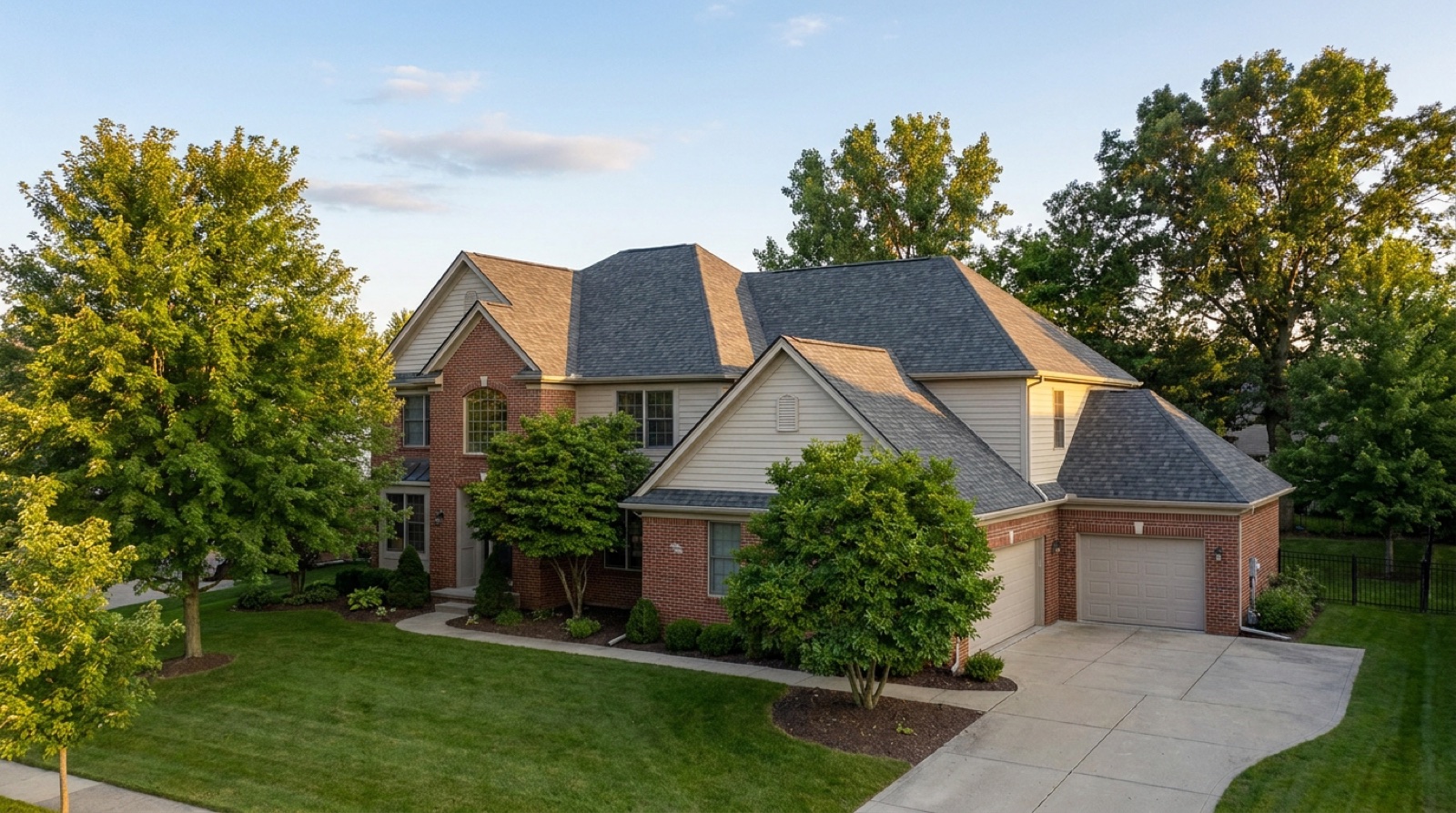
04 / THE READWhat each edge symptom implies about the roof above
The value of an eave inspection is not the eave itself. It is what the eave implies about conditions higher up on the roof that are harder to see. Here is the read we walk homeowners through on site.
| EAVE SYMPTOM | LIKELY UPSTREAM CAUSE | WHAT WE CHECK NEXT |
|---|---|---|
| Peeling paint, one section only | Missing or short drip edge, or a bent gutter section at that run | Drip edge lap and gutter pitch directly above the spot |
| Soffit sagging or water-ringed | Prolonged gutter overflow or a slow roof leak tracking to the eave | Underlayment and deck condition at that slope, gutter cleanliness |
| Gutter line wavy or pulled loose | Fascia softened by repeated moisture exposure | Fascia probe test along the full run, not just the loose section |
| Streaking below soffit vents | Blocked intake airflow, moist attic air escaping through the soffit | Attic-side baffle clearance and insulation depth at the eave |
That last row is why an eave inspection and an attic inspection are really one exercise split across two vantage points. Our roof decking inspection guide covers what we look for on the underside of the deck itself, which is often the other half of the same finding that started at the soffit vent.
05 / PESTSPest entry and the eave
A gap at the soffit, whether from a rotted panel, a pulled fascia board, or simply a joint that was never sealed tight, is an open door for wasps building a nest in the vented cavity, squirrels chewing an existing gap wider to reach the attic, or bats roosting in the dead space behind a loose panel. None of these are roofing problems on their own, but they are a reliable side effect of the same rot and gaps that a soffit and fascia inspection is already looking for, and they are worth flagging to a homeowner even when the roofing fix is straightforward, because a pest problem left in place will keep re-opening whatever repair goes in around it.
We are not a pest control company and will not pretend to be one, but part of an honest eave inspection is telling you plainly when we see chew marks, nesting material, or a gap sized for something larger than an insect, so you can bring in the right specialist alongside whatever roofing repair the eave itself needs.
06 / THE BIGGER PICTUREWhere the eave connects to the rest of the roof
A soffit and fascia inspection rarely stands alone in a real assessment. It is one of the checkpoints in a full roof inspection, alongside the shingle field, the flashing, and the attic side of the deck. Homeowners who want the complete picture of what a thorough visit covers can see the full list in our ground-level inspection guide, and the flashing details that often interact with the eave, especially at valleys that discharge near a corner of fascia, are covered in our flashing inspection guide.
It is worth being clear about scope here too. This guide is about reading the eave to diagnose what is happening with the roof, the drip edge, and the drainage above it, not about gutter cleaning, gutter guards, or gutter replacement as a service in themselves. If the diagnosis points to a gutter problem specifically, that is a separate conversation from the roofing fix, and we will tell you plainly which side of that line your issue falls on.
The good news for most homeowners is that eave damage caught early is inexpensive to correct. A fascia repair or a drip edge correction is a modest line item, generally within the $350 to $3,200 repair range and usually toward the lower end of it, and larger or complex repairs can run higher. Left alone, the same problem eventually rots enough fascia to compromise the gutter attachment entirely, invites pests further into the structure, and can point back to a ventilation or underlayment issue that costs meaningfully more to correct once it has been running unaddressed for a few seasons.
The eave does not lie. Paint and wood do not peel and sag for no reason, and every pattern we see there points back to something specific happening on the roof above it.
A free inspection covers the eave the same way it covers the shingle field, the flashing, and the attic side: photographed, zone by zone, with no invented findings if the news is good. You can start one from the instant estimator, and if you are weighing what a fascia repair or a full roof visit might run, the cost calculator uses the same published ranges as the rest of this site.
- Soffit and fascia are not part of the roof's water-shedding surface, but they sit directly beneath it and show damage from upstream problems first.
- Peeling paint, sagging panels, and streaking below soffit vents each point to a specific upstream cause: drip edge, gutter drainage, or attic ventilation.
- A ground-level walk with binoculars can flag which sections of the eave need a ladder check; a probe test at the fascia confirms rot that paint can hide.
- Pest entry at the soffit is a common side effect of the same rot and gaps a roofing inspection is already looking for, and is worth flagging even when it is not our repair to make.
- Caught early, eave repairs are usually a modest line item inside the $350 to $3,200 repair range; left alone they compound into fascia, gutter, and ventilation problems together.
Questions we hear most
Yes. The eave, including the fascia, soffit, drip edge, and gutter attachment, is one of the zones our inspectors check on every visit, at no cost and with no obligation to hire us afterward.
You can reasonably spot uneven paint wear, sagging panels, and a wavy gutter line from the ground with binoculars. Confirming rot with a probe test, checking drip edge placement, and looking behind soffit vents for blocked airflow are safer and more accurate done from a ladder.
Our focus is the roofing side of the eave: drip edge, fascia, soffit, and the ventilation and drainage that affect them. If a diagnosis points to a gutter-specific repair or replacement, we will tell you plainly so you know which side of that line your issue falls on.
- Michigan Residential Code 2015, section R905.1.2 Ice Barriers: membrane required from the eave edge to not less than 24 inches inside the exterior wall line. up.codes: MRC chapter 9
- Manufacturer technical and warranty literature for the major asphalt shingle lines: GAF (gaf.com), Owens Corning (owenscorning.com), and CertainTeed (certainteed.com).
- Michigan Residential Code 2015, section R905.2.8.5 Drip Edge: required at eaves and rakes, extending not less than 1/4 inch below the roof sheathing. up.codes: MRC chapter 9