
JUMP TO A SECTION
Every fall, hardware store endcaps and a few roofing crews push the powered attic fan as a maintenance upgrade: a small gable or roof-mounted unit with an electric motor that promises to keep the attic "breathing." In summer, sized and controlled correctly, it can shave real degrees off a baking attic. The marketing rarely follows the fan into winter, though, and that is where the question gets more complicated. A fan strong enough to move meaningful air is strong enough to change the pressure balance between the attic and the house below it, and pressure is the variable that decides whether escaping heat and moisture drift gently up through the ceiling or get pulled up in a rush. This guide stays on winter operation only: what a powered fan does to that pressure balance, what its thermostat and humidistat controls actually do in cold weather, and the narrow situations where running one through a Michigan winter still makes sense. Vent-type comparisons for warm weather belong on our attic ventilation in winter guide, the anchor for this whole series.
01 / THE SHORT ANSWERUsually harmful, and not our fix for ice dams
For most Macomb County attics, running a powered exhaust fan through the winter does more harm than good, and we do not install or recommend one as an ice dam fix. The reason is not that the fan is defective. It is that a motorized exhaust vent is a much stronger, more concentrated pull than a passive ridge vent, and in a cold climate that extra pull tends to draw from the wrong place: the heated, humid living space below, rather than the cold outside air the system is supposed to be pulling in.
is the standing guidance for a cold Michigan climate. A correctly sized, balanced soffit-to-ridge system moves air on its own, at a rate that never outpaces what the intake side can supply. A powered fan can, and when it does, the shortfall gets pulled from the house instead of the outdoors.
That does not mean every powered attic fan is doing damage right now, and it does not mean the fix is always to rip one out. It means the fan's winter behavior depends on how it is controlled, how tight the ceiling plane below it is, and whether the passive intake and exhaust path could have handled the job without it. The rest of this guide works through each of those in order.
02 / THE MECHANICSWhy a motor is not the same job as a ridge vent
How passive ventilation moves air
A properly balanced passive system, the kind our balanced attic ventilation guide covers in depth, moves air with no motor at all. Wind passing over the roof and the gentle rise of warm air inside the attic create a small, steady pressure difference, and cold air enters low at the soffits to replace whatever leaves high at the ridge. Because nothing is forcing that flow beyond what natural pressure provides, the system is largely self-limiting. It cannot pull harder than the available intake can supply, so on a still, cold night it simply moves less air, rather than reaching past the soffits for air somewhere else.
How a powered fan moves air instead
A powered fan replaces that gentle, self-limiting draw with a motor that keeps pulling at a fixed rate regardless of what the wind or the stack effect are doing. If the soffit intake was sized for a passive system, or is partially blocked the way our wind washing guide and other pieces in this series describe, a fan rated to move a meaningful volume of air can easily ask for more than the soffits can deliver. The attic does not simply move less air in that case. The fan keeps running at its rated speed, and the shortfall has to come from somewhere. In a typical house, that somewhere is every unsealed gap in the ceiling below: recessed lights, the attic hatch, plumbing chases, and the top plates over interior walls, the same bypasses our attic air leaks guide maps in detail.
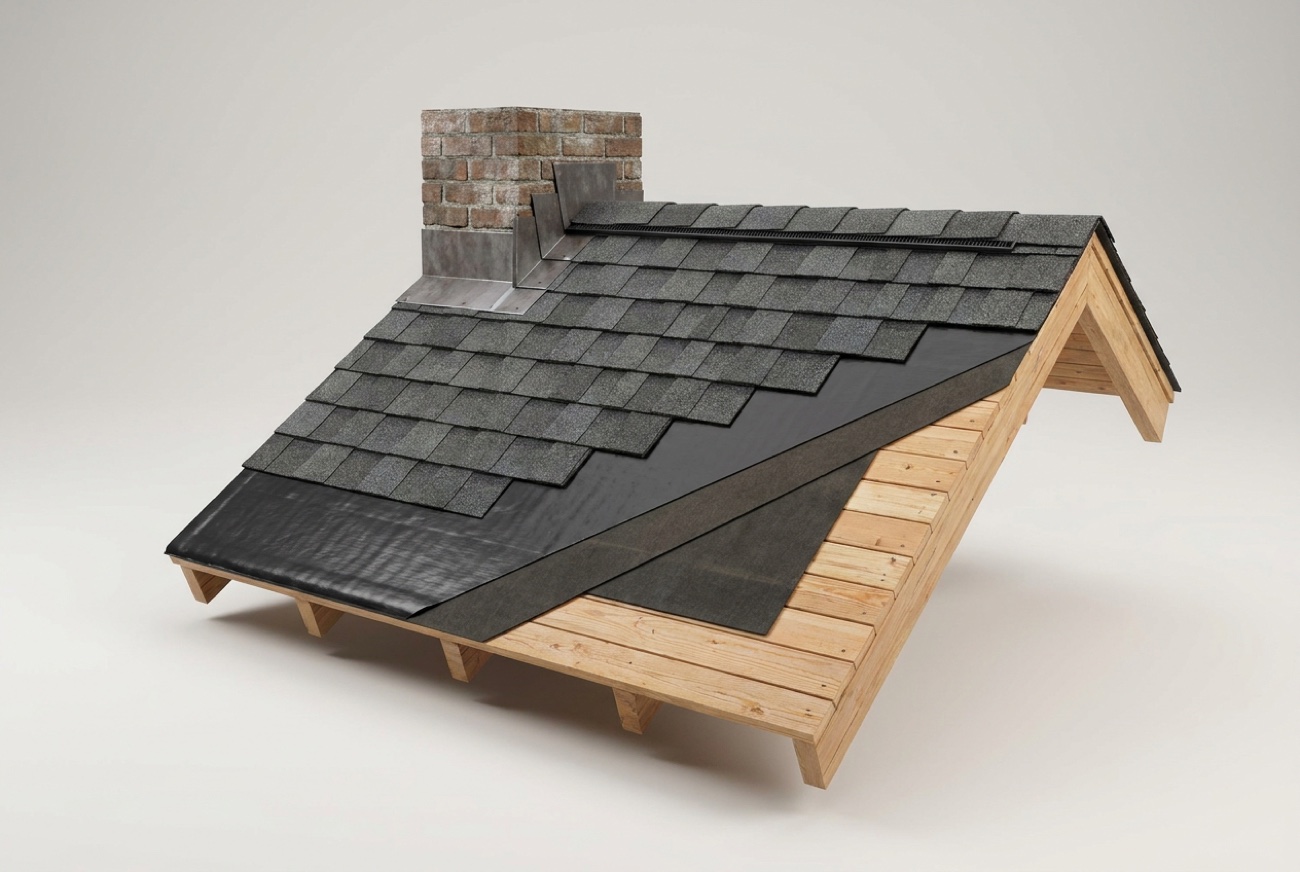
This is the same imbalance a badly mismatched passive system can create, just with a motor making it worse on demand instead of only on a windy day. A gable fan rated for a large volume of air, paired with the same modest soffit vents that would have been perfectly adequate for a passive system, is functionally an oversized exhaust vent that never turns off on its own.
03 / THE PRESSURE PROBLEMWhat depressurizing the attic actually pulls in
Depressurization is the useful word for what a fan does when it exhausts more air than the soffits can replace with outdoor air. The attic's air pressure drops slightly below the pressure of the rooms underneath it, and air, always moving from higher pressure to lower pressure, finds the next easiest path in: not through a properly screened soffit vent, but through whatever gap in the ceiling plane offers the least resistance. In a Michigan winter, that air is warm and carries a meaningful amount of household humidity from cooking, showering, laundry, and simple breathing.
A powered fan does not know the difference between drawing from a cold soffit vent and drawing from a warm gap around a recessed light. It only knows it needs a certain volume of air, and it will take the easiest path to get it.
Once that warm, humid air reaches the attic, it meets a roof deck that a Macomb County winter has already chilled well below freezing on most nights. Moisture condenses or frosts directly onto the cold sheathing and the roofing nail tips, exactly the pattern our frost in the attic guide walks through as the attic's own moisture meter. The heat riding along with that air also warms the underside of the deck itself, which is the direct mechanism behind an ice dam: warm decking melts the bottom of the snow layer above it, and that meltwater refreezes the moment it reaches the cold, unheated eave overhang.
- Frost forming on the roofing nail tips or sheathing on a cold morning, heavier than it was before the fan went in.
- A musty smell or visibly damp, matted insulation when the attic hatch is opened in cold weather.
- Rooms below the attic feeling noticeably drafty or harder to heat once the fan starts cycling regularly.
- The fan running for long stretches during genuinely cold weather rather than mostly on mild, sunny days.
- An ice dam that shows up in roughly the same place every winter, no matter how much raking or heat cable gets used, a pattern our chronic ice dam guide covers from the ventilation side.
None of these signs, by themselves, prove the fan is the cause. A blocked soffit, an unsealed hatch, or missing baffles can produce the same pattern on their own. What a powered fan does is make an existing weakness worse, and worse faster, because it keeps pulling on a schedule instead of only when the wind happens to cooperate.
04 / THE CONTROLSThermostats, humidistats, and their winter limits
Most powered attic fans ship with a control, either a thermostat, a humidistat, or both wired together, and the intent behind the control matters for how the fan actually behaves once the temperature drops.
A thermostat-only fan is tuned around a summer heat problem, so through most of a Macomb County winter the attic air temperature simply never reaches its trigger point, and the fan sits idle for weeks at a time. That is not a guarantee of safety, though. A clear, sunny day with light wind can still push a dark roof deck and the attic air beneath it well above the trigger threshold even with outdoor temperatures near freezing, and the fan will run exactly as designed, pulling on whatever intake is available at that moment.
A humidistat-paired unit is the more counterintuitive case in winter. Its whole purpose is to run whenever attic relative humidity crosses a set threshold, and attic humidity in a Michigan winter is frequently driven up not by outdoor conditions but by exactly the household moisture and air leakage this guide has been describing. A humidistat cannot tell the difference between humidity that arrived from a genuine outdoor damp spell and humidity that arrived because the attic is depressurized and pulling bathroom air through the ceiling. In the second case, the fan's own operation is feeding the trigger that keeps it running, a feedback loop that a passive system, with no motor to feed, simply cannot create.
05 / THE COMPARISONWhy passive balance usually wins in a cold climate
Passive ventilation, matched soffit intake and ridge or gable exhaust with no motor involved, has three advantages that matter specifically in winter. First, it is self-limiting: it cannot pull harder than the intake allows, so it never manufactures the depressurization a fan can create. Second, it has no electrical component to fail, run constantly, or get left switched on by a homeowner who forgot about it after the last hot week of September. Third, and most importantly, it does not paper over the actual problem. If a soffit is blocked or the ceiling plane below has open bypasses, adding a powered fan on top of that weakness does not fix the ceiling plane. It just pulls harder on it.
This is also why a powered fan is never a substitute for the fixes covered elsewhere in this series. Sealing the bypasses our air leaks guide describes, correcting the intake-to-exhaust ratio our balanced ventilation guide covers, and clearing wind-washed insulation at the eave all address the actual cause of a cold, damp-prone attic. A fan addresses none of them. It just moves more air, and in winter, more air movement pulled from the wrong source is a liability rather than a benefit.
A well-sized passive system, corrected at reroof time if the ratio is off, is typically folded into the standard $9,000 to $18,000 installed range for an asphalt replacement in Macomb County, most homes landing $12,000 to $16,000, rather than billed as a separate add-on. A homeowner weighing whether to remove an aging powered fan and correct the passive path instead can get a sense of where their own roof lands with the 60-second cost calculator, which runs the same published ranges against actual roof size.
06 / THE EXCEPTIONSThe narrow cases where a fan still earns its place
None of the above means a powered attic fan is always the wrong call. There are a handful of situations where one still earns its place, provided it is chosen deliberately rather than installed as a default upgrade.
Some roof shapes genuinely cannot accept enough passive net free area to meet the code target, particularly complex hip roofs with very little straight ridge line to vent, or additions with awkward eave geometry that leaves little room for soffit intake. On those roofs, a modest, carefully sized powered fan paired with intake that has been checked and expanded as much as physically possible can supplement a passive path that will never quite hit the target on its own. A humidistat-controlled unit, set conservatively and paired with sealed ceiling bypasses below it, can also serve as a short-term bridge while a homeowner schedules air sealing work, provided the household understands it is a stopgap and not the standing solution. Attics carrying ductwork or mechanical equipment that adds its own heat load, a case our ducts in the attic guide covers, occasionally justify supplemental removal even in cold weather, though sealing and insulating the ducts themselves usually solves more of the underlying problem than the fan does.
In every one of these narrow cases, the fan is doing supplemental work on top of an otherwise sound, sealed, and reasonably balanced attic, not compensating for one that has not been checked. The order matters: seal the ceiling plane, correct the passive intake-to-exhaust ratio, and only then decide whether a specific roof shape or mechanical load still needs a powered assist. A free inspection is the honest way to find out which category a given attic falls into, since it checks the soffit intake, the ceiling bypasses, and the exhaust path together rather than judging the fan in isolation.
- A powered attic fan strong enough to matter can depressurize the attic in winter, pulling warm, humid house air through ceiling bypasses instead of drawing outdoor air through the soffits.
- Passive ventilation is self-limiting and cannot outpace its own intake; a motorized fan can, and often does, when soffit capacity or ceiling sealing has not been checked.
- Thermostat-only fans mostly sit idle in winter but can still fire on a sunny, cold day; humidistat-paired units can run more in winter, sometimes feeding their own trigger.
- Passive, balanced ventilation is the standing recommendation for a Macomb County winter, and correcting it is typically folded into the standard replacement price range rather than billed separately.
- A powered fan still earns its place in narrow cases, difficult roof shapes, a short-term bridge during air sealing, or attics with real mechanical heat loads, but only after the ceiling plane and passive path are addressed first.
Questions we hear most
Usually not. A fan strong enough to matter can depressurize the attic and pull warm, humid house air through ceiling gaps instead of drawing outdoor air through the soffits, which feeds frost and ice dams. Passive, balanced ventilation is the standard recommendation for a Michigan winter, and we typically advise limiting or removing powered exhaust unless a specific roof shape or mechanical load genuinely needs it.
It can contribute to them. By pulling more air than the soffit intake can supply, a powered fan can draw warm, moisture-laden house air up into the attic through recessed lights, the hatch, and other bypasses. That air warms the roof deck from underneath, which is the same mechanism that melts snow and grows an ice dam at the cold eave, regardless of what pulled the warm air up there in the first place.
Not necessarily. A thermostat-only fan mostly stays idle in cold weather since attic air rarely reaches its trigger temperature, though it can still fire on a sunny, cold day. A humidistat-paired unit responds to relative humidity, which in a Michigan winter is often driven up by house air leaking into the attic, so it can end up running more, not less, during exactly the conditions that most need passive, not powered, ventilation.
- FEMA, disaster declaration DR-4757-MI, Michigan severe storms of August 2023 (Macomb County designated). fema.gov/disaster/4757
- Manufacturer technical and warranty literature for the major asphalt shingle lines: GAF (gaf.com), Owens Corning (owenscorning.com), and CertainTeed (certainteed.com).
- ENERGY STAR (U.S. EPA/DOE), recommended home insulation R-values: R-49 to R-60 for attics in climate zone 5, which covers southeast Michigan. energystar.gov: insulation R-values
- Michigan Residential Code 2015, section R806 Roof Ventilation: minimum net free ventilating area of 1/150 of the vented space, reduced to 1/300 where listed conditions are met. up.codes: MRC chapter 8