
JUMP TO A SECTION
Of the ways a roof claim can come back denied, wear and tear is the one nearly every homeowner hears at some point, because most homeowners policies only cover sudden, accidental loss and specifically exclude damage from age, deterioration, and lack of maintenance. The letter usually says some version of the same thing: the roof shows deterioration consistent with age, not damage consistent with a specific storm event. The trouble is that an old roof and a storm-damaged roof are not mutually exclusive. A 20-year-old roof near the end of its service life can still take a direct hit of wind or hail, and the honest question in every one of these files is which one actually caused the loss you are claiming. This guide walks through how that call gets made, what evidence homeowners can put in front of an adjuster, and the escalation path when the denial still feels wrong after a fair look. Nothing here promises a reversed decision. For the full ladder of denial responses beyond this one reason, our roof claim denied in Michigan pillar guide covers the whole process, start to finish.
01 / THE PATTERNWhy wear and tear is the denial you hear most
Two things make this the most frequent denial reason on older roofs. First, asphalt shingles have a finite service life, and by the time a roof is well into its second decade, granule loss, curling, and brittle sealant strips are visible on close inspection whether or not a storm ever touched the house. Second, wear and storm damage can look similar from a distance, and both can produce the same symptom homeowners actually notice: a leak. An adjuster looking at a roof with widespread granule loss, cracked shingles across multiple slopes, and no clear pattern that matches a specific wind direction has a reasonable basis to call it age. The same adjuster looking at a roof with fresh, unweathered exposed felt in a tight cluster on one slope, matching the direction a documented storm came from, has a reasonable basis to call it wind. The difference between those two files is evidence, not opinion, which is the point of this whole guide.
This denial reason is not automatically wrong. Some roofs genuinely are at the end of their life, and a fair inspection sometimes confirms it. The goal here is a correct answer, not a reversed one, and the same evidence that supports a legitimate storm claim also tells you honestly when it does not apply.
02 / THE STANDARDHow an adjuster actually separates age from storm
Pattern and direction
Wind damage tends to follow the direction the storm actually traveled, concentrated on the slopes that faced it, with lifted tabs, torn shingles, or missing pieces along a plausible path. Hail damage shows as random, scattered impact marks across exposed slopes, often with matching dings on soft metals like gutters, downspouts, and vent caps at the same time. Wear, by contrast, tends to be uniform: granule loss and curling spread evenly across the whole roof regardless of orientation, because sun and age affect every slope roughly the same way. An adjuster reading a pattern that matches the documented weather event has a very different file than one reading a pattern that matches simple age.
Freshness of the exposed material
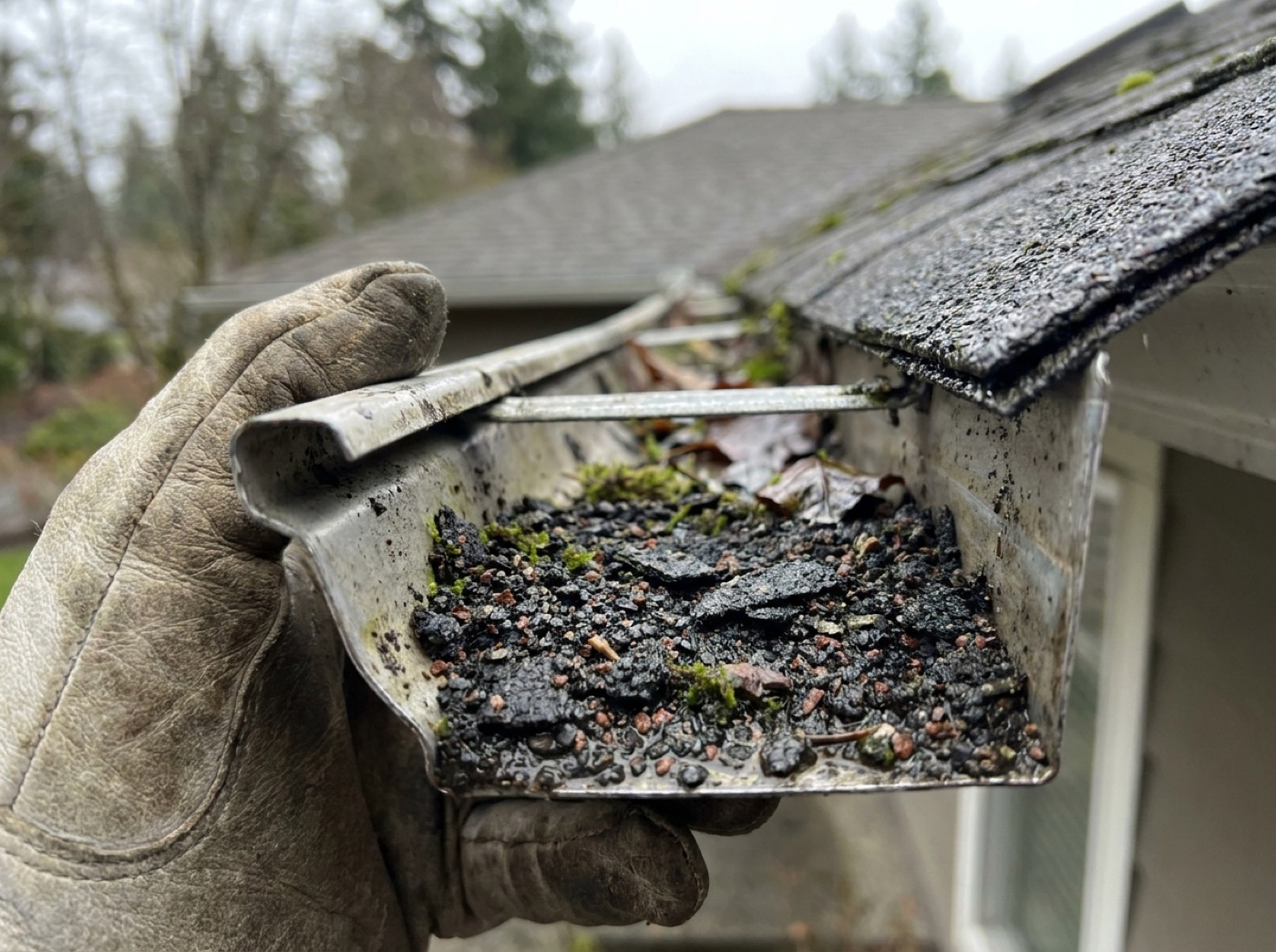
A shingle torn recently by wind exposes felt or granule surface that still looks relatively fresh underneath, without the sun-bleaching and brittleness that build up over years. Hail strikes that break the granule seal often show a darker, softer bruise where the mat is exposed, distinct from long-term surface wear. Photos taken close to the event, before weather ages the exposed material further, are the single most useful thing a homeowner can hand an adjuster or a contractor.
Timing against a known event
If the damage can be tied to a specific, verifiable date, the wear-versus-storm question gets much easier to answer, because a claim that lines up with a documented severe weather event in your area carries real weight. Macomb County has a recent, sourced example: the county was included in federal disaster declaration DR-4757 after the severe storms of August 2023, which is a matter of public record, not a homeowner's word. Our guide on proving the storm date walks through pulling public weather records and using a declared event like this one to anchor a claim.
What the attic side shows
The roof deck and rafters, viewed from inside the attic, often tell a clearer story than the shingles do. Water intrusion from a fresh storm event tends to show as a new, isolated stain following a specific path from a specific entry point, sometimes with wood that is still damp at the time of inspection. Long-term wear damage more often shows as older, darker staining spread across a wider area, sometimes with soft or delaminated decking that has clearly been wet and dried many times over years. An adjuster or a contractor who inspects both the topside and the attic side is working from a fuller picture than one who only walks the roof, and asking for that fuller inspection is a reasonable request on any disputed claim.
03 / THE EVIDENCEWhat can actually move a wear-and-tear denial
Disputing this specific denial reason is an evidence exercise, not an argument. Four categories of documentation are the ones that typically matter.
Dated photos are the foundation. A photo timestamped near the storm date, showing the damage pattern described above, does more to answer the age question than any amount of written description. If you photographed the roof yourself or a contractor's free inspection produced photos before you filed, those become part of the record. Our guide to photographing roof damage for insurance covers the shot list adjusters can actually use.
Weather and storm records fill in the timing. Public data sources can confirm that damaging wind or hail actually occurred at your address on a given date, which matters most when the damage was discovered weeks or months after the event. A declared disaster like DR-4757 is the strongest version of this evidence, because it is a federal record, not a claim.
Maintenance records address the neglect half of the denial. Carriers sometimes fold a wear finding into a broader argument that the roof was not maintained, and a dated trail of inspections, repairs, and invoices can push back on that framing directly, even if it does not resolve the age question on its own. Our guide on roof maintenance records and insurance claims explains how to assemble a record set, including from old permits and invoices if you never kept a formal file.
An independent engineer or forensic roofing report is the heaviest evidence available and is usually worth commissioning only when the other categories have not resolved the dispute and real money is at stake. A licensed engineer can inspect the roof, document the failure mechanism in technical terms, and offer an opinion on whether the damage pattern is consistent with a specific wind or hail event versus long-term deterioration. Carriers take these reports seriously because they come from a credentialed third party rather than either side of the dispute. Our guide to insurance engineer roof reports covers when this step makes sense and roughly what it involves.
A related point worth naming: the carrier's own inspector may sometimes be a similar third-party engineer rather than a staff adjuster, particularly on larger or contested claims. When both sides bring a credentialed opinion and the reports genuinely disagree, that disagreement is usually a fair one to resolve through reinspection or, where the policy allows it, the appraisal process rather than through back-and-forth argument. Knowing which category your dispute falls into, a documentation gap versus a genuine expert disagreement, tells you which lever in the next section is worth pulling first.
An adjuster is not asking whether your roof is old. They are asking whether a specific event, on a specific date, caused the specific damage in the claim. Evidence answers that question. Frustration does not.
04 / THE LOCAL PICTUREWhy this comes up so often on Macomb County ranches
This denial reason lands disproportionately hard on Macomb County's housing stock, and it is worth naming plainly. A large share of homes across Sterling Heights, Warren, Clinton Township, Shelby Township, and the surrounding communities are ranch-style houses built in the postwar decades, many carrying original or once-replaced asphalt roofs that are now well past the midpoint of a typical service life. On a roof already showing age, a genuine storm event can still cause real, coverable damage, but it lands on top of an existing wear pattern that gives an adjuster a plausible age explanation to reach for first. That is exactly the situation this guide is written for: a roof old enough that wear is a fair starting assumption, but with a real event and real evidence that says otherwise.
This is also why we treat the free inspection as a diagnostic step rather than a sales visit. On an older roof, the honest answer is sometimes exactly what the carrier said: broad, even wear with no directional signature and no plausible connection to a specific storm date. Telling you that plainly, with photos, is more useful than encouraging a dispute that the evidence does not support. On the other hand, when the same inspection turns up a concentrated, directional pattern that lines up with a documented event, that finding becomes the basis of the evidence file described above, not a guess.
is the typical installed range for a full asphalt replacement in Macomb County if the roof genuinely is at the end of its life and the claim does not proceed. Most homes land $12,000 to $16,000, and a $13,500 project financed over 10 years at 9.9% APR runs about $178 a month as an illustration only, subject to approval. A free inspection through the instant estimator gives you real numbers either way the claim goes.
05 / THE NEXT STEPIf the evidence still says the denial is wrong
Gather the four categories of evidence above before you do anything else, because a second look works only when the file actually contains something new. From there, the escalation path is the same one that applies to any denial: request a formal reinspection with the new evidence attached, consider an independent engineer report if the dollar amount justifies the cost, and if the carrier still will not move, you can file a complaint with Michigan's insurance regulator, DIFS, or consult an attorney about your options. Our roof claim denied in Michigan guide walks each of those rungs in order with realistic expectations for each one.
Put the request in writing rather than relying on a phone call, and attach the evidence directly to the message rather than describing it. A reinspection request that says the damage looks like wind, not age tends to go nowhere on its own. One that says the north and west slopes show a concentrated, directional pattern matching the documented August storm, with photos and the storm record attached, gives a reviewer something concrete to evaluate against the original finding. Keep a copy of everything you send and the date it was sent, since claim files move on their own timeline and a paper trail protects you if the response takes longer than expected.
One honest note before you invest heavily in a dispute: some wear-and-tear denials are correct, and pushing evidence at a genuinely age-related finding rarely changes the outcome. The categories above work because they answer a real question, not because they wear a carrier down. If a free inspection confirms the roof is simply at the end of its service life, that is the answer we will give you plainly, along with a real price for the replacement rather than a claim you are unlikely to win.
- Wear and tear is the most common roof claim denial reason, and it is legitimately arguable because old roofs can still take real storm damage.
- Adjusters distinguish age from storm using damage pattern and direction, freshness of the exposed material, and timing against a known weather event.
- The four evidence categories that can move this denial are dated photos, weather or storm records, maintenance history, and, for larger disputes, an independent engineer report.
- Macomb County's older ranch housing stock makes this call especially common here, which is exactly why the evidence trail matters.
- Some wear findings are correct. If the roof truly is at the end of its life, a free inspection gives you an honest answer and a real replacement price either way.
Questions we hear most
Sometimes, when new evidence enters the file: dated photos showing a directional damage pattern, records tying the damage to a documented storm date, maintenance history that rebuts a neglect argument, or an independent engineer report. A reversal is never guaranteed, and some wear findings are correct on review.
Close-range, dated photos showing a concentrated, directional pattern rather than roof-wide granule loss are the strongest evidence, paired with public weather records that confirm damaging wind or hail actually occurred at your address on a specific date. Our storm date guide walks through pulling those records.
It can be, for higher-value claims where the other evidence has not resolved the dispute. A licensed engineer's forensic opinion carries weight with carriers because it comes from a credentialed third party, but the cost only makes sense to weigh against a claim large enough to justify it.
- FEMA, disaster declaration DR-4757-MI, Michigan severe storms of August 2023 (Macomb County designated). fema.gov/disaster/4757
- NOAA National Centers for Environmental Information, Storm Events Database: county-level wind, hail, and tornado records for Macomb County. ncdc.noaa.gov/stormevents
- Manufacturer technical and warranty literature for the major asphalt shingle lines: GAF (gaf.com), Owens Corning (owenscorning.com), and CertainTeed (certainteed.com).
- Michigan Department of Insurance and Financial Services (DIFS), consumer insurance resources and complaint process. michigan.gov/difs