
JUMP TO A SECTION
If shingles on your roof lift in the wind, flap in a light breeze, or feel loose underfoot when a roofer walks them, the most likely cause is not a bad shingle. It is a self-seal strip that never bonded. That strip is a factory-applied line of asphalt adhesive on the underside of each shingle, and it needs a real dose of sun-driven heat to soften and fuse to the course beneath it. Skip that step, whether the shingles went down in November, sit on a shaded north slope, or picked up dust before the sun ever reached them, and the tabs can stay physically unattached for months, sometimes through an entire winter. This guide explains how the strip is supposed to work, the specific ways Michigan's short warm window and roof geometry get in its way, and what a legitimate hand-seal repair looks like versus a conversation you should be having about an installation defect.
01 / THE SHORT ANSWERWhy your shingles are not sealing down
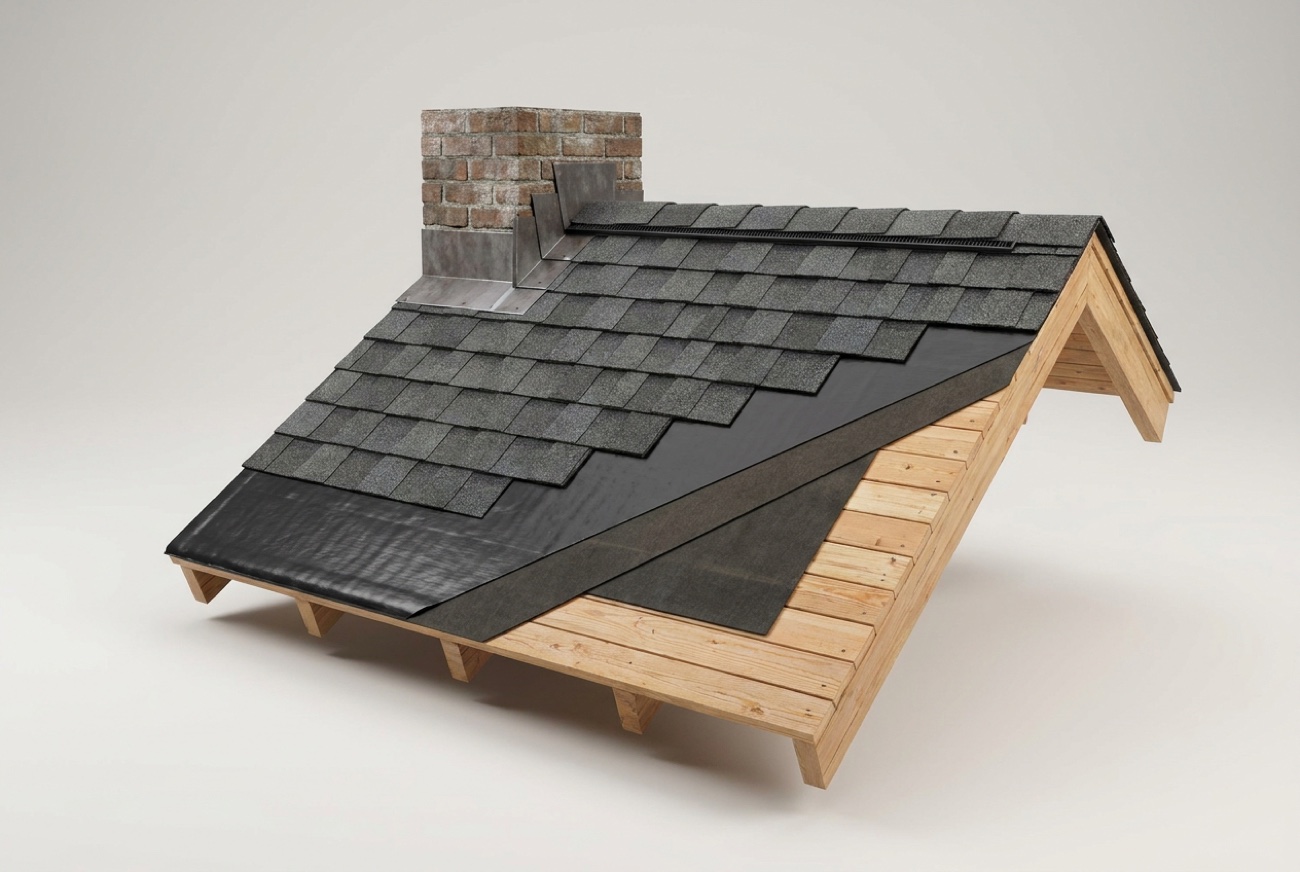
Asphalt shingles do not lock themselves down mechanically. Nails hold each shingle in place, but it is the self-seal strip, a band of adhesive on the shingle's underside, that fuses each course to the one below it and turns a field of individual shingles into a wind-resistant surface. That strip is designed to activate from heat, primarily direct sun exposure once ambient temperatures climb into a warm range for a sustained stretch. If a shingle never gets that exposure soon after installation, the strip stays inert, and the shingle above it is free to lift in wind exactly like a loose flap of shingle-shaped material, because that is functionally what it is.
is the general repair range in Macomb County, and a hand-seal fix on a limited area usually lands toward the lower end. Larger or complex repairs, or ones that turn up decking damage underneath, can run higher. The only way to know your number is a free, no-obligation inspection.
None of this means the shingle is defective. In most cases it means the installation window did not give the strip what it needed, or something got between two courses of shingles before they had the chance to bond. The rest of this guide walks through both possibilities, because the fix and the responsible party are different depending on which one you have.
02 / THE MECHANISMHow the self-seal strip actually works
Picture the seal strip as a narrow band of asphalt-based adhesive running across the upper portion of each shingle's underside, positioned so that when the next course is installed above it, the strip sits against the back of the shingle below. In its factory state that adhesive is firm, almost tacky rather than soft. It needs heat, generated mainly by the sun striking the shingle surface and warming the material through, to soften enough to actually fuse the two layers together. Manufacturers generally specify that this activation happens once shingles have experienced a period of adequate sun exposure at warm ambient temperatures, not an instant reaction and not something that happens reliably in cold or low-light conditions.
Sun and heat are doing the work, not the nails
Nails are structural. They keep a shingle from sliding down the deck and they anchor it against gravity. What nails do not do is bond shingle to shingle across a horizontal seam, which is exactly where wind gets underneath a tab and starts prying. That job belongs entirely to the seal strip, which is why a properly nailed roof can still have shingles flapping in the wind if the strip underneath never activated.
It is a one-time chemical process, not an ongoing one
Once a seal strip bonds, it is generally bonded for the life of the roof; the shingle is not designed to re-soften every summer and re-seal itself. That also means the reverse is true: a strip that missed its activation window during installation does not necessarily fix itself just because summer eventually arrives, especially if something is now sitting between the two shingle layers or the geometry of that slope keeps it shaded. The window to seal correctly is real, and once it is missed, professional intervention rather than patience is usually what closes the gap.
03 / THE MICHIGAN PROBLEMWhy shingles fail to seal more often here
Southeast Michigan's roofing calendar and its housing stock combine to produce more unsealed shingle situations than a milder, sunnier climate would see, for three distinct reasons that often show up together on the same roof.
Cold-season installs
Roofing does not stop in Michigan once temperatures drop, and asphalt shingles can be installed in cold weather with the right technique. But a roof shingled in late fall or winter may sit through months of short, weak-sun days before it gets the sustained warm exposure a seal strip needs. During that stretch, wind events are common, and a roof full of technically-installed-but-not-yet-sealed shingles is more vulnerable to lifting than one installed in June. This is a scheduling and physics reality, not necessarily a sign anyone did anything wrong.
Shaded north-facing slopes
A roof is rarely uniform in sun exposure. South and west-facing slopes bake in direct sun for most of the day and their seal strips typically activate on schedule. North-facing slopes, and any slope shaded for much of the day by mature trees, a neighboring structure, or a dormer, can receive a fraction of that heat. It is common for the exact same roof, installed on the exact same day, to have a fully sealed south slope and a north slope where tabs are still loose a year later, simply because one side of the house gets the sun exposure the strip was engineered around and the other does not.
Dust, debris, and granule contamination on the strip
The adhesive can only bond to a clean surface. If sawdust, roofing granules, dirt, or debris settles onto the seal strip before the next course is pressed down against it, most commonly on a windy job site or when shingles sit staged on the roof for a while before installation, that contamination can prevent a permanent bond. Unlike the sun-exposure problem, this failure mode generally does not resolve with time at all: once debris is sandwiched inside a seal that has otherwise closed around it, more summers will not clean it out. This is one of the clearer signals that a repair, not patience, is what is needed.
All three causes point to the same visible symptom: tabs that lift more easily than they should, a soft flapping sound in wind that a sealed roof does not make, or a roofer's hand test finding shingles that separate with light upward pressure. The cause matters because it changes what the fix looks like and, in the case of contamination or an install that never had a realistic chance to seal, whether the original work should be revisited under warranty rather than paid for again as a routine repair.
04 / VERIFYING THE PROBLEMHow a roofer confirms a real seal failure
Loose-feeling shingles are not always a seal problem, and treating every reported issue as one is how homeowners end up paying for a repair that does not address the actual cause. Before proposing a fix, we verify what is actually happening.
- The hand-lift test. A roofer gently lifts a tab by hand. A properly sealed shingle resists and holds its bond; an unsealed one separates with minimal effort and no cracking sound, because there is no bond to break.
- Pattern mapping. We note whether unsealed tabs are scattered randomly (often wind damage after the fact) or concentrated on one slope, one elevation, or the shaded side of the roof (pointing toward a sun-exposure or installation-timing cause).
- Age and install-date cross-check. A roof that is a year or more past a warm-season install and still showing widespread unsealed tabs is a different conversation than one installed six weeks ago in December that simply has not had its first real summer yet.
- Checking for contamination. Where a tab lifts cleanly with no adhesive residue transferred to the shingle below, that generally points to debris or dust having kept the strip from ever contacting a clean surface, rather than a heat-exposure problem alone.
This is the same diagnostic mindset behind any repair we do: find the actual mechanism before proposing the fix. A roof with true storm-related shingle damage is a different guide and a different repair entirely; our roof repair page covers the fuller range of what we see and fix.
05 / THE FIXHand-sealing done right
Where the cause is a missed activation window rather than contamination or a broader defect, the standard fix is hand-sealing: manually applying a compatible roofing adhesive under the affected tabs and pressing them down to create the bond the sun never finished. It is precise work, not a bead of generic caulk squeezed under a shingle edge.
The adhesive has to be the right one
Shingle manufacturers publish guidance on which adhesives are compatible with their products and how hand-sealing should be performed, generally specifying an asphalt-based roofing cement applied in small, dime-sized dabs rather than a continuous bead, so the shingle can still flex with temperature changes without cracking the adhesive line. Using the wrong adhesive, too much of it, or placing it incorrectly can trap moisture or stiffen the shingle in a way that shortens its life rather than extending it.
It is targeted work, not a blanket treatment
A hand-seal repair addresses the specific tabs and courses that failed to bond, typically on one slope or one section rather than the whole roof, unless the whole roof shows the same pattern. Each affected tab is lifted, checked for debris, cleaned if needed, and sealed individually. It is slower than it sounds and is priced accordingly, but it is dramatically less expensive than a section reroof and, done correctly, restores the wind resistance the roof was supposed to have from day one.
The wrong adhesive, applied in the wrong pattern, can void a shingle manufacturer's warranty or create a hidden moisture trap under the tab. Hand-sealing looks simple from a ladder; getting it right means knowing the manufacturer's specified adhesive and application method for the exact shingle on your roof.
06 / WHOSE PROBLEM IS ITWhen unsealed shingles are an installation defect
Not every unsealed shingle situation is simply weather timing that nobody could control. There is a meaningful difference between a roof installed in December that has not yet had a full warm season, which is a normal, expected gap that closes with the first real summer, and a roof installed two or three summers ago that still has widespread unsealed tabs across sun-exposed slopes, which points toward something the original crew did or failed to do.
Signs that point toward an installation issue rather than ordinary seasonal timing include unsealed tabs on south or west-facing slopes that get full sun exposure and should have activated long ago, adhesive residue that shows contamination when a tab is lifted, courses that were laid with visible debris or fastener issues nearby, or a pattern that matches a specific crew's work area rather than the roof's sun exposure. In those situations, the conversation is with whoever performed the original installation, and if the work is still inside its workmanship warranty period, that is the party responsible for the fix, not an out-of-pocket repair.
We document what we find with photos either way, because that documentation is what makes the difference between a homeowner who can go back to an installer with evidence and one who is simply told the shingles will seal eventually. If our inspection turns up a pattern that looks like an install issue rather than a weather-timing gap, we will tell you that plainly rather than quietly billing it as a routine repair.
07 / THE REAL NUMBERGetting unsealed shingles fixed, free to find out
The only way to know which situation your roof is in, a normal gap waiting on its first real summer, a shaded slope that needs a hand-seal assist, contamination that needs individual attention, or a defect worth raising with the original installer, is someone on the roof looking at the actual pattern. Our inspection is $0 with no obligation, and it covers every slope, not just the one visible from the driveway, with photos of what we find.
If a hand-seal repair is the right call, we will give you a written price before starting, generally within the general Macomb County repair range of $350 to $3,200 depending on how much of the roof is affected. If you want a ballpark on any other repair or a full replacement before anyone visits, the instant estimator runs the same published price canon, and the cost calculator applies it to your roof size. You can browse the rest of the repair lane in our guides library, or start from the roof repair service page.
- Shingles lock together through a self-seal adhesive strip that needs sun-driven heat to activate; nails alone do not create a wind-resistant seal between courses.
- Cold-season installs, shaded north-facing slopes, and dust or debris on the strip are the three main reasons Michigan shingles fail to seal down.
- A newer roof with unsealed tabs may simply be waiting on its first real summer; widespread failure on sun-exposed slopes after a full season points toward an installation issue instead.
- The standard fix is hand-sealing with a manufacturer-approved adhesive applied in dabs to the specific affected tabs, not a blanket caulking job.
- The only way to know which situation you have, and whether it is a paid repair or a warranty conversation with the original installer, is a free inspection with photos.
Questions we hear most
Sometimes, if the roof is new and simply has not had a full warm season yet, especially on sun-exposed slopes. But shaded north-facing slopes and any strip contaminated with dust or debris often do not seal on their own even after several summers, so a roof that is a year or more old and still showing loose tabs on sunny slopes should be inspected rather than left to wait.
It depends on the cause and how recently the roof was installed. If the pattern points to an installation issue, such as widespread failure on sun-exposed slopes on a roof well past its first summer, that is generally a workmanship warranty conversation with the original installer rather than an out-of-pocket repair. We document the pattern with photos so you have evidence either way.
Hand-seal repairs generally fall within the broader Macomb County repair range of $350 to $3,200, with a limited-area fix typically toward the lower end. Larger affected areas or repairs that turn up other issues underneath can run higher. A free inspection is the only way to get a written price for your specific roof.
- FEMA, disaster declaration DR-4757-MI, Michigan severe storms of August 2023 (Macomb County designated). fema.gov/disaster/4757
- Manufacturer technical and warranty literature for the major asphalt shingle lines: GAF (gaf.com), Owens Corning (owenscorning.com), and CertainTeed (certainteed.com).